
Plants
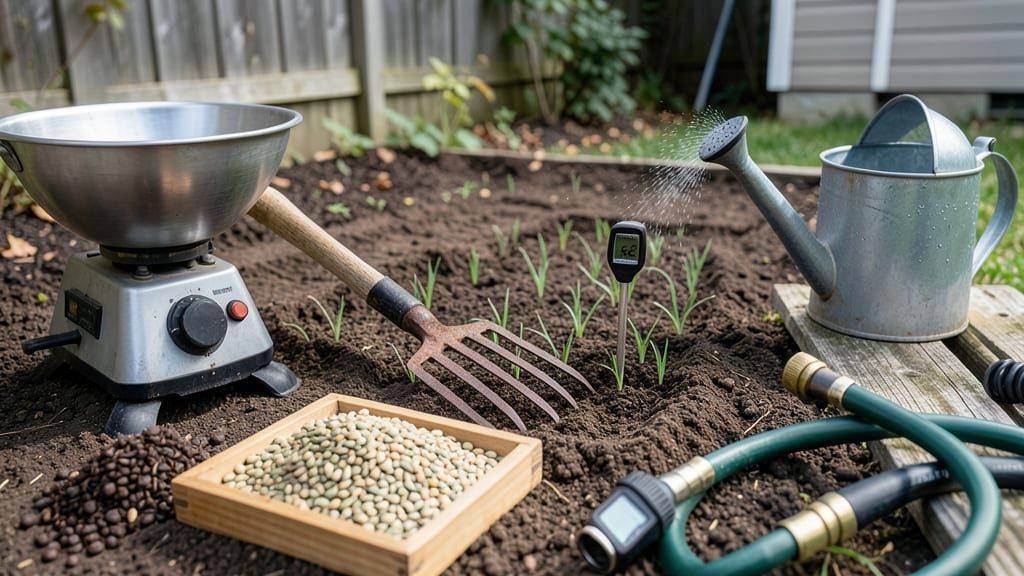
Planting grass seed in Maine spring between late April and early June is your best shot at a thick, resilient lawn before summer heat sets in.
But here’s the catch: Maine’s unpredictable spring can turn your hard work into a gamble if you’re not precise. One week of frost or a dry spell, and your new grass might struggle to take hold—or worse, never make it past germination.
The key is knowing exactly when soil temperatures hit that 50°F sweet spot and how to prep your lawn for success in USDA Zone 5b-6b.
If you’ve ever seeded too early and watched frost nip your seedlings overnight, or too late and seen your grass wilting under June’s heat, you know timing matters.
This guide cuts through the guesswork with Maine-specific deadlines, soil checks, and a post-planting care schedule that keeps your lawn lush from day one.
Ready to skip the trial-and-error? I’ll walk you through the 4-week window before summer arrives, the right grass blends for your region, and how to water, fertilize, and mow for a lawn that stays green all season.
Maine’s ideal spring grass-seeding timeline: cool-season deadlines explained
Maine’s USDA Zones 4-5 create a delicate balance for spring grass-seeding. Cool-season grasses like tall fescue and Kentucky bluegrass thrive when soil temperatures hover between 40–55°F, but timing is critical—too early and frost kills seedlings, too late and summer heat stresses young roots.
The 4-week window between late April and early June offers the perfect balance for germination and establishment before Maine’s heat arrives.
Coastal areas like Bar Harbor often experience milder springs, allowing seeding as early as mid-April when soil warms to 50°F. Inland regions like Bangor or Augusta should wait until late April to early May to avoid late frosts.
Always check the 7-day forecast for consistent 50°F+ soil temps and minimal rain—ideal conditions for seed-to-soil contact without washing away.
Here’s your Maine-specific seeding timeline, broken down by region and soil conditions to maximize success:
| Region | Optimal Seeding Window | Soil Temp Requirement | Key Climate Factor | Action Steps |
|---|---|---|---|---|
| Coastal (e.g., Portland, Bar Harbor) | Mid-April to early May | 50–55°F | Milder frosts, higher humidity | Test soil pH (6.0–7.0), aerate compacted areas |
| Inland (e.g., Bangor, Augusta) | Late April to early June | 45–50°F (minimum) | Later frosts, drier soil | Wait for 3+ consecutive frost-free days |
| Northern (e.g., Presque Isle) | Early May to mid-June | 50–55°F (strict) | Short growing season | Use cold-tolerant blends (fine fescue mixes) |
| All Regions | Avoid after June 1 | N/A (summer heat risk) | High daytime temps (>75°F) | Switch to fall seeding (Aug–Sept) |
Pro tip: Use a soil thermometer to confirm temps—Maine’s mornings can be deceptive. Dig 2–3 inches deep where you’ll seed; this is where roots will establish. If temps dip below 40°F at night, delay seeding until stability improves.
Coastal areas may see earlier germination, but inland spots often need 10–14 days longer to sprout due to cooler, drier conditions.
Rainfall patterns play a critical role. Aim for 1 inch of rain per week after seeding, but avoid heavy downpours that erode seed. In dry springs (like 2023), supplement with light irrigation (10–15 mins, 2x/day) until seedlings reach 2 inches tall.
Overwatering can suffocate seeds, so prioritize consistent moisture over saturation.
Don’t overlook seed selection. For Maine’s climate, blend tall fescue (drought-tolerant) with fine fescue (shade-tolerant) for resilience. Coastal lawns benefit from Kentucky bluegrass mixes, while inland areas thrive with creeping red fescue. Always choose certified Maine-friendly seed to avoid invasive species that outcompete native grasses.
Mark your calendar for June 1—this is Maine’s hard deadline for spring seeding. After this date, summer heat (80°F+ days) stresses young grass, and germination rates plummet.
If you miss the window, shift to fall seeding (August–September), when soil temps drop to 60–70°F and rainfall increases naturally.
Regional variations extend beyond frost dates. Coastal areas like South Portland experience 3–5°F warmer soils than inland Lewiston, thanks to the Gulf of Maine’s moderating effect.
Use local Maine Agricultural Weather Network data to fine-tune your timing. For example, Acadia National Park zones may seed 2 weeks earlier than Aroostook County.
One common mistake? Seeding after applying pre-emergent herbicides. These chemicals block grass growth for 3–6 months. Always wait 30–60 days post-herbicide before planting. Also, avoid seeding
Step-by-step pre-seeding prep: soil, weather, and seed selection checklist
Before you even think about spreading grass seed, your soil and weather prep make or break success. In Maine’s USDA Zone 5b-6b, cool-season grasses like tall fescue and Kentucky bluegrass need the perfect conditions to germinate—soil temps between 50–60°F and consistent moisture.
Start by testing your soil pH (aim for 6.0–7.0), because acidic soil locks out nutrients your new grass desperately needs.
Don’t skip the aeration step—compacted soil blocks roots and strangles growth. Rent a core aerator or hire a pro to punch holes 2–3 inches deep across your lawn.
This also loosens thatch, letting water and air reach the seed. Time it right: aerate 1–2 weeks before seeding so the holes don’t fill in too quickly.
If you’ve used pre-emergent herbicides (like crabgrass preventer), wait 4–6 months before seeding—these chemicals can kill new grass for months. For post-emergent herbicides (like 2,4-D), wait 3–4 weeks and test soil for residue with a home pH kit (values above 7.5 may indicate lingering chemicals).
Pro Tip: Rake lightly after aerating to create a fine, crumbly seedbed. This mimics the texture of a golf green—ideal for seed-to-soil contact.
Next, pick the right grass seed blend for your Maine lawn. Coastal areas thrive with fine fescue mixes (shade-tolerant and drought-resistant), while inland zones do best with tall fescue/Kentucky bluegrass blends for durability. Check the label for cool-season hardiness—look for varieties labeled "Maine-tested" or "Zone 4–5".
Weather watchers, listen up: monitor the 7-day forecast for no frost warnings and steady rain. Seed on a cloudy day (reduces evaporation) or water 3 times daily for the first week.
If a heatwave is forecasted, delay seeding until temps drop below 75°F—summer heat dries out seeds faster than you can water.
Finally, avoid these common pitfalls: seeding when soil is too wet or too dry, using cheap seed with low germination rates, or skipping the starter fertilizer (apply low-nitrogen 10-10-10 at planting).
A little prep now saves hours of frustration later—and your lawn will thank you with thick, green coverage by summer.
With your soil prepped, seed chosen, and weather on your side, you’re ready to roll. Just remember: patience is key—germination takes 7–21 days, and the first mow shouldn’t happen until the grass reaches 3–4 inches. Happy seeding! 🌱