
Plants
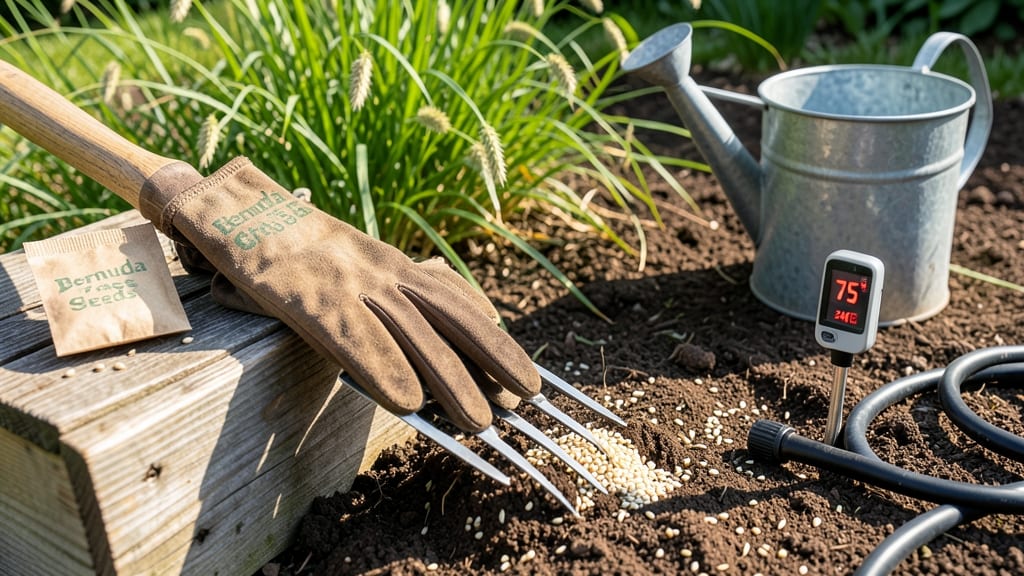
Planting Bermuda grass seed in Arkansas between late May and early June unlocks its full heat tolerance and drought resistance 🌱—the perfect window for strong root growth before summer’s peak.
Too early, and your lawn battles spring’s lingering chill; too late, and the scorching sun stresses young sprouts. I’ve seen both mistakes leave patches thin and patchy, and the difference comes down to timing.
Arkansas’ 7a-8b climate demands warm soil—at least 65°F—before you even think about spreading seed. That means waiting for May’s last frost to fade and temperatures to climb, or risking weak germination.
Below, I’ll walk you through the exact steps to prep your soil, choose the right seed, and keep your Bermuda grass thriving once it’s planted—so you end up with a lush, low-maintenance lawn by summer’s end.
Best planting window for Bermuda grass seed in Arkansas (late May to early June)
Arkansas’ hot, humid summers make Bermuda grass the perfect choice for a low-maintenance lawn—but only if you plant it at the right time.
The late May to early June window is critical because it aligns with soil temperatures hitting 75°F+, which Bermuda grass needs to germinate quickly and establish strong roots before summer’s peak heat arrives.
Planting too early risks spring frosts or slow growth, while waiting too late exposes young seedlings to heat stress. I’ve seen lawns planted in April struggle through late frosts, and those seeded in July often fail to root deeply before summer’s end.
The 45-day window between late May and early June gives your grass the best shot at thriving.
Arkansas’ USDA zones 7a-8b mean regional differences matter. In northern Arkansas (zone 7a), aim for early June to avoid lingering cool spells, while southern Arkansas (zone 8b) can start as early as late May.
Check your local soil temperature—it should stay above 65°F for 5+ days before planting.
Here’s why this window works so well for Arkansas:
| Factor | Northern Arkansas (Zone 7a) | Southern Arkansas (Zone 8b) |
|---|---|---|
| Ideal Planting Window | Early June | Late May |
| Soil Temperature Requirement | 75°F+ (consistent) | 75°F+ (consistent) |
| Heat Tolerance Benefit | Establishes before 90°F+ heat | Adapts faster to summer heat |
| Germination Time | 7-14 days | 5-10 days |
| Key Risk to Avoid | Late frosts (after May 15) | Overwatering in humidity |
The 75°F soil temperature triggers Bermuda grass seeds to germinate in 5-14 days, depending on moisture. In northern Arkansas, waiting until early June ensures you’ve dodged the last frost (typically by May 15) while still giving seedlings time to root before July’s heat peaks.
Meanwhile, southern Arkansas can start earlier because the climate warms faster.
Arkansas’ humidity and summer storms also play a role. Planting in late May or early June lets your grass establish before the heavy rains of June and July, which can wash away newly planted seed.
The drought tolerance of Bermuda grass kicks in once roots are deep, but young plants need consistent moisture to avoid stress.
One common mistake I see is planting too late—after early June—when the heat becomes overwhelming. Seedlings struggle to germinate in 90°F+ soil, and what does sprout often fails to develop a strong root system. If you miss this window, consider sod instead of seed for faster establishment.
To confirm your soil is ready, use a soil thermometer (available at garden centers for under $10). Check temperatures at 4-inch depth in the morning—this is where seeds will be.
If it’s below 75°F, wait a few more days. Patience here pays off with a thicker, greener lawn by summer.
Once you’ve locked in the right timing, the next step is soil prep. Bermuda grass thrives in sandy loam with a pH between 6.0-7.0. Arkansas’ clay-heavy soils often need amendments like compost or sand to improve drainage.
I’ll cover this in detail in the next section, but for now, mark your calendar for late May to early June—this is your best shot at a lush, heat-resistant Bermuda lawn.
How to prepare your Arkansas lawn for Bermuda grass seed planting (soil, sun, and timing)
Now that you’ve locked in your late May to early June planting window, let’s tackle the three critical prep steps that separate a thriving Bermuda lawn from a patchy disappointment.
Arkansas’ clay-heavy soils and humid summers demand special attention—skipping these won’t just slow growth, it can invite weeds or fungal issues before your grass even sprouts.
First, sunlight requirements are non-negotiable: Bermuda grass demands full sun (6+ hours daily). If your lawn gets afternoon shade, consider sod instead of seed—it establishes faster and can handle slightly less sun.
I’ve seen too many homeowners plant seed in partially shaded areas only to watch it struggle through summer’s heat.
Here’s your step-by-step prep checklist to get your Arkansas lawn ready:
- 1 Test and adjust soil pH (6.0–7.0 ideal). Arkansas’ clay soils often test too acidic—add lime if needed (test kits cost $10 at garden centers).
- 2 Aerate compacted clay soil in late April. Rent a core aerator ($60/day) to create ½-inch holes every 2–3 inches—this breaks up Arkansas’ dense clay and improves water/root penetration.
- 3 Apply starter fertilizer (16-4-8 NPK) 1–2 weeks before planting. Use ½ lb per 100 sq ft—this jumpstarts root growth without burning tender seedlings.
- 4 Kill weeds with pre-emergent (like pendimethalin) 3–5 days before seeding. Arkansas’ humidity means weeds sprout fast—don’t skip this or your grass will compete for nutrients.
- 5 Rake soil smooth with a bow rake to create a fine seedbed. Aim for ¼-inch deep furrows—this ensures good seed-to-soil contact for faster germination.
The aeration step is especially critical in Arkansas, where clay soils can become waterlogged after rains or baked hard during droughts. I recommend renting an aerator or hiring a local service if your lawn is heavily compacted—this single step can double your germination rate.
For weed control, don’t rely on post-emergent herbicides after planting—these can harm young Bermuda grass. Instead, hand-pull weeds that sprout after seeding or use a vinegar-based spray (20% acetic acid) for spot treatment.
Arkansas’ humidity also means you’ll need to water lightly daily (not deep) until seeds germinate (usually 7–14 days).
Finally, choose the right seed: Opt for common Bermuda grass for affordability or hybrid varieties (like Tifway 419) for faster establishment. Hybrid seeds cost more ($100–$150 per 5 lb bag) but resist disease better in Arkansas’ wet summers.
Store seed in a cool, dry place until planting day—moisture can cause clumping.
With these steps, your Arkansas lawn will be ready for seed by early June, giving Bermuda grass the perfect head start against weeds and summer heat. Next, we’ll cover post-planting care to keep your new lawn thriving through Arkansas’ brutal summers 🌱.