
Companion Plants
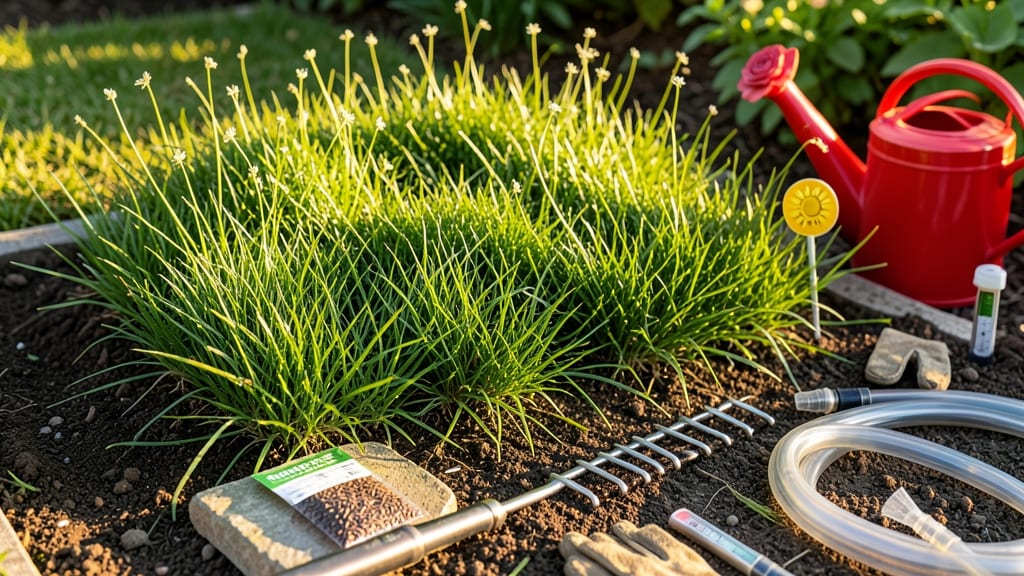
Planting Bermuda grass seed in Texas at the right time means the difference between a fast, drought-resistant lawn and months of frustration. If you’ve ever watched your seed struggle under scorching summer sun or wash away in sudden spring rains, you know timing is everything.
Texas’s 8a-10b zones demand precision—plant too early, and frost can kill tender sprouts; too late, and the heat arrives before roots take hold. The sweet spot? Late spring to early summer, when soil temperatures hit 65°F and stay there, giving your 🌱 Bermuda grass the best shot at thriving.
This isn’t just about dates—it’s about heat zones, soil prep, and avoiding the brutal summer heat that can turn your effort into a patchy mess.
Below, I break down the exact deadlines by region, soil tricks to speed up germination, and how to tell if you’ve planted at the wrong time.
Ready to skip the guesswork? You’ll learn how to time it perfectly, from North Texas’s cooler springs to South Texas’s longer growing seasons, so your lawn establishes fast and stays resilient all year.
Texas heat zones: exact planting deadlines by region for Bermuda grass seed
Texas’s three distinct heat zones (8a, 8b, 9a) mean your Bermuda grass seed planting deadline can vary by 4-6 weeks. Miss the window, and you’ll either battle late-spring frosts or watch your seed bake under 100°F+ soil.
The key? Plant when soil temps hit 65°F and stay consistent—too early, and frost zaps tender sprouts; too late, and summer’s heat stalls germination.
North Texas’s Zone 8a (Dallas, Fort Worth) has the tightest window—just 6 weeks between frost risk and scorching heat. Central Texas’s Zone 8b (Austin, San Antonio) stretches that to 8 weeks, while South Texas’s Zone 9a (Houston, Corpus Christi) gives you until late June.
Below, I’ll break down the exact deadlines, soil tricks to speed up germination, and how to adjust if you’re late to the game.
🌱
For Zone 8a (North Texas), aim to plant by May 15—any later, and the 90°F+ soil will stall germination. I’ve seen lawns planted in late May struggle unless they’re heavily irrigated and shaded with burlap for the first 2 weeks.
The trick? Use a soil thermometer—wait until temps stay above 65°F for 5 consecutive days.
In Zone 8b (Central Texas), you’ve got more flexibility—plant as early as April 1 if your soil warms fast, but don’t push past June 1. Austin’s unpredictable spring rains can wash away seed, so I recommend pre-germinating your seed indoors for 3-5 days before planting.
This cuts germination time from 14 days to just 7-10 days.
South Texas’s Zone 9a is the most forgiving, but don’t wait past July 10—by then, the humidity and heat create a perfect storm for fungal diseases like brown patch.
If you’re in Houston or Corpus Christi, consider overseeding in September for a fall green-up instead of a summer struggle.
Pro tip: If you’re late to plant, switch to sod—it establishes 3x faster than seed and handles Texas heat better. For seed, use a starter fertilizer (high in phosphorus) to jumpstart root growth before the heat peaks.
💧
One critical mistake I see in Texas is planting too shallow. Bermuda grass seed needs ¼-inch depth—any deeper, and it won’t sprout. Use a seed rake to lightly cover seed, then water gently to avoid washing it away.
In Zone 8a, I’ve had success with black plastic mulch to warm the soil faster—just remove it once sprouts appear.
Finally, watering schedule makes or breaks success. Bermuda grass needs 1-1.5 inches of water weekly during establishment, but morning watering is key—evening water can lead to fungus. In South Texas, I recommend drip irrigation to avoid wasting water on evaporation.
☀️
How to prepare soil and seed for fast germination in Texas heat
Texas’s intense heat and dry winds can turn even the best-laid Bermuda grass seed plans into a failure if your soil isn’t ready. Before you scatter those seeds, focus on two critical factors: soil preparation and seed conditioning.
These steps ensure your grass gets the moisture and nutrients it needs to break through the hard Texas crust and take root before summer’s peak arrives.
The key to fast germination lies in loose, well-aerated soil with the right pH balance—typically between 6.0 and 7.0 for Bermuda grass. If your soil is compacted or alkaline, seeds will struggle to sprout, and your lawn may develop weak spots that invite weeds.
I’ve seen too many Texas gardeners skip this step only to end up with patchy, slow-growing grass that can’t handle the heat.
Here’s how to prepare your soil and seed for fast, reliable germination in Texas’s brutal climate:
- 1 Test your soil using a pH test kit or send a sample to your local agricultural extension office. Bermuda grass thrives in slightly acidic to neutral soil (6.0–7.0).
- 2 If your soil is alkaline (above 7.0), amend it with elemental sulfur (apply 2–4 lbs per 100 sq ft) or peat moss 4–6 weeks before planting.
- 3 For compacted clay soil, mix in compost or sand to improve drainage and aeration. Aim for 2–3 inches of organic matter in the top 6 inches of soil.
- 4 Remove debris like rocks, weeds, and dead grass. Use a raking tool to create a smooth, level surface—this prevents water pooling and seed loss.
- 5 Lightly scarify the soil with a garden rake or aerator to break up the top ½-inch layer. This helps seeds make contact with moisture and nutrients.
- 6 Water deeply the day before planting to moisten the top 2–3 inches of soil. Aim for 1–1.5 inches of water—this keeps the soil damp during germination.
- 7 Sow seeds at a depth of ¼-inch. Use a spreader for even coverage—aim for 10–15 lbs per 1,000 sq ft for Bermuda grass.
- 8 Lightly rake the soil to cover seeds, then apply a thin layer of straw mulch (¼-inch) to retain moisture and prevent crusting from heavy rains.
- 9 Water gently with a fine mist (like a sprinkler) to avoid displacing seeds. Keep soil consistently moist (not soggy) for the first 14–21 days until germination.
Texas’s sudden summer storms can wash away freshly planted seeds or create a hard crust that blocks sprouts. To combat this, I recommend mulching with straw immediately after planting—it’s a game-changer for keeping seeds in place and moisture levels stable.