
Planting
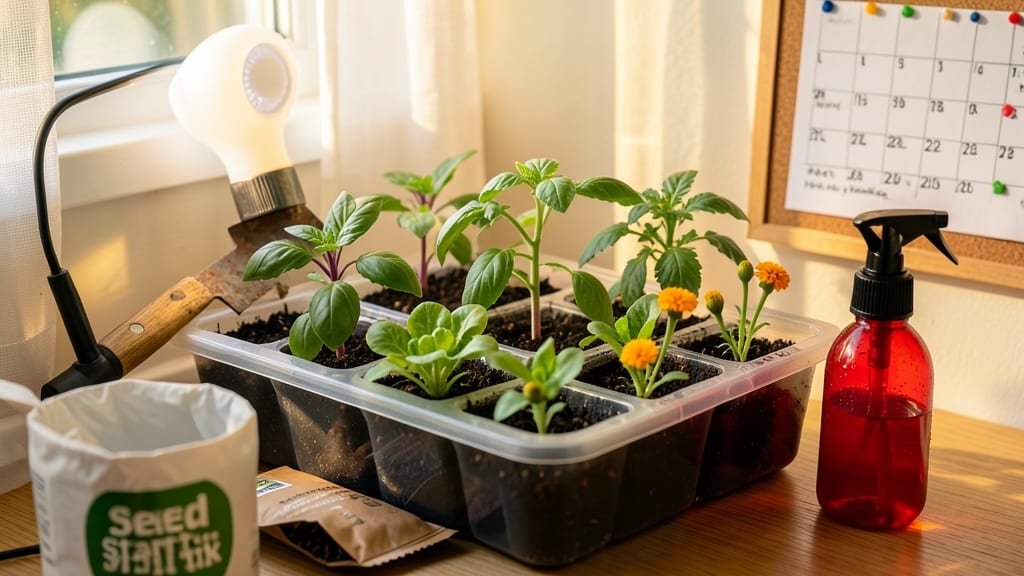
To plant seed starters at the perfect time means starting them 6-8 weeks before your last frost—a window that changes everything from cold-hardy greens to heat-loving tomatoes.
Picture this: you’ve got tiny 🌱 seed starters reaching for the light, but your frost date sneaks up earlier than expected. One miscalculation, and those delicate seedlings could bolt or struggle when transplanted. That’s why knowing your zone’s exact timing is the key to a thriving garden.
In Zone 6a, where frost typically lingers until mid-April, that means kicking off your seed starters in late February. But what if you’re in a warmer zone? Or dealing with an unpredictable spring?
I’ll break down how to adjust your schedule so your seedlings are ready—not too early, not too late—just right for transplant day.
You’ll learn the exact weeks before last frost for your zone, how to spot early signs of readiness, and which seeds need the most (or least) time to go from tray to table. Let’s get those 🌱 seed starters on the right track.
Seed starter planting schedule by USDA zone (weeks before last frost)
Getting your seed starters indoors at the right time means the difference between robust transplants and leggy, struggling seedlings. Each USDA zone has a unique window—typically 6 to 12 weeks before your last frost—to start seeds for vegetables, herbs, and flowers.
Miss this timing, and you risk bolting or stunted growth. Let’s break it down by zone so you can plan with precision.
First, find your last frost date (check local weather averages or use the USDA Plant Hardiness Zone Map). Then, count backward based on the plant type. Cold-hardy greens like kale or spinach need 10-12 weeks indoors, while warm-season crops like tomatoes or peppers thrive with 6-8 weeks.
Below, I’ve mapped out the exact weeks before last frost for each zone, plus adjustments for early or late frosts.
For Zones 3-4, where winters are long, start your cold-hardy greens like spinach or peas as early as February (10-12 weeks before frost). Meanwhile, tomatoes and peppers can wait until March (6-8 weeks before frost).
In Zones 7-8, you’ve got more flexibility—begin basil and cucumbers in January and eggplants in February.
In Zones 9-10, where frost is rare, you can start seeds year-round, but focus on warm-season crops like okra or melons in December-January. The key is to match your seed-starting timeline with the plant’s maturity rate.
A tomato plant needs 70-80 days to fruit, so starting it 6 weeks before last frost ensures it’s ready to harvest.
If your last frost date varies from the average (e.g., a late frost in Zone 5), adjust your schedule by 1-2 weeks. For example, if frost is delayed until May 1 instead of April 15, shift all seed-starting dates 2 weeks later.
Use a seed-starting calendar or app to track your progress and avoid overcrowding trays.
Pro tip: Label your seed trays with the plant type and date sown. This helps you rotate seedlings under grow lights or in sunny windows efficiently. For slow germinators like parsley or carrots, start them 2 weeks earlier than the recommended window to account for delayed sprouting.
One common mistake is starting warm-season crops too early. If you plant tomatoes in Zone 5 in January (12 weeks before frost), they’ll stretch toward the light and become leggy.
Instead, wait until March (6-8 weeks before frost) and use grow lights to keep them strong. The same goes for peppers
How to adjust for early or late last frost dates
When your last frost date shifts unexpectedly—like a Zone 5 garden facing frost in late April instead of mid-May—your seed-starting timeline needs a quick recalibration. The key is to adjust without causing transplant shock or letting seedlings bolt before they’re ready.
I’ve seen this happen when early springs trick gardeners into starting too soon, or late frosts force a last-minute scramble.
For example, if your frost date moves up by 2 weeks, you’ll need to delay starting seeds by 2 weeks to avoid overgrown seedlings. Conversely, a late frost means you can push your start date back.
The goal is to have seedlings with 2-3 true leaves and sturdy stems ready to transplant just as the soil warms.
Here’s the critical rule: Calculate your frost date from your local extension service or a trusted resource like the Old Farmer’s Almanac. Then, work backward from there, adjusting your seed-starting schedule based on how many weeks each plant type needs before transplant.
For instance, tomatoes and peppers need 6-8 weeks, while broccoli and cabbage can handle 10-12 weeks.
If your last frost date arrives late, don’t rush your seedlings. Starting too early leads to overcrowded trays or bolting before transplant. Instead, focus on hardening off seedlings for 7-10 days before the new frost date. For early frosts, prioritize fast-maturing varieties like bush beans or radishes (30-40 days to harvest) to salvage the season.
Pro Tip: Use a seed heat mat to speed up germination if you’re behind schedule.
To adjust your schedule, start by identifying which plants are most sensitive to cold. For example, peppers and eggplants hate chilly soil, so if your frost date shifts late, delay their start by 3-4 weeks to avoid stunted growth.
On the flip side, spinach and lettuce can handle cooler temps, so you can start them up to 4 weeks earlier without risk.
Another trick is to use season extenders like row covers or cold frames. These can push your last frost date back by 2-3 weeks, giving you extra time to transplant delicate seedlings.
For instance, if you’re in Zone 4 with a late frost, a row cover might let you plant tomatoes a week earlier than usual. Just be sure to remove covers during the day to prevent overheating.
Finally, keep a seed-starting journal to track your adjustments each year. Note which plants thrived with early or late starts, and which struggled. Over time, you’ll fine-tune your schedule to match your garden’s unique climate quirks—whether that’s a microclimate in your yard or a particularly unpredictable spring.