
Lawn
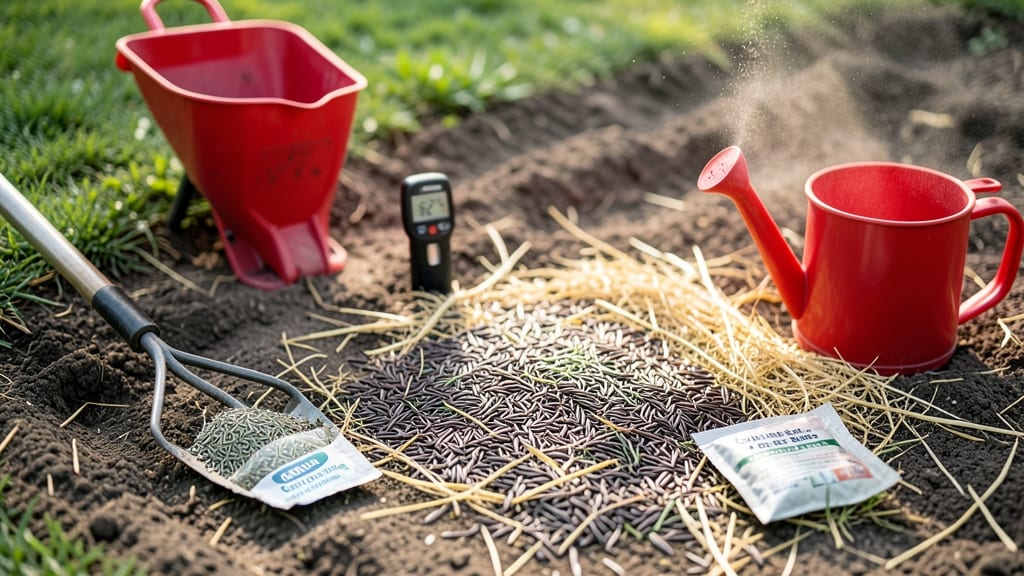
Planting grass seed in Ohio's spring means waiting until soil warms to 55–65°F—typically mid-April to early May—when the risk of frost has passed.
If you’ve ever watched your freshly sown lawn turn to mud under a late freeze, you know timing is everything. Ohio’s unpredictable spring weather can turn a perfect planting day into a soggy mess in days. The key? Soil temperature, not just the calendar.
Most Ohio lawns thrive with cool-season grasses like Kentucky Bluegrass or Tall Fescue, which need consistent moisture and warmth to germinate. Plant too early, and frost will kill tender sprouts; too late, and summer heat stresses young roots before they establish.
Below, I’ll break down the exact window for your zone, how to prep soil for success, and the 3 critical steps to keep your grass growing strong once it’s in the ground.
Ohio’s spring planting window: soil temperature & frost-free deadlines
Ohio’s spring weather is famously unpredictable, with last frost dates that can swing by weeks depending on your location. For grass seed to germinate properly, you need two key factors: soil temperatures between 55–65°F and a stable frost-free window.
Plant too early, and frost will kill tender sprouts. Plant too late, and summer heat can stress young grass before it establishes. Here’s how to nail the timing for your Ohio region.
Most of Ohio falls within USDA Zones 5b–6a, but even within these zones, northern Ohio (like Cleveland and Toledo) experiences later springs than southern Ohio (like Cincinnati and Columbus).
The average last frost date in northern Ohio is around April 15–May 1, while southern Ohio typically sees its last frost by April 1–15. These dates are your starting point—but soil temperature is the real game-changer.
Grass seed needs consistent warmth to sprout. Use a soil thermometer (just $10 at garden centers) to check temperatures at a depth of 2–4 inches.
Aim for 55°F for cool-season grasses (like Kentucky Bluegrass and Tall Fescue) and hold off until 65°F for warm-season grasses (like Bermuda or Zoysia, though these are rare in Ohio’s spring planting). If your soil is still below 50°F, wait—even if the calendar says “spring.”
Here’s a data-driven timeline to help you decide. Northern Ohio’s ideal planting window runs from mid-April to early May, while southern Ohio can start as early as late March. But don’t rush!
A late April planting in northern Ohio often outperforms an early March attempt, because the soil simply isn’t ready. Patience here means a thicker, healthier lawn down the road.
🌱
If you’re still unsure, use the “backward counting” method. Start with your region’s average last frost date, then count 4–6 weeks backward. This gives you a buffer to wait for soil warmth.
For example, if your last frost is April 15, aim to plant by March 15–March 30. But if your soil is still cold, delay until April 1.
Another trick is to plant a test patch 2–3 weeks before your target date. If the grass germinates and thrives, you’ve got the green light to plant the rest of your lawn.
If sprouts die back from frost, you’ll know to wait. This small experiment can save you from wasted seed and frustration.
Ohio’s spring weather can also bring unpredictable rain, which can wash away fresh seed. If a heavy rain is forecast within 48 hours of planting, delay until the storm passes.
Once seeds are down, keep the soil moist but not soggy—water lightly daily until germination (about 7–14 days). Overwatering can suffocate seeds, while underwatering leaves them vulnerable to drying out.
For cool-season grasses (the best choice for Ohio), early fall planting is also an option—think late August to early September. This gives grass time to establish roots before winter, resulting in a lush lawn the following spring.
But if you’re sticking to spring, timing is critical. Don’t let Ohio’s fickle weather fool you—your soil thermometer and frost dates are your best friends.
🌿
How to prepare your Ohio lawn for grass seed success
Once you’ve locked in your spring planting window, the real work begins: preparing your Ohio lawn for seed success. Skipping this step is like planting seeds in concrete—no matter how good your timing, poor soil and competition will derail germination.
I’ve seen too many lawns fail because homeowners rushed past prep, only to end up with patchy, weak grass that never fully fills in.
The foundation of a great lawn starts with soil testing. Ohio’s soil pH typically runs between 6.0–7.5, but many lawns need adjustments. Cool-season grasses like Kentucky Bluegrass thrive at 6.0–7.0, while Tall Fescue prefers 6.0–7.5.
Test your soil with a simple kit from your local garden center—it’s the difference between seed that sprouts and seed that just sits there, waiting for the perfect conditions that never come.
Next, tackle weeds and debris. Use a stiff rake or dethatching tool to remove thatch layers thicker than ½ inch. Thatch blocks water and air from reaching seeds. For stubborn weeds, apply a pre-emergent herbicide 2–4 weeks before planting.
Pro tip: Mow existing grass short (1–1.5 inches) to create space for new seeds to make contact with the soil.
Your Ohio Lawn Prep Checklist
- Test soil pH (aim for 6.0–7.0 for cool-season grasses). Adjust with lime (to raise pH) or sulfur (to lower pH) 4–6 weeks before planting.
- Remove weeds/debris with a rake or dethatcher. Focus on areas with thatch > ½ inch—this smothers seeds.
- Choose your method: Aerate (for established lawns) or till (for bare soil). Aeration creates holes for seeds to nestle into, while tilling breaks up compacted soil.
- Select seed type: Cool-season (Kentucky Bluegrass, Tall Fescue) for Ohio’s climate, or warm-season (Bermuda, Zoysia) if you’re planting late spring/early summer.
- Spread seed evenly with a broadcast spreader (8–12 lbs per 1,000 sq ft). Lightly rake to ensure soil contact, then cover with ¼ inch of compost to retain moisture.
⏰ Pro Tip: Water lightly 2x daily (morning/evening) for the first 2 weeks—keep soil moist but not soggy.
A common mistake I see? Over-tilling. While tilling loosens soil, overdoing it can bring buried weed seeds to the surface. For established lawns, core aeration (removing small soil plugs) works better than tilling. If your lawn has compacted soil, rent a core aerator—it’s worth the investment for seed-to-soil contact.
Finally, choose the right seed mix for your Ohio climate. Cool-season grasses dominate here, but your specific needs matter: Kentucky Bluegrass for lush, high-traffic areas, Tall Fescue for drought tolerance, or a mix of both for versatility.
Avoid cheap, low-quality seed—it often contains fillers that won’t grow, wasting your time and money.
With these steps, your Ohio lawn will be ready to welcome grass seed like a well-prepared garden bed. The key is patience: consistent moisture, proper soil prep, and choosing the right seed will give you a thick, green lawn that stands up to Ohio’s unpredictable weather.
Once your seeds sprout, you’ll know every step was worth it. 🌱