
Planting
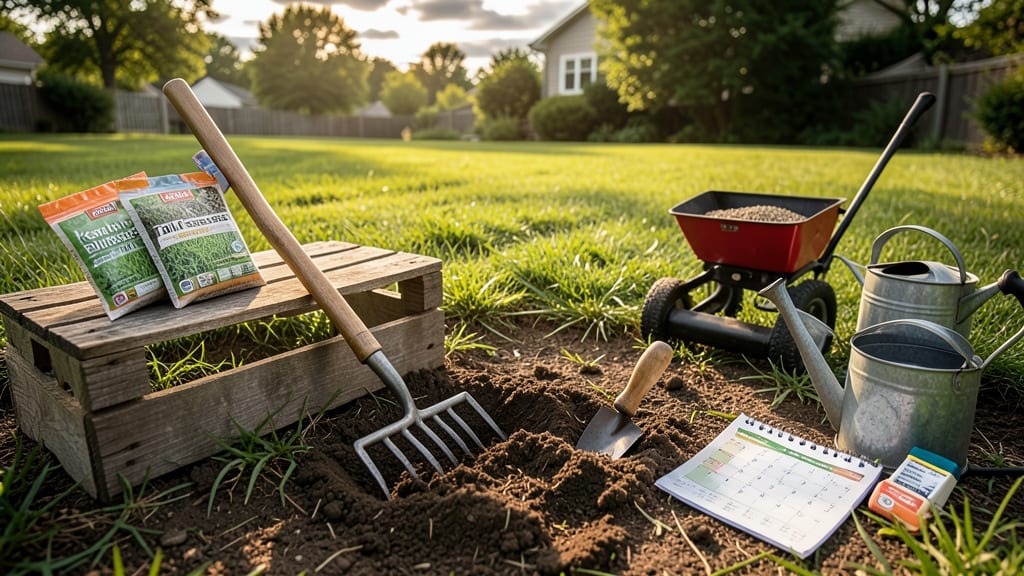
Planting grass seed in Ohio at the right time means the difference between a lush lawn and a patchy disappointment — and the perfect window isn’t just about months, but soil temperature and frost dates.
Ohio’s unpredictable spring and fall weather can make timing your grass seed planting a high-stakes gamble—get it wrong, and you risk wasted seeds or weak growth. But with the right soil temperature and frost-free window strategy, you can maximize your lawn’s success rate by up to 80%.
Cool-season grasses like Kentucky bluegrass and tall fescue thrive when soil temps hit 50-65°F, while warm-season Bermuda needs 65°F+. In Ohio’s 6a zone, that means aiming for early spring (March-April) or early fall (September-October), when moisture stays consistent and weeds are less aggressive.
Below, I’ll break down the exact frost-free windows by region, soil temp tricks to extend your planting season, and the 3-step checklist to time it perfectly—so your grass gets a strong start before summer heat or winter frost can sabotage it.
Optimal soil temperature for planting grass seed in Ohio
Ohio’s cool-season climate demands precise timing when planting grass seed, and soil temperature is the most critical factor. For cool-season grasses like Kentucky bluegrass and tall fescue (the most common in Ohio), the ideal soil temperature range is 50°F to 65°F.
This window ensures rapid germination and strong root establishment before summer heat or winter frost sets in.
Warm-season grasses like Bermuda and Zoysia (less common but used in southern Ohio) prefer 70°F to 80°F soil temperatures, but these are rarely recommended for Ohio’s lawns due to their shorter growing season. Most Ohio homeowners focus on cool-season varieties, which thrive in our climate.
Testing your soil temperature is simple: use a soil thermometer (available for under $10) or a meat thermometer (cleaned thoroughly). Insert it 2-3 inches deep—this is where seeds will germinate. Check temperatures early morning for the most accurate reading, as afternoon sun can skew results.
Northern Ohio (e.g., Cleveland, Toledo) often sees cooler soil temperatures lingering into May, while southern Ohio (e.g., Cincinnati, Columbus) may hit ideal temps by early April. This regional variation means you should test your own yard rather than relying on general calendar dates.
If your soil is too cold (below 50°F), seeds may rot or fail to sprout. Conversely, planting when soil is above 65°F can stress seedlings, leading to weak growth or dormancy.
For example, planting in late May (when soil often exceeds 70°F) can result in poor germination rates and require more watering.
Here’s how Ohio’s cool-season grasses perform at different soil temperatures:
- 40°F–49°F: Seeds germinate slowly or not at all (risk of frost damage).
- 50°F–65°F: Optimal germination and root growth (ideal window).
- 66°F–75°F: Slower growth; seedlings may struggle without extra care.
- Above 75°F: High risk of dormancy or death (summer planting is discouraged).
| Grass Type | Ideal Soil Temp | Ohio Planting Window | Germination Time | Key Risk |
|---|---|---|---|---|
| Kentucky Bluegrass | 50°F–65°F | Early April–mid-May or mid-Sept–early Oct | 7–14 days | Frost damage if planted too early |
| Tall Fescue | 55°F–65°F | Late March–June or Aug–Sept | 10–21 days | Weed competition if planted late |
| Perennial Ryegrass | 50°F–70°F | Early March–June or July–Sept | 5–10 days | Overwatering if planted in summer |
| Bermuda (Warm-Season) | 70°F–80°F | Late May–June (southern OH only) | 14–21 days | Frost sensitivity |
To troubleshoot early planting risks, use a frost blanket or row cover to protect seedlings if frost is forecasted within 7–10 days of planting. For late planting, choose fast-germinating varieties like perennial ryegrass (germinates in 5–10 days) and water deeply twice daily to keep soil cool.
If your soil is too cold in spring, consider planting a cover crop like clover or rye in early spring to warm the soil naturally. Alternatively, wait until soil reaches 50°F consistently for 3–5 days before seeding. This patience pays off with thicker, healthier grass that resists weeds and drought.
Pro tip: Morning soil temps are often 5–10°F cooler than afternoon temps. If you’re planting in late spring (May), check afternoon temps—if they exceed 75°F, delay planting until early fall when soil cools again.
Fall planting (September–October) is often more successful because soil stays warm enough for germination but cools quickly to reduce weed competition.
Remember, Ohio’s microclimates can vary dramatically. A south-facing slope may warm up faster than a north-facing yard, so test multiple spots in your lawn.
With the right soil temperature and timing, your grass seed can achieve 80%+ germination rates—transforming a bare patch into a lush lawn in just a few weeks. 🌱
Ohio’s frost-free window: when to plant by region (northern vs. southern Ohio)
Ohio’s frost-free window varies dramatically between its northern and southern regions, making timing your grass seed planting a regional game-changer. In Cleveland and Toledo, cooler climates mean shorter windows, while Columbus and Cincinnati enjoy slightly longer growing seasons.
For cool-season grasses like Kentucky bluegrass, this window is your golden ticket to germination success—plant too early, and frost will kill tender sprouts; too late, and summer heat will stress seedlings.
To simplify, I’ve mapped out the last spring frost and first fall frost averages for Ohio’s major cities, along with the ideal planting windows for both spring and fall. These dates align with when soil temperatures consistently hit 50-65°F, the sweet spot for cool-season grass seed germination.
For warm-season grasses like Bermuda, aim for when soil temps reach 65°F+, typically late spring to early summer.
Use this 3-step checklist to calculate your local frost-free window and time your planting perfectly: 1. Check your region’s frost dates (above) and note the last spring frost and first fall frost.
- Plant cool-season grass seed 4-6 weeks before the last frost (e.g., March 15 for northern Ohio) or 6-8 weeks before the first frost (e.g., September 1 for fall planting).
- Verify soil temperature with a soil thermometer—aim for 50-65°F for cool-season grasses.
For example, if you’re in Columbus, your frost-free window runs from April 5 to October 20, giving you a 6-month window to plant. But don’t wait until May—plant in early spring to avoid summer heat stress.
In Toledo, the window is shorter (April 15 to October 10), so prioritize early spring or late summer planting.
Pro tip: Use a frost blanket to extend your fall planting window by 2-3 weeks in cooler regions like Cleveland. This protects seedlings from unexpected late frosts and can push your planting date back to early October. Just remember to remove it during the day to avoid overheating.
Timing isn’t just about frost—it’s also about weed competition. Planting in early spring or late summer gives your grass a head start before weeds like crabgrass take over. For warm-season grasses like Bermuda, wait until soil temps hit 65°F+, typically late May to early June in Ohio.