
Plants
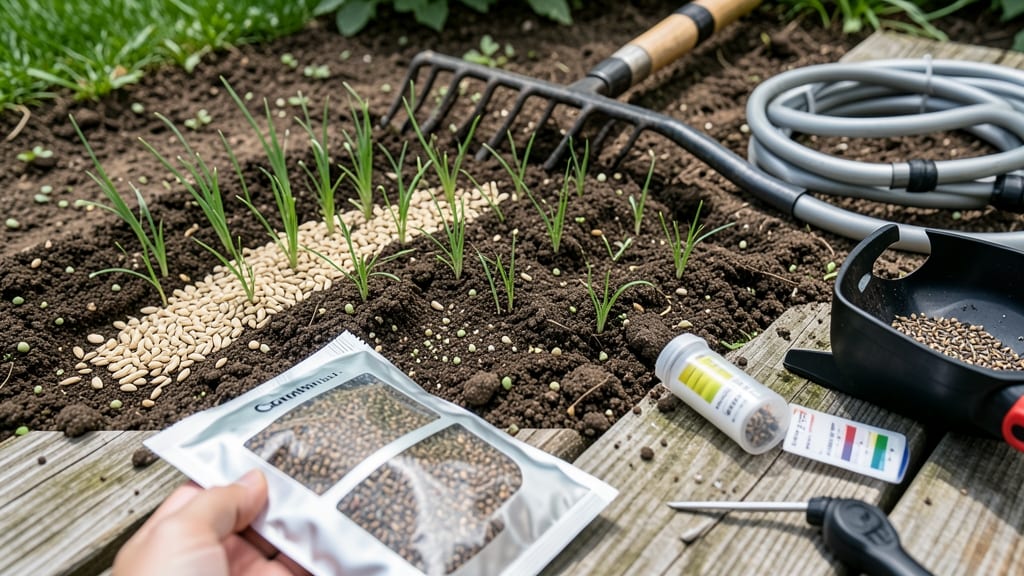
Planting grass seed in Massachusetts spring between late April and mid-May is the golden window for a fast, weed-resistant lawn—skipping this timing risks frost damage or weed takeover.
Massachusetts’ unpredictable spring weather can make or break your lawn—plant grass seed too early, and frost will kill your efforts; too late, and weeds will take over. Timing is everything for a lush, weed-resistant lawn that thrives all season.
Cooler-season grasses like Kentucky Bluegrass and Fine Fescue love the 5b-6b zone’s spring temperatures, but soil must stay above 50°F for 7-10 days before planting. Coastal areas like Cape Cod can plant a week earlier than inland regions.
Below, I’ll walk you through the exact dates, soil prep steps, and seed varieties that give you the fastest, most resilient lawn—plus what to do if spring delays hit.
Best Massachusetts spring planting windows for cool-season grass seed
Massachusetts’ spring weather is famously unpredictable—one day brings 50°F soil temperatures, and the next, a surprise frost. For cool-season grass seed like Kentucky Bluegrass or Fine Fescue, timing is critical. Plant too early, and frost will kill tender seedlings; too late, and weeds will dominate.
The ideal window balances soil warmth, moisture consistency, and frost risk to give your lawn the best start.
Most of Massachusetts falls in USDA Zones 5b-6b, where the last frost typically occurs between mid-April (coastal areas) and early May (inland regions). To maximize germination, aim to plant 4-6 weeks before your region’s average last frost date.
This means late March to mid-April for coastal zones (like Cape Cod or Boston) and mid-April to early May for inland areas (like Worcester or Springfield).
Coastal areas like Boston or Provincetown benefit from warmer microclimates, allowing earlier planting. In these zones, late March is often safe if soil temperatures hover around 45–50°F.
However, always check the National Weather Service’s frost prediction maps for your specific town, as coastal areas can still experience late frosts in April.
For inland regions like Worcester or Pittsfield, wait until mid-April when soil temperatures consistently reach 50°F. These areas face higher frost risk, so avoid planting before April 15 unless you’re using a frost cloth to protect seedlings.
If spring delays occur, a backup window in late May works, but expect slower germination and increased weed competition.
Rainfall is another critical factor. Massachusetts’ spring often brings 3–5 inches of rain per month, which is ideal for germination. However, if drought conditions persist, supplement with 0.5 inches of water daily until seedlings establish.
Use a rain gauge to track moisture—consistent dampness (not soggy soil) is key for seed-to-soil contact.
If you miss the primary window, don’t panic. A late May planting can still succeed, especially with Tall Fescue varieties, which tolerate heat better. Just be prepared for more frequent watering and weed control during the hotter summer months.
For a stronger lawn, consider overseeding in early fall (September) as well—this two-step approach fills gaps and crowds out weeds.
Before planting, test your soil’s pH (6.0–7.0 is ideal) and amend with compost or lime if needed. Cool-season grasses prefer slightly acidic to neutral soil. After sowing, lightly rake seeds into the soil and cover with ¼-inch of topsoil to protect them from drying out.
Keep the area moist until germination (typically 7–21 days, depending on variety).
Once your grass reaches 3–4 inches tall, begin mowing at 3 inches height to encourage root growth. Avoid heavy foot traffic for 4–6 weeks post-planting to prevent seed displacement. With the right timing and care, your Massachusetts lawn will be dense, weed-resistant, and ready for summer.
🌱 For real-time updates, bookmark the Massachusetts Extension Service’s frost maps and set reminders for your local planting deadlines. A little preparation now means a lush lawn all season—no guesswork required!
How to prepare your Massachusetts lawn for spring grass seed success
Preparing your Massachusetts lawn for spring grass seed requires precise steps to ensure optimal seed-to-soil contact and weed suppression. Start by testing your soil pH—most cool-season grasses thrive in a range of 6.0 to 7.0.
If your soil is too acidic, add lime 4-6 weeks before planting to adjust the pH.
A clean slate is critical for seed success. Remove existing weeds using a pre-emergent herbicide or manually pull them before planting. For stubborn weeds, apply a glyphosate-based herbicide 2-3 weeks before seeding to avoid damaging new grass shoots.
Next, focus on soil aeration to improve seed contact. Use a core aerator to create ¼-inch deep holes across your lawn, especially if the soil is compacted. This step is vital for seed germination rates and root development in Massachusetts’ dense clay soils.
- Test Soil pH: Aim for 6.0-7.0; amend with lime if needed.
- Clear Weeds: Apply pre-emergent herbicide or pull weeds manually.
- Aerate Soil: Core aerate to create ¼-inch deep holes for seed contact.
- Rake Surface: Level soil with a rake, removing debris and clumps.
- Spread Seed: Use a broadcast spreader for even coverage (8-12 lbs per 1,000 sq ft).
- Lightly Rake Again: Cover seeds with ¼-inch of soil for moisture retention.
- Water Immediately: Apply ¼-inch of water daily until germination (7-14 days).
After aeration, rake the soil surface to create a fine, level texture free of debris. This step ensures even seed distribution and prevents clumping, which can lead to bare spots.
For large lawns, use a broadcast spreader to distribute seed evenly at a rate of 8-12 pounds per 1,000 square feet.
Once seeds are spread, lightly rake the area again to cover them with a ¼-inch layer of soil.
This protects seeds from drying out while allowing sunlight to reach them. Immediate watering is crucial—apply ¼-inch of water daily until germination occurs, which typically takes 7-14 days in Massachusetts’ spring conditions.
Adjust your irrigation schedule based on rainfall patterns. Massachusetts’ spring often brings variable rainfall, so monitor soil moisture daily. Water in the early morning to reduce evaporation and fungal risks. Once grass reaches 3-4 inches tall, reduce watering to 1 inch per week to encourage deep root growth.
With these steps, your lawn will be primed for fast germination and weed resistance, setting the stage for a lush, green carpet by summer. Don’t skip soil prep—it’s the foundation of success! 🌱