
Lawn
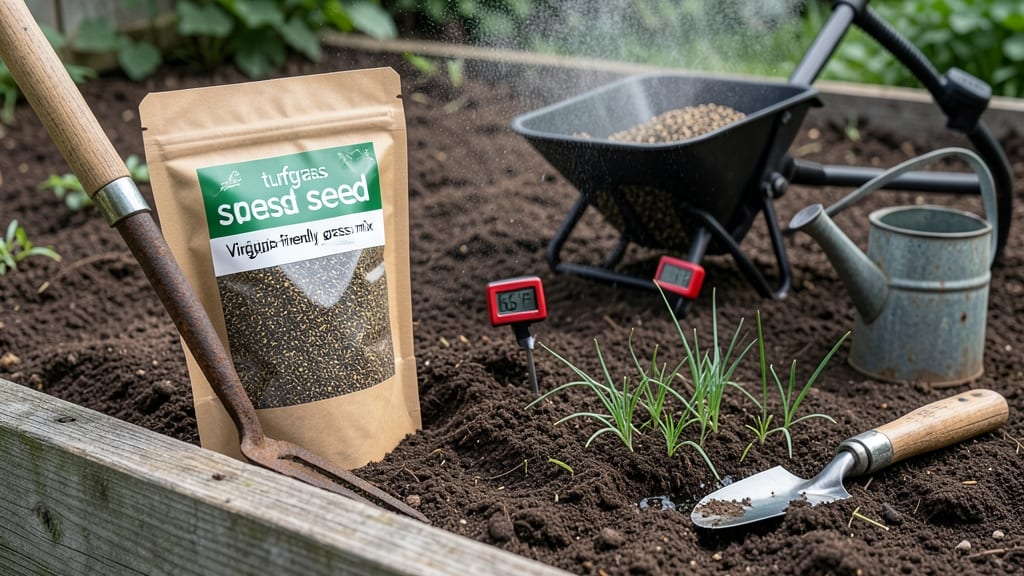
Planting grass seed in the spring in Virginia means timing it just right to beat weeds and summer heat—aim for early April to mid-May in most zones (6a–8a) for the best germination.
Get it wrong, and you’ll spend the season battling crabgrass instead of admiring your lawn. I’ve seen thick, weed-free turf take hold when planted at the perfect moment, but also patches of dirt where the window was missed by even a week.
Virginia’s climate varies wildly from the Piedmont to the Coastal Plain, so your local frost dates and soil temperature are the real deadlines—not just the calendar.
Below, I’ll break down the exact zones where you should plant, how to prep soil to outsmart weeds, and the one watering trick that makes all the difference.
Whether you’re reseeding a bare spot or starting a new lawn, these steps will help your grass outpace the weeds before summer arrives.
Virginia spring grass planting deadlines by hardiness Zone (5b–8a)
Timing your grass seed planting in Virginia isn't just about the calendar—it's about soil temperatures, frost dates, and weed competition. In zones 5b through 8a, the window between late frost risks and summer heat is narrow.
Plant too early, and weeds like crabgrass will steal your space. Plant too late, and seedlings will struggle under Virginia's 90°F+ summer heat. The key? Start when soil reaches 55–65°F and you have 6–8 weeks before summer's intensity peaks.
Virginia's diverse zones—from the cooler Blue Ridge Mountains (5b–6a) to the milder Coastal Plain (7b–8a)—create wildly different planting conditions. For example, Roanoke (Zone 6b) gardeners can start in early April, while Norfolk (Zone 8a) should wait until mid-May.
This guide gives you the exact planting deadlines for each zone, plus soil prep tricks to outsmart weeds and ensure your grass gets a head start.
Why this matters: Grass seed needs consistent moisture and warmth to germinate. If you plant when soil is still cold (below 50°F), seeds may rot. If you wait until soil is too hot (above 70°F), germination slows, leaving gaps for weeds. The 6-week rule is your golden ticket: sow seeds 6 weeks before your area's average last frost date to give roots time to establish before summer stress hits.
Use this table as your planting calendar, but don’t rely solely on dates. Check soil temps with a soil thermometer (or press your hand into the ground—if it feels warm but not hot, it’s ready).
In Zone 5b, for example, early April might seem early, but if soil hits 55°F, go for it. Conversely, in Zone 8a, waiting until mid-May avoids the risk of summer heat stress on young grass.
Pro tip: Clay soils (common in Piedmont) warm up slower than sandy soils (Coastal Plain). If your soil feels cold or damp, wait a week or two.
The goal is to plant when 60% of your lawn’s weeds are still dormant—this gives your grass a 4–6 week head start before weeds like crabgrass germinate. Pre-emergent herbicides can help, but apply them 2–4 weeks before seeding to avoid harming your grass.
Once you’ve nailed the timing, focus on watering consistency. New grass needs 1–1.5 inches of water weekly (including rain) for the first 3–4 weeks. Use a sprinkler with gentle rain nozzles to avoid washing away seeds.
In Virginia’s humid climate, water in the early morning to prevent fungal diseases like brown patch, which thrives in warm, wet conditions.
Don’t overlook soil pH either. Virginia’s native soils often lean acidic (pH 5.0–6.0), but grass prefers 6.0–7.0. Test your soil 2–3 weeks
How to prep soil for weed-free grass seed germination in Virginia
Virginia’s spring soil can be a battleground between your grass seed and weeds, but the right prep gives your lawn the upper hand. The key is creating a clean, loose, and nutrient-rich environment where grass seedlings can establish before weeds like crabgrass take over.
I’ve learned that skipping even one step—like proper tilling or pH testing—can mean a lawn full of weeds by summer.
Start with a soil test to check your lawn’s pH, which should ideally be between 6.0 and 7.0 for most grass types. Virginia’s soil often leans acidic, especially in older lawns, and adjusting it now prevents weak germination later.
If your test shows pH outside this range, add pelletized lime (for low pH) or sulfur (for high pH) 4–6 weeks before planting to let it adjust naturally.
Use a soil test kit (available at garden centers) to check pH. Aim for 6.0–7.0. Amend with lime or sulfur 4–6 weeks before planting.
Remove existing grass or weeds, then till to loosen compacted soil. This helps seeds make direct contact with soil for faster germination.
If weeds are a problem, use pre-emergent herbicide 2–4 weeks before seeding. For organic options, try corn gluten meal (apply at 20 lbs per 1,000 sq ft).
Mix in 1–2 inches of compost to improve soil fertility and water retention. Avoid thick layers, which can suffocate seeds.
Lightly cover seeds with ¼-inch of straw or peat moss to retain moisture and block sunlight from weed seeds. Avoid thick mulch, which can smother grass.
After tilling, rake the soil to create a fine, crumbly texture—this ensures seeds make good contact with the earth. If your lawn has heavy clay soil (common in Piedmont regions), mix in sand or perlite to improve drainage.
Sandy soils in Coastal Virginia may need extra compost to hold moisture. The goal is a loose, aerated bed where grass roots can spread freely.
Timing your pre-emergent herbicide is critical. Synthetic options like pendimethalin should be applied 2–4 weeks before seeding to kill weed seeds without harming grass. For organic gardeners, corn gluten meal is a great alternative—it disrupts weed seed germination while being safe for grass.
Just remember, these treatments work best when applied to bare, moist soil before weeds sprout.
Finally, a light mulch of straw or peat moss locks in moisture and keeps weed seeds from germinating. I’ve seen lawns where skipping this step led to a 50% weed takeover by June.
Use ¼-inch of mulch max—any thicker, and it can block sunlight from your grass seedlings. Water gently after mulching to settle everything in place.
With these steps, your Virginia lawn will have the head start it needs to outcompete weeds. The secret? Prep the soil first, then plant when conditions are perfect—usually early April to mid-May for most zones.
Once your grass is established, it’ll crowd out weeds naturally, giving you that thick, green carpet you’re dreaming of. 🌱