
Plants
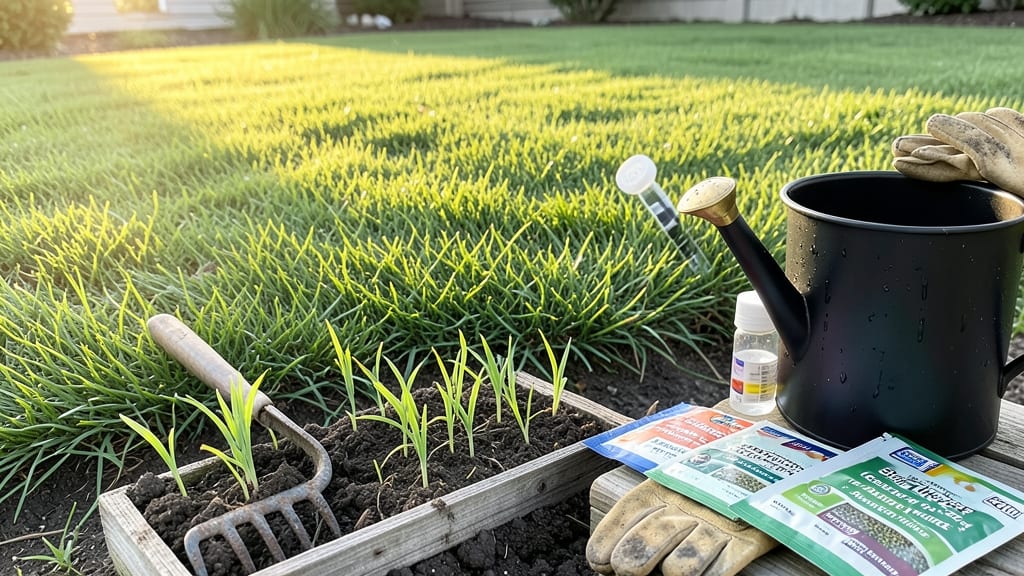
Planting grass seed in Austin works best in late August when soil temperatures drop and summer’s brutal heat finally backs off 🌱 — the 6-week window before frost arrives is your golden opportunity.
Here’s the catch: Austin’s unpredictable frost dates and scorching summers mean planting too early or too late can leave your lawn struggling. Too soon, and the seed bakes in the heat; too late, and it races against winter’s chill.
But nail that late August timing, and your grass roots will dive deep before the first frost, giving you a thicker, greener lawn next spring.
This isn’t just about throwing seed on the ground and hoping for the best. The soil prep, seed selection, and watering schedule all shift when you plant in fall versus spring.
In Austin’s 8a-9a climate, cool-season grasses like tall fescue or ryegrass need that late-summer head start to beat the heat and outcompete weeds.
Below, I’ll walk you through the exact steps to prep your soil, choose the right seed, and keep your new lawn hydrated through Austin’s unpredictable fall rains—so you’re not left with bare patches by December.
Austin’s optimal grass seed planting window: late August’s hidden advantages
Austin’s 8a-9a climate creates a unique challenge for grass seeders: the 100°F summers bake seeds before they sprout, while unpredictable frosts can arrive as early as mid-December. Late August emerges as the sweet spot because soil temperatures finally drop below 85°F, the critical threshold for cool-season grass germination.
This is when your seed stops fighting the heat and starts focusing on root growth—giving it that 6-week head start before winter slows things down.
What makes late August special isn’t just the temperature drop—it’s Austin’s fall rainfall patterns. September typically brings 2-3 inches of rain, reducing your watering burden while keeping young roots hydrated.
Plus, this timing lets you beat summer weeds, which explode in late spring and early summer when grass is still dormant. By planting in late August, you’re essentially outmaneuvering nature’s competition before it even gets started.
Don’t let Austin’s microclimates fool you—just because your neighbor’s yard thrives with Bermuda grass doesn’t mean it’s the right choice for your shadier south-facing slope or clay-heavy soil.
Late August planting lets you test different varieties in the same season, so you can see which one handles your specific conditions best. For example, tall fescue thrives in partial shade, while ryegrass germinates faster in cooler soil.
The key to success isn’t just picking the right date—it’s leveraging Austin’s late-summer conditions. When you plant in late August, your grass will establish 3-4 inches of roots before winter, making it far more drought-resistant when spring hits.
This deep root system also helps it outcompete weeds naturally, so you spend less time pulling crabgrass next year.
| Timing Factor | Late August Advantage | Austin-Specific Tip |
|---|---|---|
| Soil Temperature | Drops below 85°F, ideal for germination | Test with a soil thermometer—aim for 75-80°F at 2" depth |
| Rainfall Patterns | 2-3 inches of rain in September | Use drip irrigation for consistent moisture if rain fails |
| Weed Competition | Summer weeds are declining by late August | Pre-treat with corn gluten meal to suppress weeds |
| Root Growth Window | 6 weeks before frost to establish roots | Avoid fertilizing 6 weeks before frost—let roots harden |
| Microclimate Variability | North vs. south slopes have 5-10°F differences | Plant tall fescue on shady slopes, ryegrass on sunny areas |
One of the biggest mistakes Austin gardeners make is assuming spring planting gives them more time. In reality, spring seeds often struggle with April heat waves that spike to 95°F before roots can establish.
Late August planting gives you a cooler, more stable environment where seeds stay moist longer and germinate faster. Plus, by the time winter hits, your grass will already have a 3-inch root system, making it far more resilient to freeze-thaw cycles.
If you’re planting in elevated areas of Austin (like West Lake Hills), where temperatures drop faster, aim for mid-August—the soil cools earlier there. Conversely, lower elevations (like East Austin) can wait until early September because they retain heat longer.
Always check your local frost dates—while Austin’s average first frost is December 15, some years it arrives as early as November 15, so be ready to cover new seedlings with frost cloth if needed.
Pro tip: Use a soil thermometer to confirm your planting window. If temperatures stay above 85°F for more than 3 days, delay seeding until conditions improve. This simple tool can save you from wasting seed on a failed germination attempt.
Pair it with a moisture meter to ensure your soil stays at 40-60% moisture—the sweet spot for seedling establishment.
Remember, late August isn’t just about planting—it’s about setting your lawn up for long-term success. By timing it right, you’ll avoid the summer bake-out and winter shock that plague poorly timed plantings. The result? A lawn that’s thicker, greener, and more drought-resistant by next spring—without the constant patchwork repairs.
🌱
Step-by-step guide: preparing Austin soil for grass seed in late August
Late August is your best shot at establishing a resilient Austin lawn, but the soil needs serious prep work to beat the region’s clay-heavy earth and weed competition. Without proper steps, your seed will struggle to germinate or get choked out before roots establish.
The key? Loosening compaction, adjusting pH levels, and creating a weed-free canvas—all while working around Austin’s unpredictable late-summer rains.
Start by testing your soil’s pH and texture—most Austin yards sit in the 6.5-7.5 range, but clay soils often need gypsum or sulfur to break up compaction. Cool-season grasses like tall fescue thrive at 6.0-7.0 pH, so aim for that sweet spot.
If your soil tests higher than 7.5, you’ll need to lower pH with sulfur before seeding.
🌱 Step-by-Step Soil Prep for Austin Grass Seed
- 1 Test Soil pH & Texture – Use a soil test kit (available at Home Depot or Local Ag Extension) to check pH and clay content. Austin’s clay soil needs organic matter to improve drainage.
- 2 Adjust pH if Needed – If pH > 7.5, apply elemental sulfur (1 lb per 100 sq ft) and water deeply. For pH < 6.0, use lime (2 lbs per 100 sq ft). Wait 4-6 weeks before seeding.
- 3 Break Up Clay Compaction – Rent a core aerator (not just a spike aerator) to pull 3-4 inch plugs from the soil. This lets roots penetrate 6+ inches deep before winter.
- 4 Kill Weeds & Debris – Spray glyphosate (like Roundup) on existing weeds 2 weeks before seeding. For organic options, use vinegar + dish soap and hand-pull stubborn weeds.
- 5 Spread Compost & Topsoil – Mix 1-2 inches of compost (like Cowboy Compost) into aeration holes, then top with ¼ inch of seed-starting mix to create a moisture-retaining layer.
- 6 Set Up Irrigation – Install soaker hoses or drip lines to deliver ¼ inch of water daily for the first 2 weeks, then taper to 1 inch weekly. Austin’s evaporative heat demands morning watering to prevent fungal growth.
- 7 Plant Seed & Protect – Scatter ½ lb of seed per 100 sq ft (like Tifway 419 or Tall Fescue), lightly rake, and cover with ¼ inch of straw mulch to retain moisture and block bird foraging.
Avoid the biggest Austin mistakes: Skipping aeration (clay soil suffocates roots), using cheap seed (weeds will outcompete it), or watering too much at once (causes runoff).
Instead, think of your soil like a sponge—it needs to hold moisture but also drain to prevent root rot in Austin’s heavy clay.
Once your seed is down, monitor soil moisture like a hawk. Austin’s September heat can still dry out new seedlings, so check the top 1 inch of soil daily. If it’s dry, water again. Within 10-14 days, you’ll see tiny green blades—proof your prep paid off.
Pro tip: Mulch heavily with straw after germination to block weeds and retain moisture. By November, your grass should be 3-4 inches tall and ready to handle Austin’s first frost like a pro.