
Plants
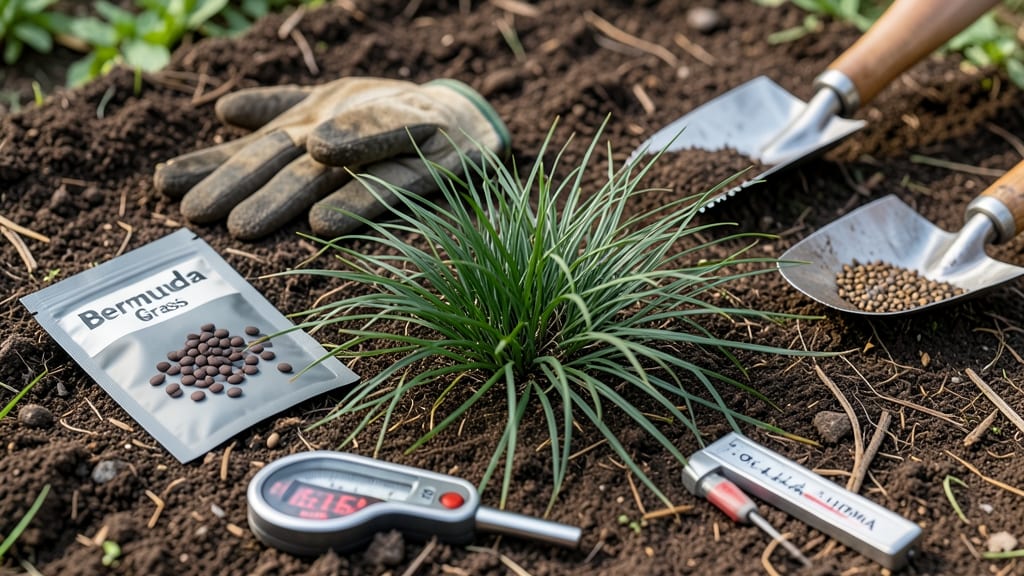
Planting Bermuda seed in Oklahoma after the last frost, when soil hits 65°F, is the key to beating the brutal summer heat and frost risks.
If you’ve ever watched your lawn turn crispy by July because you planted too early, you know timing matters more than seed quality. Bermuda grass thrives in heat but wilts if sown before the ground warms—or worse, gets hit by a late freeze.
In Oklahoma’s 6a–8a zones, the sweet spot is late May, when the soil is hot enough to kickstart germination but the worst heatwave hasn’t arrived yet. This window gives your grass a fighting chance to root deep before the dog days of summer.
Below, I’ll break down the exact dates by region, soil prep secrets for Oklahoma’s clay-heavy dirt, and how to keep your lawn lush even when the thermometer hits 100°F.
Best planting dates for Bermuda seed in Oklahoma’s climate zones
Oklahoma’s USDA zones 6a–8a create two distinct planting zones: the cooler northern half (like Tulsa and Oklahoma City) and the hotter southern half (like Lawton and Altus). The difference? Up to 3 weeks in ideal planting windows.
In the north, you can start as early as mid-April, while the south waits until late May to avoid early heat stress.
Bermuda grass needs soil temperatures of at least 65°F (18°C) to germinate. In Oklahoma, this typically happens between late April and early June, depending on your region. Planting too early risks frost damage, while planting too late means your grass won’t establish before summer drought hits.
Here’s the breakdown by region, including critical deadlines to avoid common pitfalls like heat shock or frost damage:
For fall planting, Oklahoma’s second window opens in late August to early September. This gives seedlings time to establish before the first frost, typically around November 15. Fall planting is ideal for southern Oklahoma, where summers are even more brutal.
Use a soil thermometer to confirm temperatures before planting. If your soil hasn’t reached 65°F, wait—even if the calendar says it’s time. Bermuda grass won’t germinate in cooler soil, and you’ll waste seed and money.
In northern Oklahoma, aim for late April to mid-May. The last frost usually passes by March 15, but soil may still be too cold. Test it: stick the thermometer in the ground at 4-inch depth in full sun for the most accurate reading.
If you’re in central Oklahoma (like Oklahoma City), the May 1–15 window is your best bet. This gives your grass 6–8 weeks to establish before the worst heat arrives. Water deeply twice daily for the first two weeks to keep soil moist.
For southern Oklahoma, don’t plant before late May. The ground heats up faster here, but the risk of 100°F+ days in June means your seedlings could bake before they sprout. Use shade cloth (30–50%) if planting in June to protect tender shoots.
Pro tip: If you miss the spring window, don’t despair—fall is your backup. Plant in late August for a second chance at a lush lawn. Just be ready to water daily until frost arrives.
Remember, Bermuda grass is drought-tolerant once established, but seedlings need consistent moisture. The first 30 days are critical—skimp on water, and your lawn will struggle to survive Oklahoma’s summer heat.
How to prepare Oklahoma soil for Bermuda seed success
Oklahoma’s clay-heavy soils can be a double-edged sword for Bermuda grass—too dense, and your seeds suffocate; too loose, and they dry out. The key is preparing the ground 4–6 weeks before planting to create the perfect balance of aeration, moisture, and nutrients.
Start by testing your soil pH—Bermuda thrives in a range of 5.8–6.5. If your soil is too alkaline (common in Oklahoma), amend it with sulfur or peat moss to lower the pH gradually.
Next, tackle weed competition, which steals moisture and nutrients from your seedlings. Use a non-selective herbicide like glyphosate 2–3 weeks before planting to kill existing weeds, then till the soil to 3–4 inches deep.
This breaks up compacted clay and creates a seed-friendly environment. For organic gardeners, hand-pull weeds and apply corn gluten meal as a pre-emergent.
🌱 Oklahoma Soil Prep Checklist for Bermuda Seed
- Test pH: Aim for 5.8–6.5 (use lime to raise, sulfur to lower)
- Tillage depth: 3–4 inches to break clay and improve drainage
- Weed control: Apply herbicide 2–3 weeks before planting
- Moisture balance: Water deeply 2 days before seeding to settle soil
- Fertilizer: Mix in starter fertilizer (16-4-8 NPK) at planting
⏰ Best timing: Complete prep 4–6 weeks before your regional planting window (e.g., late April for northern OK, late May for southern OK).
After tilling, rake the soil to create a fine, crumbly texture. Bermuda seeds are tiny, so a smooth surface helps them make contact with the earth. If your soil is still too compacted, mix in compost or aged manure to improve structure and fertility.
For clay-heavy areas, add sand or perlite to enhance drainage—Bermuda grass hates soggy roots.
Moisture is critical in Oklahoma’s unpredictable climate. Water the prepared soil deeply 2 days before planting to settle it and create ideal seedbed conditions. Avoid overwatering, which can lead to crusting—this creates a hard barrier that prevents seeds from sprouting.
Instead, aim for 1–1.5 inches of water per week during the establishment phase.
Finally, apply a starter fertilizer with a high nitrogen content (16-4-8 NPK) at planting time. This gives your Bermuda grass a nutrient boost to outcompete weeds and establish quickly.
Work the fertilizer into the top 1–2 inches of soil before scattering seeds. For large lawns, use a drop spreader for even coverage.
Pro tip: If your Oklahoma soil is particularly alkaline (pH >7.0), consider planting Bermuda grass varieties like 'Tifway 419', which tolerate higher pH levels better than others.
Just remember—consistent soil prep is the foundation of a thick, heat-resistant Bermuda lawn. Skip these steps, and you’ll fight weeds and poor germination all summer.