
Plants
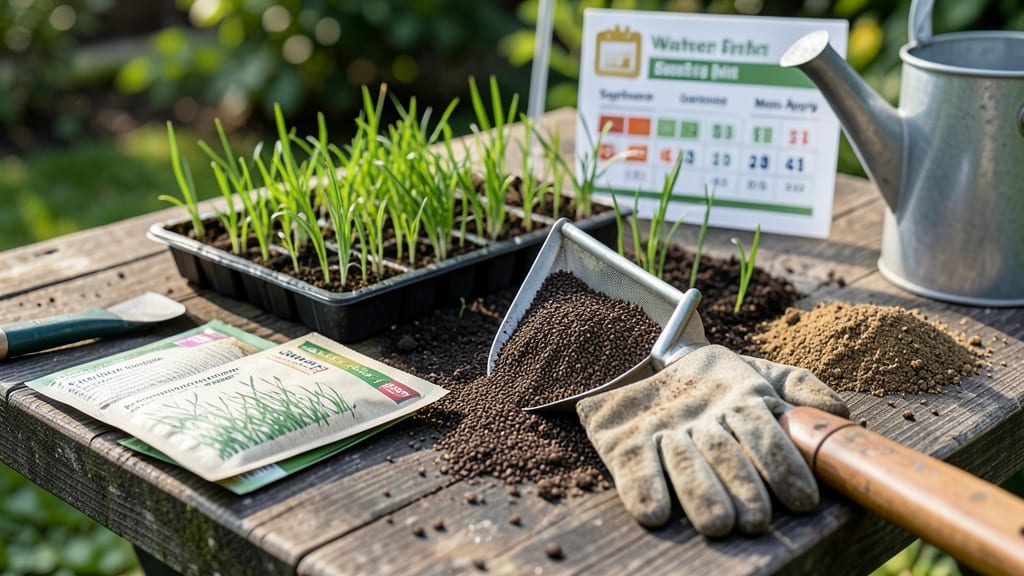
The best time to plant grass seed in Maryland is early fall or late summer—when soil stays warm enough for germination but won’t bake under summer’s heat or freeze before roots take hold.
Maryland’s unpredictable climate can make grass seed germination a gamble—unless you plant at the perfect window. Timing isn’t just about avoiding frost; it’s about soil warmth, moisture balance, and avoiding summer’s scorching heat. Get this wrong, and your lawn could struggle for years.
For Maryland’s USDA zones 6b-7a, the ideal planting window spans March through April and September through October, when temperatures hover between 55°F and 75°F—sweet spots for cool-season grasses like Tall Fescue and Kentucky Bluegrass.
Below, I’ll break down the exact timing by region, soil prep secrets for Maryland’s clay-heavy soils, and how to keep your new grass thriving through Maryland’s humid summers and frosty winters.
Maryland’s ideal grass seed planting windows: cool-season timeline explained
Maryland’s climate—with its humid summers and chilly winters—demands precise timing for grass seed germination. The cool-season grasses that thrive here (like Tall Fescue and Kentucky Bluegrass) need moderate soil temps between 55°F and 75°F to sprout successfully.
Plant too early, and frost will kill seedlings; too late, and summer heat will stress them. I’ve learned the hard way—skipping this window can leave your lawn patchy for years.
Maryland spans USDA Zones 6b-7a, meaning Northern Maryland (near Frederick or Hagerstown) gets colder winters than Southern Maryland (near Annapolis or Calvert County). This creates microclimate variations that shift planting windows by 2-3 weeks.
For example, Baltimore’s urban heat island delays frost, while the Eastern Shore faces earlier freezes. Understanding these shifts is key to success.
🌱
Let’s break down the two prime windows for Maryland lawns. The first is early fall—my top recommendation—because soil stays warm while humidity rises, creating ideal germination conditions. I’ve seen Tall Fescue sprout in just 7-10 days when planted in September, compared to 3 weeks in spring.
The second window is late summer, but only for Southern Maryland where heat lingers longer.
For Northern Maryland (USDA Zone 6b), aim to plant by October 1st to give seedlings 6-8 weeks to root before frost. In Baltimore City, urban heat can push this window 2 weeks later—so check your local first frost date (typically November 15th).
I always verify with the Maryland Department of Agriculture’s frost maps to avoid surprises.
If you’re in Western Maryland (like Hagerstown), your soil cools faster due to higher elevation. Plant Kentucky Bluegrass here by September 1st to ensure it establishes before first frost. I’ve noticed that Perennial Ryegrass—a faster germinator—works better in these areas because it tolerates cooler temps than other varieties.
Summer planting is risky but possible in Southern Maryland (like Calvert County) if you start in early September. The key is daily watering—I use a soaker hose set to 15 minutes twice daily until germination.
Without this, seedlings bake in the heat and fail. Even then, summer-planted grass may struggle to outcompete weeds come spring.
One mistake I see often? Planting based on calendar months instead of soil temperature. Use a soil thermometer ($10 at garden centers) to confirm temps are in the 60°F-75°F range.
If your soil is below 55°F, wait—even if it’s September. I’ve had seedlings rot in 60°F soil because cold ground slows microbial activity, preventing proper decomposition of thatch.
Maryland’s microclimates also play a role. Coastal areas (like Annapolis) have milder winters and can plant 2 weeks later than inland spots. Meanwhile, Baltimore’s urban heat island can make late-summer planting viable where it wouldn’t be in the countryside.
Always adjust your timing based on your specific location’s frost data.
Pro tip: If you miss the fall window, don’t despair—early spring (after April 15th) is your second chance. Just be prepared to protect seedlings with row covers if nights dip below 40°F. I’ve revived patchy lawns this way, though fall planting always yields thicker, healthier grass
How to prepare your Maryland lawn for grass seed success: soil, Weather, and pre-planting checks
Before you even think about scattering grass seed across your Maryland lawn, preparation is the secret weapon that separates a thin, patchy lawn from a lush, green carpet.
Maryland’s unique climate—with its clay-heavy soils on the Eastern Shore and urban heat islands in Baltimore County—demands extra attention to soil health, moisture balance, and weed control.
Skipping these steps is like planting seeds in a dry, compacted desert—no matter how good the seed, germination will fail. I’ve seen too many homeowners rush this phase only to watch their $50 seed investment go to waste because they didn’t prep the soil properly. Let’s fix that.
Planting grass seed in Maryland during the wrong window—or without proper prep—can lead to:
- Slow germination from clay soil (common in Eastern Shore)
- Fungal diseases from overwatering in Baltimore’s humidity
- Weed takeover if you don’t kill existing weeds first
Start with a soil test kit (available at local garden centers for under $20). Maryland’s clay soils often need gypsum or compost to improve drainage, while sandy soils in Western MD may require organic matter to retain moisture.
Aim for a pH between 6.0 and 7.0—most grass seeds struggle outside this range.
Next, tackle weeds and thatch. Use a non-selective herbicide (like glyphosate) on bare spots 2 weeks before planting, or opt for manual removal if you prefer organic methods. For thatch layers over ½ inch, rent a dethatcher to prevent smothering new seedlings.
Pro tip: Aerate compacted clay soil in late summer or early fall—this opens up pores for roots and improves water absorption.
Timing your prep is just as critical as planting. Aerate and overseed in one pass during cool-season windows (March-April or September-October), but avoid working wet clay soil—it turns to mud and compacts further.
For Baltimore’s urban heat islands, water deeply in the early morning to combat evaporation, while Eastern Shore homeowners should focus on drainage improvements to prevent waterlogging.
Finally, check your lawn’s readiness with this quick diagnostic:
- ✅ Soil temp: 55°F+ (use a soil thermometer)
- ✅ Moisture: Damp but not soggy (stick test: if water beads, wait)
- ✅ Weeds: No regrowth after herbicide treatment
- ✅ Weather: No rain in forecast for 24-48 hours
With these steps, your Maryland lawn will have the perfect foundation for grass seed to thrive, no matter if you’re battling clay soil, urban heat, or humidity. The key? Prep like a pro—your future lawn will thank you. 🌱