
Plants
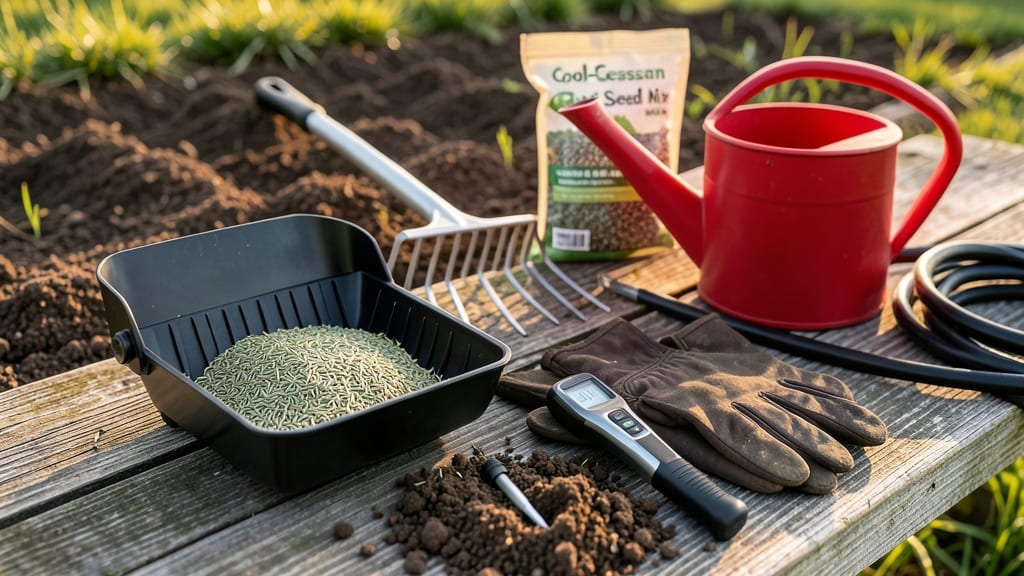
Planting grass seed in Maryland spring means timing it right to beat frost and heat—aim for mid-March through early May, when soil warms to 50°F+ and nights stay reliably above freezing.
Timing your grass seed planting in Maryland’s unpredictable spring can mean the difference between a lush lawn and wasted effort—get it wrong, and frost or heat will sabotage your hard work.
Maryland’s USDA Zones 7a–8a stretch from Baltimore’s cooler north to the warmer Eastern Shore, so your exact window shifts by 2–3 weeks depending on location.
Below, I break down the frost-free window by zone, soil prep secrets, and how to stretch your planting season with mulch or frost cloth—so your grass gets a strong start before summer arrives.
Maryland’s frost-free window for planting grass seed by USDA zone
Maryland’s spring weather is famously fickle—one day you’re planting grass seed, the next you’re shoveling snow. To succeed, you need to plant cool-season grass seed (like Kentucky bluegrass or tall fescue) when the soil warms to 50°F+ but before summer’s brutal heat sets in.
The USDA Zones 7a–8a across Maryland create subtle but critical timing differences, with northern counties (like Baltimore) needing to act earlier than southern regions (like Annapolis).
Your frost-free window typically opens in late March to mid-April, but exact dates depend on your zone. Planting too early risks frost damage, while waiting too long invites weeds or heat stress.
The key is balancing soil temperature, last-frost averages, and rainfall patterns—all of which vary by county. Let’s break it down by zone so you can choose the perfect week to sow your seed.
⚠️ PRO TIP: Always check the National Weather Service for your local last-frost date—it can shift by 1–2 weeks yearly. For example, USDA Zone 7a (western Maryland) might see its last frost on April 10, while Zone 8a (eastern shore) often waits until April 20. Plant 4–6 weeks before your average last frost for the best results.
If you’re in USDA Zone 7a (think Frederick or Hagerstown), your window opens earliest—aim for mid-March to early April.
The soil should stay above 50°F for 5+ days before planting, and you’ll want to finish by April 10 to avoid late frosts. Cool-season grasses like tall fescue thrive in these conditions, but warm-season grasses (like Bermuda) should wait until late May in this zone.
For Zone 7b (Baltimore, Annapolis), you’ve got a slightly later window—late March to mid-April. This zone often sees its last frost around April 15, so don’t rush. Kentucky bluegrass is a top pick here because it tolerates Maryland’s humidity and foot traffic.
If you plant too early, a late frost can kill tender seedlings, while waiting too long risks crabgrass invasion.
Southern Maryland’s Zone 8a (Calvert, St. Mary’s) enjoys the latest frost-free dates, with planting ideal from late March to early May. The soil warms faster here, and warm-season grasses like Bermuda or Zoysia can be sown as late as late May.
However, for cool-season grasses, stick to the March–April window to ensure strong root establishment before summer heat arrives.
One common mistake Maryland gardeners make is planting too early. If you sow grass seed in February, your seedlings might sprout only to be fried by a 20°F night. Always use a soil thermometer to confirm temperatures are stable at 50°F+ for at least a week.
If you’re unsure, err on the side of waiting—April planting is always safer than a February gamble.
Don’t forget to test your soil pH before planting! Maryland’s clay-heavy soils often need lime to raise pH (ideal range: 6.0–7.0 for most grasses). A quick $20 soil test kit from your local extension office can save you from patchy growth.
Once your soil is prepped, rake lightly to create a fine seedbed—this ensures good seed-to-soil contact, which is critical for germination.
After sowing, water deeply twice daily (morning and evening) for the first 2 weeks to keep the soil consistently moist. Avoid overhead sprinklers, which can wash away seed.
Once seedlings reach 3–4 inches, you can transition to deep, infrequent watering (1–1.5 inches per week). This encourages deep root growth, making your lawn more drought-resistant.
If you miss the spring window, don’t despair—early fall (September) is the second-best time to plant grass seed in Maryland. Just repeat the same steps: test soil, rake, sow, and water. Your lawn will thank you for the timing! 🌱
3 Critical factors that determine the best planting time in Maryland
Maryland’s spring weather swings wildly—one day it’s 50°F and sunny, the next it drops back to 35°F with frost. To plant grass seed successfully, you need to nail three key factors: soil temperature, rainfall patterns, and weed competition.
Each one shifts your ideal planting window by weeks, especially when choosing between cool-season (like Kentucky bluegrass) and warm-season (like Bermuda) varieties.
For example, cool-season grasses thrive when soil hits 50°F–60°F, while warm-season types wait until 65°F+. In Maryland, this means northern zones (like Baltimore) plant in late March–April, while southern areas (like the Eastern Shore) can start as early as February or push to May.
Miss these cues, and your seedlings either freeze or bake in the heat.
- Soil Temperature: Aim for 50°F+ for cool-season grasses (e.g., Kentucky bluegrass) or 65°F+ for warm-season types (e.g., Zoysia). Use a soil thermometer—Maryland’s northern zones hit 50°F by mid-April, while southern zones reach it by late March.
- Rainfall Patterns: Plant when 1–1.5 inches of rain is forecast weekly. Maryland’s spring showers peak in April, but droughts can hit May. If rain fails, water daily for 2 weeks to keep seeds moist.
- Weed Competition: Weeds like crabgrass and dandelions sprout aggressively in May–June. Plant 4–6 weeks before their peak to give grass a head start. Pre-emergent herbicides can help, but apply them after seeding.
- Cool-Season vs. Warm-Season: Cool-season grasses (e.g., fescue) thrive in Maryland’s spring/fall, while warm-season (e.g., centipede) wait for summer heat. Mixing types? Plant cool-season in spring and warm-season in late spring.
Let’s dive deeper into soil temperature. Maryland’s USDA Zones 7a–8a mean soil warms unevenly—northern areas (like Frederick) often need to wait until after April 15 to avoid frost, while southern areas (like Annapolis) can start by March 15.
A simple trick? Press your hand into the soil: if it feels warm to the touch (not cold), it’s ready for cool-season grass.
Don’t overlook rainfall patterns, either. Maryland’s spring is unpredictable—one year you’ll get 6 inches of rain in April, the next you’ll need to supplement with drip irrigation.
Check the National Weather Service for your county’s 30-day forecast before planting. If drought looms, opt for drought-tolerant varieties like tall fescue or adjust your schedule to fall planting.
Finally, weed competition can derail your lawn before it even starts. Weeds like henbit and chickweed germinate in cool, moist soil—just like grass seeds. To outpace them, apply a pre-emergent herbicide 2 weeks after seeding (once grass is 1 inch tall).
For organic control, hand-pull weeds when soil is damp and cover bare spots with mulch.
Pro tip: If you’re torn between spring and fall planting, remember—Maryland’s fall window (September) often yields thicker grass because weeds are dormant and soil stays warm longer. But if you’re committed to spring, late April is your sweet spot for most of the state.