
Plants
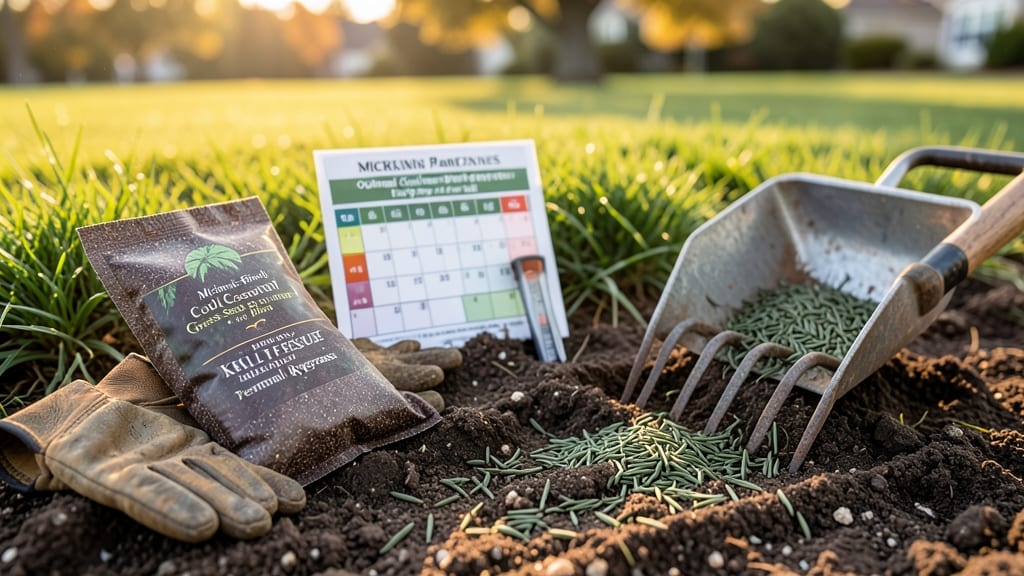
You can plant grass seed in Michigan once soil temperatures stay above 50°F for at least a week, typically between mid-April and early May for spring or late August to early October for fall.
Michigan’s unpredictable spring and fall weather can make timing your grass seed planting a real challenge—plant too early and risk frost damage, too late and miss optimal germination.
For fast germination, focus on USDA zones 5b-6b, where soil warms quicker in southern regions like Detroit but stays cooler in the Upper Peninsula. Fall planting often works better because cooler air helps seeds establish before winter.
Below, I break down the exact frost-free windows, soil prep tricks, and the best grass seed varieties for Michigan’s climate—so you can skip the guesswork and get a lush lawn in record time.
Michigan grass seed planting calendar by USDA hardiness zones (5-6)
Michigan’s USDA Zones 5b and 6a create distinct planting windows for grass seed, where timing directly impacts germination success. In Zone 5b (northern Michigan), cooler temperatures demand earlier fall planting, while Zone 6a (southern Michigan) offers slightly more flexibility.
Both zones share a critical rule: soil temperatures must stay above 50°F (10°C) for 7-10 days before planting—this threshold separates success from failure.
Fall planting in Michigan often outperforms spring efforts because cooler air temperatures reduce evaporation stress while warm soil fuels root growth. However, planting too late risks winter dormancy before seeds establish.
For spring plantings, aim to finish 4-6 weeks before the last frost date (typically mid-April in Zone 6a, early May in Zone 5b) to avoid frost damage to tender seedlings.
Comparison Table: Michigan Grass Seed Planting Windows by Zone
| Zone | Ideal Planting Window | Soil Temp Threshold | Last Frost Date | First Frost Date | Key Risk |
|---|---|---|---|---|---|
| Zone 5b (Northern MI) | Early Sept–Mid-October (Fall) or Early May (Spring) | 50–60°F (10–15°C) | Early May | Mid-October | Early frost in fall |
| Zone 6a (Southern MI) | Mid-Sept–Early Nov (Fall) or Late April (Spring) | 50–65°F (10–18°C) | Mid-April | Late October | Heat stress in late summer |
In Zone 5b, the 6-week window between mid-September and early November is your best bet for fall planting. Soil remains warm enough for germination (50–60°F) while daytime highs drop below 75°F, reducing seed desiccation.
For spring, wait until soil temperatures consistently stay above 50°F—typically early May—before sowing. Northern Michigan’s shorter growing season means rushing spring plantings often leads to frost-killed seedlings.
Zone 6a gardeners enjoy a 7-week fall window (mid-September to early November) and can start spring plantings as early as late April, provided soil temperatures exceed 50°F. The extended fall window in southern Michigan allows seeds to establish deeper roots before winter, while spring plantings benefit from longer daylight hours that accelerate growth.
However, planting after mid-October in Zone 6a risks seeds germinating too late to develop robust root systems before frost.
Soil temperature is your most critical factor—never rely on air temperature alone. Use a soil thermometer to verify conditions: 50°F (10°C) is the minimum for germination, but 60–65°F (15–18°C) is ideal.
In Zone 5b, morning soil temps can drop below 50°F even when afternoons feel warm, creating a false planting window. Always check late afternoon temperatures (3–5 PM) for the most accurate reading.
Another key difference between zones: Zone 6a’s longer frost-free season allows for late summer overseeding (August) if your lawn suffers from heat stress. In Zone 5b, late summer plantings are high-risk due to shorter daylight and cooler soils.
For both zones, avoid planting when daytime highs exceed 85°F—this causes seed desiccation and poor germination, even with adequate watering.
Pro tip: Test your soil’s moisture retention before planting. Michigan’s clay-heavy soils in Zone 5b often require sand or compost amendments to prevent waterlogging, while Zone 6a’s sandy soils may need organic matter to retain moisture.
Aim for 1 inch of water per week after planting, split into two morning sessions to reduce evaporation and fungal risks.
Remember: Fall planting in Michigan almost always outperforms spring due to cooler air temperatures and consistent soil moisture. If you miss the fall window, spring is your second chance—but act fast once soil warms.
Use this zone-specific calendar to align your planting with Michigan’s climate, and you’ll be rewarded with a thicker, greener lawn in just 3–4 weeks. 🌱
5 Critical factors that determine the best planting time in Michigan
Timing your grass seed planting in Michigan isn’t just about checking a calendar—it’s about understanding five key variables that make or break germination. First, soil temperature is your #1 indicator: seeds need soil at 50°F or warmer for at least a week before planting.
In southern Michigan, this usually means waiting until mid-April, while northern regions may need to wait until early May.
Next, frost dates dictate your planting window. Michigan’s last frost typically arrives between mid-April and early May, but this shifts dramatically across regions. For example, Detroit’s frost-free date is April 15, while Traverse City holds out until May 10. Planting too early risks killing tender seedlings.
- Soil Temperature: Wait until soil reaches 50°F+ for 7+ days (use a soil thermometer). Southern MI: mid-April; Northern MI: early May.
- Frost Dates: Plant 4-6 weeks before first frost (late August-early October for fall). Check your USDA zone (5b-6b) for exact dates.
- Rainfall Patterns: Aim for 1 inch of water weekly after planting. Fall planting benefits from Michigan’s cooler, wetter air in September-October.
- Shade Exposure: Full sun (6+ hours) is ideal, but shady lawns need fine fescue varieties that tolerate 3-6 hours of sun.
- Microclimates: Urban areas (like Ann Arbor) warm faster than rural spots. Use frost cloth to extend spring planting by 2-3 weeks if needed.
Don’t overlook rainfall patterns, which can make or break your lawn’s success. Michigan’s fall planting window (late August to early October) often works better than spring because cooler temperatures reduce evaporation, and the ground stays moist longer.
Aim for 1 inch of water weekly—either from rain or irrigation—to keep seeds hydrated during germination.
Shade exposure is another game-changer. Most grass varieties thrive in full sun (6+ hours daily), but if your yard has partial shade, opt for fine fescue or Kentucky bluegrass mixes, which tolerate 3-6 hours of sun. Test your lawn’s light levels in late afternoon when shadows are longest to plan seed placement.
Finally, leverage Michigan’s microclimates to your advantage. Urban areas like Detroit or Grand Rapids warm up faster than rural or northern regions, giving you a 2-3 week head start on planting.
Conversely, the Upper Peninsula may need to wait until early June for safe spring planting. Use frost cloth to extend your window by protecting seedlings from unexpected late frosts.
Pro tip: Combine these factors with a soil test to check pH (ideal: 6.0-7.0) and amend with compost or lime if needed. The right timing + soil prep = a lawn that establishes 30% faster than average Michigan yards. 🌱