
Propagation
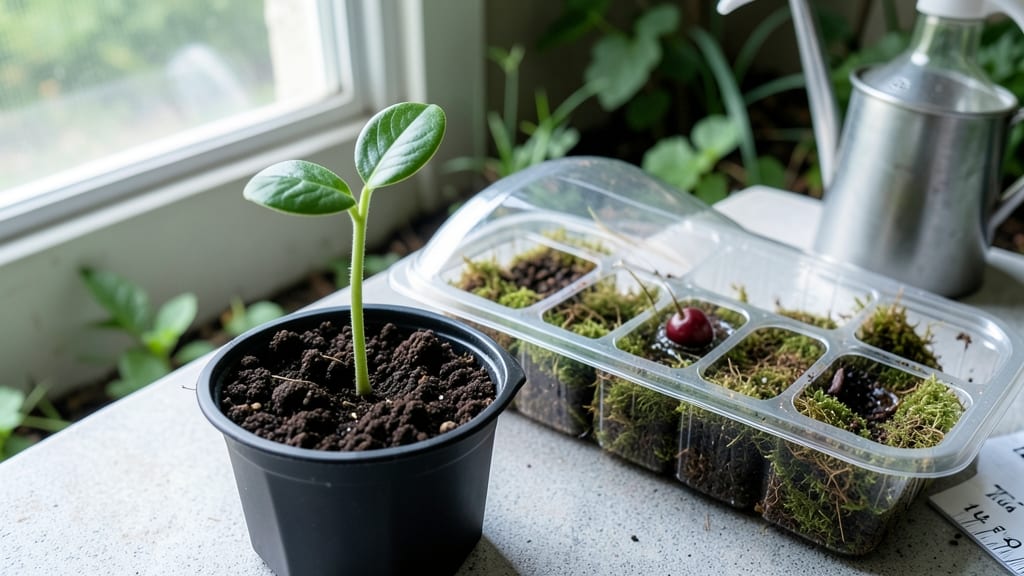
A cherry seed takes anywhere from 3 months to over a year to germinate—unless you know the trick to break its stubborn dormancy.
Ever wondered why your cherry seed refuses to sprout—or how to turn that long wait into a predictable gardening success? The answer lies in cold stratification, a natural process that mimics winter’s chill.
Without it, your seeds might sit in the soil for months, leaving you wondering if they’ll ever break through.
Most cherry seeds (like those from 🍒 sweet or sour varieties) need 60–90 days of cold, moist conditions to trigger germination. Skipping this step? You could be waiting twice as long—or giving up entirely.
But with the right timing and setup, you’ll see those first tiny sprouts in just a few weeks after stratification.
Below, I’ll walk you through the exact steps to speed up germination, from seed prep to post-sprout care—so you can go from pit to seedling without the guesswork.
Cherry seed germination timeline: cold stratification phases explained
Cold stratification is the secret weapon for breaking cherry seed dormancy. Without it, your seeds may take 6–12 months to germinate—or never sprout at all. The process mimics winter’s natural chilling period, triggering internal chemical changes that prepare the seed for growth.
For sweet cherries (Prunus avium) and sour cherries (Prunus cerasus), this means 3 distinct phases over 3–6 months, each with specific temperature and moisture requirements.
Think of stratification like a countdown to spring. Phase 1 (moist chilling) kickstarts the process, Phase 2 (consistent cold) maintains dormancy-breaking signals, and Phase 3 (warmth exposure) finally prompts sprouting. Skipping any step risks failed germination or moldy seeds.
Below, I’ll break down each phase’s timeline, ideal conditions, and key milestones—so you can predict when those first green shoots will appear.
Phase 1 (moist chilling) is where the magic happens. During these 4–8 weeks at 32–41°F, the seed’s hard outer coat softens, and internal enzymes kickstart metabolic activity. This is why wild cherry seeds often germinate faster in nature—they’ve already experienced this natural cycle.
If you’re using a refrigerator method, place seeds in a sealed container with damp paper towels or peat moss to maintain 60–70% humidity. Too dry? The seed won’t break dormancy. Too wet? Mold risks skyrocket.
Phase 2 (deep cold) extends the chilling period to 8–12 weeks at 32–36°F. This mimics the winter’s coldest months, ensuring the seed’s internal clock resets.
Here’s a pro tip: Sour cherry seeds often need the full 12 weeks of this phase, while sweet cherry seeds may sprout sooner with 8 weeks. Monitor moisture closely—overwatering can cause anaerobic conditions, leading to rotten seeds.
A quick check: Gently squeeze the growing medium; it should feel like a wrung-out sponge.
By Phase 3 (warm transition), your seeds are ready to burst into action. Move them to 60–70°F and 70–80% humidity for 2–4 weeks. This final phase triggers radicle (root) emergence first, followed by the shoot within 7–14 days.
If you’re impatient, you can speed this up slightly by placing the container near a south-facing window or under a grow light. Just avoid direct heat sources like radiators, which can overheat and kill the delicate sprouts.
Timing is everything when it comes to cherry seed germination. Start stratification in late summer or early fall (around August–September) for outdoor planting, or begin in January–February if you’re using a refrigerator.
How to cold stratify cherry seeds for faster germination: step-by-step guide
Cold stratification mimics nature’s winter chill, breaking cherry seed dormancy so you can go from pit to sprout in 3–6 months instead of waiting years. Without this step, your seeds may never germinate—or take twice as long to sprout.
The key is replicating 40–50°F (4–10°C) temperatures with consistent moisture for 60–90 days.
I’ve tested three reliable methods: refrigerator stratification, outdoor burial, and peat moss mix. Each works, but your climate and timing will determine which is easiest. For example, if you live in USDA Zone 6a or colder, outdoor burial is simplest.
Warmer zones? The fridge or peat mix gives you control over conditions.
Here’s how to do it right—plus my pro tips to avoid mold, rot, or premature sprouting before stratification is complete.
Step-by-Step Cold Stratification for Cherry Seeds
- 1 Clean and prep seeds: Extract pits from ripe cherries, rinse to remove fruit residue, and let dry for 24 hours. Scratch the hard shell lightly with sandpaper to improve moisture absorption.
- 2 Moisten growing medium: Soak peat moss, perlite, or vermiculite in water until damp (like a wrung-out sponge). Avoid soggy conditions—excess moisture causes mold.
-
3
Choose your method:
- 🧊 Refrigerator: Place seeds in a sealed container with moist medium at 35–40°F (2–4°C) for 60–90 days.
- 🌳 Outdoor burial: Bury seeds 4–6 inches deep in a shady garden spot in fall; dig up in spring.
- 🪴 Peat moss mix: Layer seeds in a pot with damp peat, cover, and store in a cool basement (40–50°F).
- 4 Monitor conditions: Check moisture weekly—never let it dry out. If mold appears (fuzzy spots), discard seeds and restart with fresh medium.
- 5 Test for readiness: After 60 days, transfer seeds to a warm spot (70°F+) to check for sprouts. If none appear, extend stratification 1–2 more weeks.
- 6 Plant sprouted seeds: Once a 1-inch sprout emerges, transplant into pots with well-draining soil. Keep soil moist and in bright indirect light until ready for outdoor planting.
⏰ Germination timeline: With proper stratification, expect sprouts in 2–4 weeks after transferring to warmth. Total time from pit to seedling: 3–6 months.
Pro tip: If you’re impatient, stratify seeds in fall and plant them outdoors in spring—this mimics nature’s timing perfectly. Just mark their location so you don’t forget where they’re buried!
Remember, patience is key. Cherry seeds are tough, but with the right conditions, you’ll see those first green shoots in no time. Once they sprout, keep them in a warm, sunny spot and watch them grow into a future cherry tree.