
Propagation
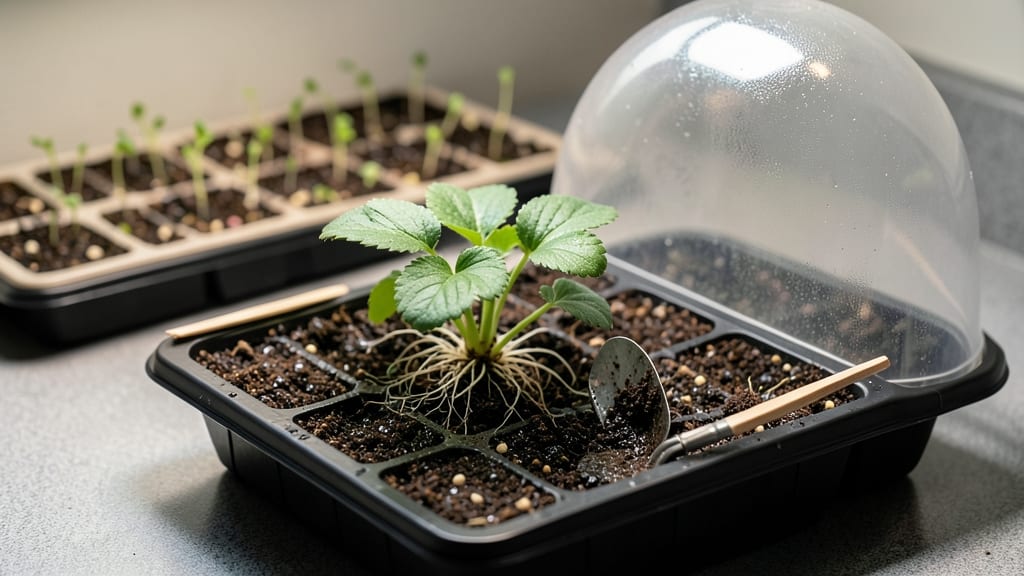
The five stages of strawberry seed germination 🍓 are where patience and precision meet—because tiny seeds hold big potential, but only if you give them the right conditions.
Struggling to get your strawberry seeds to sprout consistently? Temperature plays a critical role in germination success—knowing the exact stages and timelines can mean the difference between thriving plants and wasted seeds.
From the first moment seeds absorb moisture to the day they’re ready for transplanting, each phase demands specific care. Too hot or too cold, and you risk mold, rot, or seeds that simply refuse to wake up.
Here’s what happens week by week, how to troubleshoot delays, and the ideal conditions to coax those first green shoots—so you can go from seed to harvest with confidence.
5 Critical stages of strawberry seed germination with exact temperature requirements
Growing strawberries from seed is incredibly rewarding, but the germination process can feel like a mystery—especially when seeds take longer than expected to sprout. The truth? Temperature control is the single most influential factor in each stage of strawberry seed germination.
I’ve learned through trial and error that even a 5°F difference can mean the difference between fast, healthy sprouts and weeks of waiting. Let’s break down the five critical stages and the exact temperature ranges that optimize each one.
First, it’s essential to understand that strawberry seeds are tiny and delicate. Unlike runners or bare-root plants, seeds require precise conditions to break dormancy. The ideal germination temperature range for strawberries is 60-85°F, but each stage has its own sweet spot.
Too cold, and seeds may never sprout; too hot, and they can rot before emerging. I’ll walk you through each phase, including how to troubleshoot slow germination and what to watch for at every step.
| Stage | Temperature Range (°F) | Timeframe | Key Visual Cues | Troubleshooting Tips |
|---|---|---|---|---|
| 1. Imbibition | 60-75°F | 1-3 days | Seed swells slightly, turns darker | Keep soil moist; avoid flooding |
| 2. Radicle Emergence | 70-75°F | 3-7 days | White root appears, breaks seed coat | Use a heat mat if below 65°F |
| 3. Hypocotyl Elongation | 75-85°F | 5-10 days | Shoot pushes upward, hooks toward light | Provide grow lights if natural light is weak |
| 4. Cotyledon Development | 65-75°F | 7-14 days | Two small leaves unfurl, green and round | Thin seedlings if overcrowded |
| 5. True Leaf Formation | 60-70°F | 10-21 days | Third leaf appears, serrated edges | Hardening off before transplanting |
The first stage, imbibition, is where seeds absorb moisture and swell. This happens most efficiently between 60-75°F. If your seeds aren’t sprouting within 3 days at this stage, check your soil moisture—it should feel like a damp sponge, not soggy.
I once left my seeds in cold basement conditions (55°F), and they took 10 days just to imbibe. The lesson? Use a seedling heat mat if your home runs cooler than 65°F.
Next comes radicle emergence, where the tiny root (radicle) breaks through the seed coat. This is the most temperature-sensitive stage, thriving at 70-75°F. If your seeds aren’t sprouting within 7 days, they may be struggling due to low temperatures or poor seed viability.
Test a few seeds in a warm, humid environment (like a sealed plastic bag with a heat mat) to see if they respond. This stage is also where fungal issues can arise if the soil stays too wet.
During hypocotyl elongation, the shoot pushes upward toward light. This phase loves warmer conditions (75-85°F), which is why many gardeners use grow lights or place trays on sunny windowsills. If your
Germination timeline comparison: fastest vs. slowest conditions for strawberry seeds
Strawberry seeds can take anywhere from 5 to 30+ days to germinate, depending on your growing conditions. The biggest factors? Temperature and humidity—get these right, and you’ll see sprouts in under two weeks. Miss the mark, and you might wait a month or face moldy seeds instead.
For fastest results, aim for 75-85°F with consistent moisture—this combo cuts germination time to 5-14 days. But drop below 60°F or let soil dry out, and you’re looking at 14-30+ days of waiting (or worse, failed germination). Let’s break down the extremes so you can optimize your setup.
At 75-85°F, strawberry seeds absorb moisture quickly and break dormancy in just 3-7 days.
Pair this with a humidity dome or plastic wrap, and you’ll see radicle emergence (tiny root growth) within a week. Light, airy soil (like a 50/50 mix of peat moss and perlite) also speeds things up by preventing suffocation.
On the flip side, cold soil (below 60°F) slows metabolism, extending germination to 21-30+ days. Seeds may even rot if moisture lingers in chilly conditions.
High humidity (90%+) without airflow creates the perfect storm for fungal mold, while dry soil (below 50% moisture) causes seeds to shrivel before sprouting.
Pro tip: Use a seed heating mat ($15-$25) to maintain 75-80°F—this shaves 5-7 days off germination time. For humidity, a simple spray bottle (mist seeds daily) works better than soaking, which can drown them. Monitor closely: overwatering is the #1 killer of slow-starting seeds.
If your seeds take longer than 21 days, check for these red flags: damp soil (mold risk), hard seeds (may need scarification), or old seeds (viability drops after 6 months). Adjust your setup and give them another 10-14 days—patience pays off with healthy, vigorous sprouts.