
Propagation
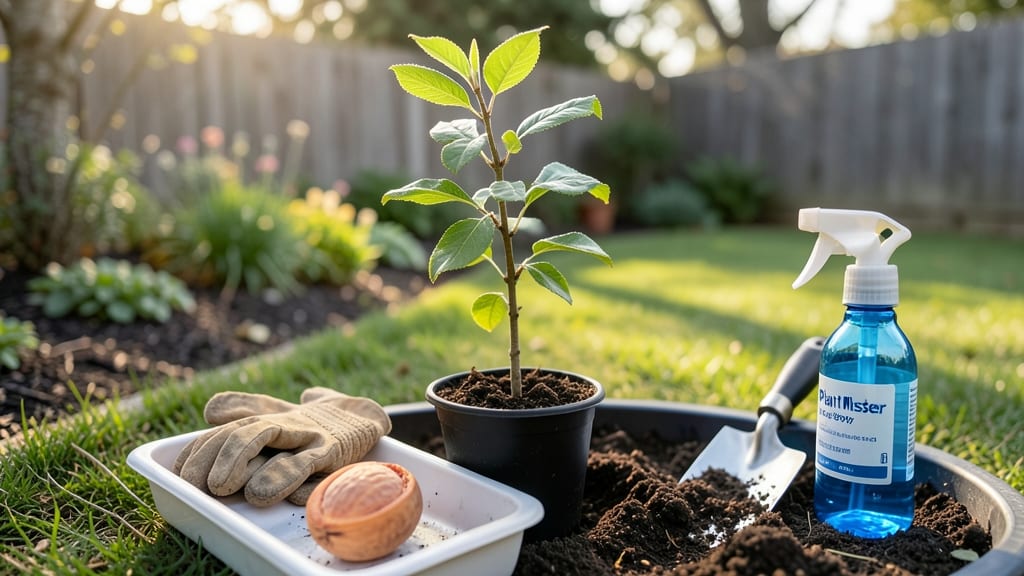
Growing a peach tree from seed takes 2 to 5 years to bear fruit, but the journey starts with a 2–4 week germination period that sets the foundation for everything that follows.
Ever wondered if that peach pit in your fruit salad could sprout into a tree? The answer is yes—but it requires patience, the right conditions, and a clear understanding of each growth stage.
Without knowing what to expect, you might give up too soon or miss critical care steps that make the difference between a thriving sapling and a failed experiment.
Most gardeners assume peach seeds will sprout quickly, only to be disappointed when weeks pass without progress. The truth? Germination depends on factors like soil temperature, moisture, and even how you pre-treat the seed.
A little preparation can cut that initial wait time by half, while skipping key steps might leave you staring at a tray of stubborn pits.
In this guide, I’ll walk you through the exact timeline for each growth phase—from the first crack in the seed coat to the day your tree finally produces fruit.
You’ll also discover how to troubleshoot delays, avoid common pitfalls, and decide whether seed-grown trees are worth the wait compared to grafting for faster results.
Peach seed germination timeline: Week-by-Week growth stages
Understanding the peach seed germination timeline transforms a guessing game into a predictable process. From the moment you crack open that pit to the day your seedling emerges, each stage has specific needs that determine success.
Most seeds take 2 to 4 weeks to sprout, but proper preparation can cut that time in half—while neglecting key steps might leave you waiting months.
The journey begins with seed stratification, a critical cold treatment that mimics winter conditions. Without this step, your peach pit could sit dormant for months or never sprout at all.
Think of it as waking up a seed from hibernation—just like how a tree needs winter to prepare for spring growth.
Once stratified, the real action starts. Weeks 1 through 4 are where most of the magic happens, with root development and shoot emergence marking the biggest milestones. Each phase requires precise care, from maintaining 60-70°F soil temperatures to keeping moisture consistent without drowning the seed.
Here’s what to expect at each stage, along with the exact conditions that make or break your success:
Week 1 marks the critical germination window where your seed either wakes up or stays dormant. During this time, the radicle (primary root) emerges first, followed by the shoot breaking through the soil surface.
This is when most gardeners see their first sign of life—but it’s also when failure is most likely if conditions aren’t perfect.
By Week 2, you should see the cotyledons (seed leaves) unfurling. These aren’t true leaves but serve as the seedling’s first energy source. This stage is your cue to introduce bright indirect light (no direct sun yet) and maintain consistent moisture. Overwatering now can cause rot, while underwatering stunts growth.
Weeks 3-4 bring the most visible progress as true leaves appear, indicating the seedling is photosynthesizing independently. This is when you can gradually introduce direct sunlight for 4-6 hours daily.
The seedling’s root system also expands rapidly—now’s the time to ensure your container has drainage holes or your garden bed is well-aerated.
Most peach seedlings are ready for transplanting outdoors by Week 6-8, once they’ve grown 3-4 inches tall with at least 4 true leaves. Hardening off (acclimating to outdoor conditions) over 7-10 days prevents shock.
Remember: Seed-grown trees may take 2-5 years to bear fruit, but proper early care determines whether they’ll survive that long.
One common misconception is that peach seeds will grow into fruit-bearing trees as quickly as store-bought saplings. The reality? Seedlings often produce small, poor-quality fruit (if any) because they’re not true to the parent variety.
For reliable peaches, grafting is the professional’s choice—but understanding this timeline helps you decide whether to experiment or invest in a grafted tree.
🌱 Whether you’re growing peaches for the challenge or future orchards, tracking these stages ensures you don’t miss critical care moments. The first year is about building strong roots and structure—patience pays off when your tree finally blooms.
Factors that speed up or slow down peach seed germination
Peach seed germination can take anywhere from 2 to 6 weeks, but several key factors determine whether your seeds sprout quickly or struggle to break through the soil.
The right conditions can cut that wait time in half, while mistakes often lead to disappointment. Understanding these variables helps you create the perfect environment for success.
First, temperature plays the biggest role. Peach seeds germinate fastest in soil that stays between 70°F and 85°F. If your climate can't maintain these warm conditions naturally, you'll need to use a seedling heat mat or start them indoors near a sunny window during cooler months.
Cold soil slows germination dramatically—sometimes by 2 to 3 weeks.
Stratification is another critical step many gardeners overlook. Since peach seeds come from stone fruits, they require a cold period to break dormancy. Place your cleaned seeds in a damp paper towel inside a sealed bag and refrigerate for 6 to 8 weeks before planting. Skipping this step often results in seeds that never sprout at all.
Now let's look at the key factors that either accelerate or delay germination in a clear comparison:
Germination Speed Factors
- Warm soil (70°F-85°F)
- Proper stratification
- Moist, well-draining soil
- Bright indirect light
- Fresh seeds (current year)
- Cold soil (<60°F)
- Skipping stratification
- Overwatering (rot risk)
- Direct sunlight (dries seeds)
- Old seeds (>1 year)
Light exposure also impacts early growth. While seeds don't need light to germinate, bright indirect light after sprouting helps seedlings develop strong stems. Place your seed tray near a south-facing window or under grow lights for 12 to 14 hours daily.
Direct sunlight can scorch delicate sprouts, while too little light leads to leggy, weak seedlings that struggle to stand.
One of the most common mistakes is overwatering. Peach seeds need consistently moist—but not soggy—conditions. Use a spray bottle to keep the soil evenly damp, and always use containers with drainage holes.
Saturated soil suffocates seeds and promotes rot, while uneven moisture creates dry pockets where seeds fail to sprout. I've lost entire seed trays to this exact problem!
Finally, seed age matters. Fresh peach pits from this year's fruit germinate at a 70-80% success rate, while seeds older than 12 months drop to 30-40%. If you're using store-bought peaches, check the pack date—seeds from last summer's harvest may already be too old.
For best results, collect pits from your own tree or buy fresh fruit from local farmers' markets in late summer.