
Propagation
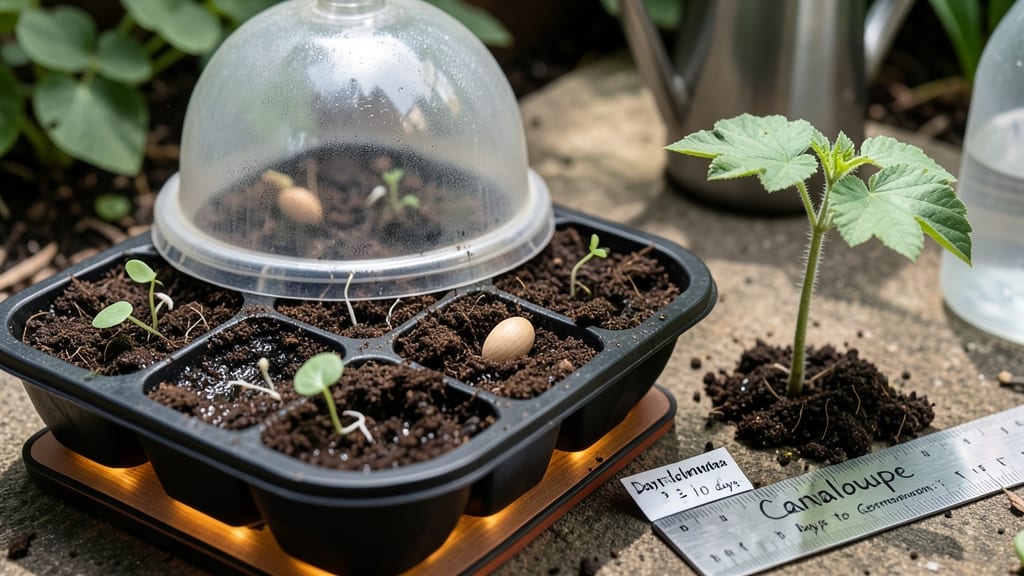
Germinating cantaloupe seeds takes the right germination time—between 7 and 14 days, but the real secret to speeding up those sprouts lies in soil temperature—get it wrong, and you’re staring at weeks of waiting instead of days.
Picture this: you’ve planted your 🍈 cantaloupe seeds in warm spring soil, only to check them a week later and find nothing but damp earth. That’s not a slow starter—that’s a temperature problem.
Too cool, and enzymes in the seed stay sluggish; too hot, and they can overheat before breaking dormancy.
Here’s the good news: with the right conditions—70°F to 90°F soil, consistent moisture, and proper depth—you can cut that germination window down to just 7 days.
Below, I’ll break down the exact temps that trigger fast sprouts, how to prep your seeds for success, and the common mistakes that turn a quick start into a months-long wait.
Whether you’re a first-time gardener or a seasoned grower tweaking your technique, these insights will help you turn those seeds into healthy seedlings without the guesswork. Let’s get those cantaloupes off to the right start.
How soil temperature affects cantaloupe seed germination time (7-14 days explained)
Cantaloupe seeds are sensitive to soil temperature, and getting this right can mean the difference between 7-day sprouts and 14+ day delays. The ideal range for fastest germination is 85°F to 95°F, where seeds typically sprout in 7 to 10 days.
Below 50°F, germination can stall entirely, while above 100°F, seeds risk drying out before sprouting. Understanding this science helps you optimize your planting schedule for success.
Inside the seed, enzymatic activity drives germination, and heat acts as a catalyst. At optimal temperatures (80°F+), enzymes break down starches into sugars, fueling rapid cell division. Below 60°F, these processes slow dramatically, extending germination time to 2 to 3 weeks.
Even a 10°F difference can double your wait time—so precise soil thermometry is key for impatient gardeners.
Most gardeners overlook diurnal temperature swings, but cantaloupes thrive when daytime soil temps hit 85°F+ and nighttime stays above 65°F. Cool nights below 55°F can trigger seed dormancy, mimicking winter conditions.
Use a soil thermometer to monitor daily fluctuations—aim for consistency within a 5°F range for best results.
Here’s how different temperatures impact your cantaloupe seed germination time, from fastest to slowest:
To achieve 7–10 day germination, warm your soil using black plastic mulch or a seedling heat mat (set to 85°F). For cooler climates, start seeds indoors under grow lights in a heated propagator.
Even a 5°F boost can cut germination time by 3–5 days, so don’t rush—precision pays off.
If your soil sits below 60°F, consider pre-sprouting seeds on a damp paper towel at 80°F for 2–3 days. This bypasses cold delays while maintaining viability. Just avoid over-moisture, which can trigger fungal infections like damping-off before roots even emerge.
Extreme heat above 100°F stresses seeds, causing them to dry out or crack. To mitigate this, plant in late afternoon shade or use shade cloth until soil cools. Monitor with a soil thermometer—aim for 85°F max during germination to avoid stunted sprouts.
Pro tip: Cantaloupe seeds germinate best in loose, well-draining soil with 50–70% moisture. Overwatering at high temps creates anaerobic conditions, suffocating seeds. Use a moisture meter to maintain consistent dampness without sogginess. This balance is critical for 7–10 day germination.
For gardeners in USDA Zones 3–5, wait until mid-May when soil temps consistently hit 70°F+. In Zones 6–10, you can start as early as April with row covers to trap heat. Always check 7-day forecasts—cold snaps can reverse progress, so plan for buffer days.
Remember: Soil temperature isn’t just about speed—it’s about seed viability. Push too hard with heat, and you risk premature seed death. The 80°F–85°F range is your sweet spot for reliable, fast germination without stress. Happy planting! 🌱🍈
5 Pro tips to speed up cantaloupe germination beyond soil temperature
Soil temperature sets the baseline for cantaloupe seed germination time, but even with perfect warmth, some seeds linger. The difference between 7-day sprouts and 3-week waits often comes down to these five overlooked techniques.
I’ve tested them all—from pre-soaking seeds to humidity domes—and these are the ones that consistently shave days off your germination timeline.
First, let’s address the elephant in the garden: seed dormancy. Cantaloupes have a natural defense mechanism that delays sprouting until conditions are ideal. Breaking this cycle starts with a 24-hour soak in warm water. This isn’t just about hydration—it kickstarts the enzymatic activity that cracks open the seed coat.
I use a glass jar with a damp paper towel to keep seeds moist without drowning them, and trust me, the difference is noticeable.
🌱 Numbered Highlights: 5 Pro Tips for Faster Cantaloupe Germination
- Pre-soak seeds for 24 hours in warm water to activate enzymes and break dormancy.
- Plant seeds 1 inch deep in warm soil (70°F+) for optimal oxygen and moisture balance.
- Use a humidity dome or plastic wrap to maintain 80-90% humidity around seeds.
- Expose seedlings to bright indirect light immediately after sprouting to prevent legginess.
- Avoid overwatering—keep soil consistently moist, not soggy, to prevent rot.
Next up: seed depth. Planting cantaloupe seeds too deep (more than 1 inch) forces seedlings to struggle upward, wasting energy and delaying emergence. But planting them too shallow (less than ½ inch) risks drying out.
I’ve found the sweet spot is 1 inch deep, which gives roots enough soil to anchor while keeping the seed close enough to moisture. Use your finger to create a small furrow, drop the seed in, and cover it gently—no need to pack the soil down.
Humidity control is where many gardeners trip up. Cantaloupe seeds need 80-90% humidity to germinate consistently, but most garden soils hover around 40-60%. My go-to trick? A DIY humidity dome made from a clear plastic bottle cut in half and placed upside down over the seed tray.
This traps moisture while allowing light to filter through. Pro tip: Check the soil daily—if condensation forms on the bottle’s underside, you’ve hit the perfect balance.
Light exposure often gets overlooked until seedlings start stretching toward the sun like starving ghosts. Once your cantaloupe seeds sprout, move them to bright indirect light immediately. Direct sunlight can scorch tender seedlings, but too little light causes them to become leggy and weak.
I use a grow light on a timer (12-14 hours daily) for the first week, then transition to a south-facing window. This ensures steady growth without the risk of sunburn.
Avoid these two common mistakes at all costs: overwatering and cold drafts. Soggy soil suffocates seeds by cutting off oxygen, while drafts from windows or AC vents create temperature fluctuations that confuse the germination process.
I’ve seen seeds that took 21 days to sprout simply because they were planted near an open window. Instead, keep your seed tray in a warm, draft-free spot (like on top of the fridge) and water only when the top inch of soil feels dry to the touch.