
Plants
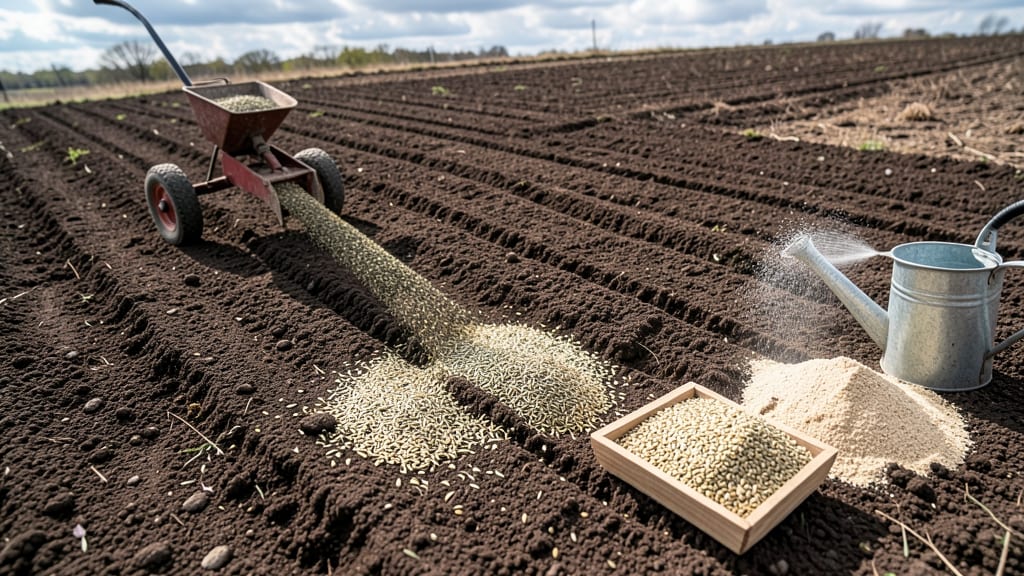
Planting grass seed in the fall gives your lawn a head start before winter 🌱 — but the timing has to be just right to avoid frost or missed growth.
Fall is the perfect time to plant grass seed—but timing is everything. Plant too early, and frost will kill your seedlings; too late, and your lawn might not establish before winter. Here’s how to nail the exact window for your climate zone.
In Zone 6a, like most of the U.S., aim for mid-to-late September to give your grass 4-6 weeks of warm soil before the first frost. That’s when roots take hold, and spring brings a lush, green lawn.
Below, I’ll break down zone-specific deadlines, soil prep tips, and how to adjust for early or late frosts—so you don’t end up with bare patches or wasted seed.
Fall grass seed planting deadlines by USDA hardiness zones
Fall is the golden window for planting grass seed because cooler temperatures and increased rainfall create ideal growing conditions. But your exact planting deadline depends on your USDA hardiness zone—and even within zones, coastal areas often have 2-4 week later windows than inland regions due to milder microclimates.
Let’s break down the precise timing for Zones 3 through 10 to ensure your grass establishes strong roots before winter dormancy.
Most grass seeds need 4–6 weeks of frost-free growth to develop a robust root system before the first hard freeze. This means planting too early risks seedling damage from unexpected late-summer heatwaves, while planting too late may leave your lawn struggling to survive winter.
Below, I’ve mapped out the optimal planting windows for each zone, along with regional adjustments for coastal vs. inland climates.
For example, if you’re in Zone 6a (like much of the Midwest), aim to plant between late August and mid-October. But if you’re in Zone 7b along the Gulf Coast, you might extend your window until early November—just ensure the ground stays above 50°F for root growth.
Coastal areas benefit from delayed planting because ocean breezes moderate temperatures, while inland zones face earlier frost risks.
Pro tip: Use a soil thermometer to confirm temperatures are between 50–65°F—this is the sweet spot for grass seed germination. If your local weather forecast predicts a hard freeze within 4 weeks, pause planting until conditions improve.
In Zones 9–10, where winters are mild, you can even plant into December, but prioritize warm-season grasses like Bermuda or Zoysia.
One common mistake is assuming all zones follow the same calendar. For instance, Zone 5 in Minnesota might see its first frost by October 10, while Zone 5 in New York’s Hudson Valley could extend to October 25.
Check your local USDA Plant Hardiness Map and cross-reference with Almanac frost dates for precision. If you’re unsure, err on the side of earlier planting—grass seeds planted in late September often outperform those sown in November, even in warmer zones.
Regional microclimates also play a role. Urban areas with heat islands (e.g., Phoenix or Atlanta) may need to plant 2 weeks earlier than rural counterparts to escape summer heat stress. Conversely, high-elevation zones (e.g., Denver) should plant 1–2 weeks later than their USDA zone suggests due to cooler temperatures.
Always adjust for your specific location’s last average frost date, not just the zone’s general guideline.
Finally, don’t forget that cool-season grasses (like fescue and bluegrass) thrive in fall’s mild weather, while warm-season grasses (like Bermuda) can handle later planting. Match your seed choice to your zone and climate type—this ensures your lawn not only survives the winter but thrives come spring**.
With the right timing, you’ll have a lush, resilient lawn that outshines neighbors who planted at the wrong time.
Ready to plant? Grab your seed, soil thermometer, and rake—and mark your calendar for the zone-specific deadline that works for you. Your future lawn will thank you! 🌱
How to calculate your exact planting window for frost-free growth
Determining the perfect time to plant grass seed in fall isn't just about checking a calendar—it's about understanding your local climate's frost patterns and soil temperature thresholds. Grass seeds need 4–6 weeks of frost-free growth to establish strong roots before winter dormancy.
If you plant too early, seedlings may suffer from late-summer heat stress, while planting too late risks weak roots that can't survive the cold. The key is calculating your local last frost date and ensuring soil temperatures stay between 50–65°F during the establishment period.
Start by checking your USDA hardiness zone and cross-reference it with your local Almanac frost dates. For example, in Zone 6a, the average last frost date is around October 20, so you'd want to plant by mid-September to give your grass 4–6 weeks of growth.
However, microclimates—like urban heat islands or high-elevation areas—can shift this window by 1–3 weeks. Always verify with a soil thermometer to confirm temperatures are in the ideal range before planting.
- Step 1: Find your local last frost date using the USDA Plant Hardiness Map or Almanac. Subtract 4–6 weeks to determine your planting window.
- Step 2: Use a soil thermometer to confirm soil temps are between 50–65°F. This is the sweet spot for grass seed germination.
- Step 3: Adjust for microclimates. Urban areas may need to plant 1–2 weeks earlier, while high-elevation zones can extend the window by 1–2 weeks.
- Step 4: Plant cool-season grasses (like fescue or bluegrass) when daytime temps are 70–80°F and nighttime temps drop to 50–60°F.
- Step 5: Monitor weather forecasts for sudden cold snaps. If a hard freeze is predicted within 4 weeks, delay planting until conditions improve.
Once you've nailed down your planting window, focus on soil preparation. Loosen the top 2–3 inches of soil to improve aeration and drainage, then level the area to ensure even seed distribution.
If your soil is compacted or clay-heavy, mix in compost or sand to create a looser, more hospitable environment for roots. Over-seeding an existing lawn? Mow the grass short first to expose the soil and improve seed-to-soil contact.
After planting, maintain consistent moisture—aim for 1/2 inch of water per week, either from rainfall or irrigation. Water lightly twice daily (morning and evening) for the first 2 weeks to keep the soil surface moist but not soggy.
Once seedlings emerge (typically in 7–14 days), gradually reduce watering to 1 inch per week to encourage deep root growth. Avoid walking on the lawn until the grass reaches 3–4 inches tall to prevent damage to delicate seedlings.
One common misstep is assuming that "fall" means you can plant anytime from September to November. In reality, late fall planting (after October 15 in most zones) often results in weak, slow-growing grass that struggles to survive winter.
For example, in Zone 5, planting after October 1 risks seedlings not developing enough roots before the ground freezes. Always prioritize timing over convenience—your lawn's long-term health depends on it.
Finally, consider your grass seed variety. Cool-season grasses (like Kentucky bluegrass and tall fescue) thrive when planted in fall, while warm-season grasses (like Bermuda or Zoysia) can be planted later in late summer or early fall.
Match your seed choice to your climate zone and local frost patterns for the best results. With the right timing and care, your grass will establish a deep, resilient root system before winter—setting the stage for a lush, green lawn next spring. 🌱