
Plants
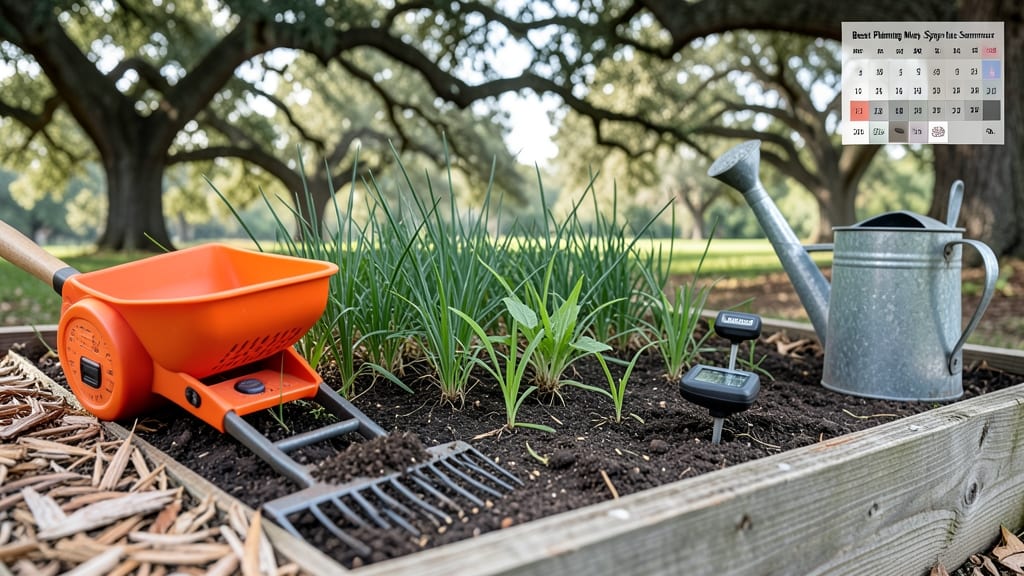
Planting grass seed in Mississippi at the right time is the difference between a thick, green lawn that survives the heat and a patchy, weak one that struggles by summer.
Most gardeners wait for fall, but late summer—when soil stays warm and weeds are still manageable—is actually the sweet spot for deep root growth before frost hits. The key? Timing it right so your 🌱 turfgrass establishes before winter’s chill sets in.
Mississippi’s humid summers and unpredictable frost dates make this a high-stakes decision. Plant too early, and you risk seed washout from storms. Too late, and your grass won’t have time to root before cold weather slows growth.
In this guide, I’ll break down the ideal late-summer window, soil prep tips, and the best grass types for Mississippi’s climate—so you can skip the guesswork and get a lawn that lasts.
Mississippi’s ideal grass seed planting window: late summer vs. fall timing explained
Choosing the right time to plant grass seed in Mississippi isn’t just about avoiding frost—it’s about leveraging soil warmth, rainfall patterns, and weed competition to give your lawn the strongest start.
While many gardeners default to fall planting, late summer (especially late August to mid-September) often delivers better results for Mississippi’s climate, particularly in the southern half of the state where humidity lingers longer.
Mississippi’s USDA Zones 7b-9a create distinct regional differences. In North Mississippi (Zones 7b-8a), cooler nights arrive earlier, making fall planting (September-October) safer.
But in South Mississippi (Zones 8b-9a), the window for warm-season grasses like Bermuda or Zoysia extends well into late summer, thanks to delayed frost and consistent soil temperatures above 65°F.
The key advantage of late summer planting is deep root establishment before winter’s chill. When seeds germinate in 70-75°F soil, they develop 30-50% stronger roots than fall-planted seeds, which often face cooler temperatures sooner.
Plus, weed pressure drops in late summer after the peak growing season, giving your grass a competitive edge.
Mississippi’s late summer rainfall (August-September) provides natural irrigation, but timing matters. Heavy storms can wash out seeds, so aim to plant 1-2 weeks before the region’s typical tropical storm season (early September).
In North Mississippi, this means planting by mid-August, while South Mississippi can safely extend to mid-September.
If you’re planting in late summer, prioritize warm-season grasses like Bermuda or Zoysia, which thrive in 80-90°F soil but can still establish in the 70s. For cool-season grasses (e.g., Tall Fescue), fall planting (September-October) is ideal, as they need 60-65°F soil to germinate.
The trade-off? Fall-planted seeds may not develop as deep roots before winter dormancy.
Mississippi’s southern regions (e.g., Jackson, Biloxi) can push late summer planting into early October with minimal frost risk, while northern areas (e.g., Tupelo, Oxford) should finish by mid-September.
Check your local Extension Service for microclimate adjustments, as urban areas (like Gulfport) often stay warmer than rural zones.
Pro tip: Use a soil thermometer to confirm temperatures. Aim for 65°F+ for warm-season grasses and 60°F+ for cool-season types. If soil is below 60°F, delay planting or use row covers to retain warmth. This small step can double your germination rates in Mississippi’s unpredictable climate.
Don’t overlook overseeding in late summer. If your existing lawn is thinning, scatter Tall Fescue or Ryegrass seeds in late August to fill bare spots before winter. These cool-season grasses will germinate quickly in warm soil and outcompete weeds before the first frost.
Remember: Mississippi’s humidity and late-summer storms demand quick action. Once seeds hit the soil, keep it moist (but not soggy) for 14-21 dayslight mulch (like straw) to prevent crusting and
How to prepare Mississippi soil for late-summer grass seed success
Late-summer grass seeding in Mississippi demands premium soil prep to outpace weeds and storms. The window between mid-August and mid-September offers warm soil but also heavy rainfall—meaning your soil structure must be perfect to prevent seed washout.
I’ve learned the hard way that skipping these steps leads to patchy germination, even with premium seed.
Start with a soil test to confirm your lawn’s pH sits between 6.0 and 7.0. Mississippi’s clay-heavy soils often run acidic, and grass needs that neutral range to access nutrients.
If your test shows lower pH, add pelletized lime 4-6 weeks before planting—it takes time to adjust the soil chemistry.
Next, focus on organic matter. Work in 2-3 inches of compost or well-rotted manure to improve drainage and water retention. For heavy clay soils, mix in sand or perlite to break up compaction. This isn’t just about nutrients—it’s about creating a loose, crumbly seedbed where roots can penetrate easily.
Weed control is non-negotiable in late summer. Apply a pre-emergent herbicide like pendimethalin two weeks before seeding—this stops crabgrass and other weeds from germinating while your grass establishes. Never use post-emergent sprays after planting, as they’ll kill your new seedlings.
Finally, level your soil with a rake or lawn roller. Mississippi’s heavy rains can create low spots where water pools, drowning seeds. Fill depressions with topsoil and smooth the surface so seeds make even contact with the soil.
A slightly raised edge around the perimeter helps direct water away from your new lawn.
With these steps, your late-summer grass will germinate uniformly and strongly, ready to handle Mississippi’s first frost. The secret? Prep now so your grass can focus on growing, not struggling. 🌱