
Companion Plants
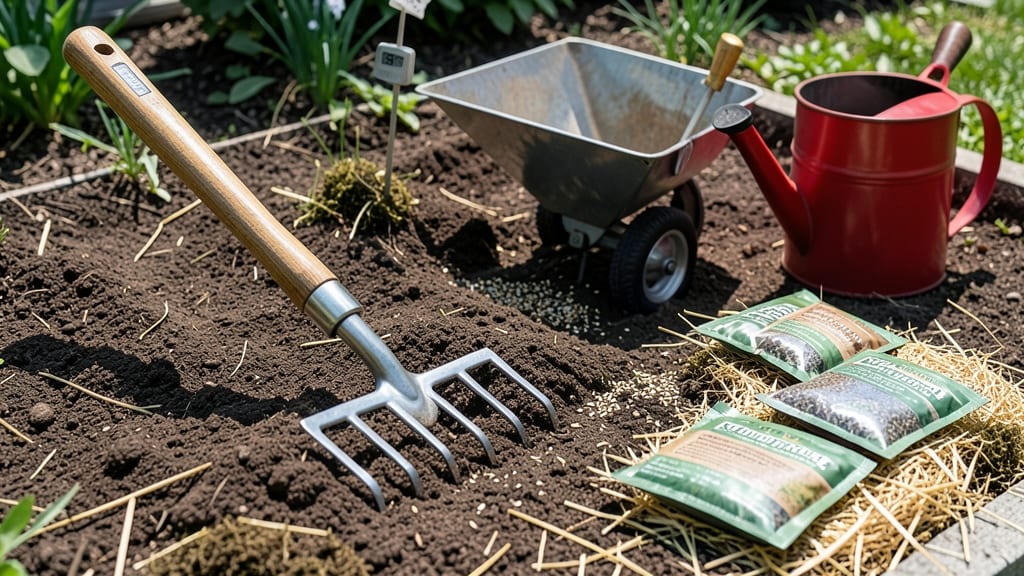
Planting grass seed in Colorado at the right time means the difference between a lush lawn and a patchy disappointment — and early spring or early fall are your best bets to outsmart the climate.
Picture this: you’ve spent hours spreading seed, only for a late frost to wipe it out or summer’s heat to bake it before it takes root. Colorado’s USDA Zones 4-7 throw extra curveballs, with frost dates shifting by weeks from Denver to the Western Slope.
Below, I’ll break down the exact months to plant by elevation, soil prep secrets for rocky Colorado soil, and how to spot the warning signs of planting too early or too late.
You’ll leave here with a checklist for success — from soil temperature checks to watering schedules — so your grass stands a fighting chance against Mother Nature’s whims.
Best months to plant grass seed in Colorado for optimal germination
Colorado’s diverse climate zones mean what works in Denver (Zone 5) fails in Grand Junction (Zone 7). The key to success? Planting when soil temperatures are consistently 50-65°F for cool-season grasses like Kentucky bluegrass or tall fescue, which dominate Colorado lawns.
Most gardeners here swear by early fall (September-October) or late spring (April-May) windows. Fall planting gives seeds time to establish roots before winter, while spring planting avoids summer drought stress. But timing shifts by 1000+ feet in elevation—what’s perfect in Boulder may be too early in Fort Collins.
Warm-season grasses like Bermuda grass (rare in Colorado) need 70-80°F soil and thrive in late spring to early summer, but they’re not ideal for most Colorado lawns. Stick with cool-season types unless you’re in Zone 7+ areas like the San Luis Valley.
Fall planting is my top recommendation for most Coloradoans. Seeds germinate with cool but consistent moisture, and established roots handle winter better. Aim for 4-6 weeks before first frost—typically September 1-15 on the Front Range.
Spring planting demands soil temperature checks. Use a soil thermometer—wait until readings hit 50°F+ consistently for 5+ days. In Denver, this usually means late April to early May, but high-altitude areas like Estes Park may need to wait until June.
Never plant in summer (June-August)—Colorado’s heat and drought will bake seeds before germination. Even irrigation can’t compensate for 100°F+ soil temperatures. If you must repair a lawn in summer, use sod instead.
Pro tip: Test your soil’s pH before planting. Colorado’s alkaline soils (pH 7.5+) often need sulfur amendments to help cool-season grasses thrive. Aim for a pH of 6.0-7.0—most grass seeds won’t germinate well outside this range.
Watering deeply but infrequently after planting is critical. New grass needs 1-1.5 inches of water weekly, but daily light sprinkles encourage shallow roots. Use a rain gauge to track moisture—Colorado’s dry winds evaporate water faster than you think.
Watch for fungal diseases if you plant too late in fall. Wet, 50
How Colorado’s microclimates affect grass seed planting timing
Colorado’s dramatic elevation shifts create wildly different planting conditions—what works in Denver (5,280 ft) can fail in Steamboat Springs (6,700 ft) just 150 miles away. The rule of thumb? Plant 4-6 weeks before your last frost date, but that window slides by weeks depending on where you live.
In low-elevation areas like Grand Junction (4,500 ft), spring arrives earlier, while high-altitude regions like Leadville (10,000 ft) face frost threats well into June. Even neighboring towns can have 2-3 week differences in frost dates—so don’t rely on your neighbor’s schedule!
I’ve broken down Colorado’s key regions below to help you pinpoint the perfect planting window for your yard. Pro tip: Use a soil thermometer—seed needs soil temps between 55°F-75°F to germinate properly.
| Region | Avg. Elevation | Last Frost Date | Ideal Planting Window | Key Consideration |
|---|---|---|---|---|
| Denver Metro | 5,280 ft | April 15-May 1 | March 15-April 15 (spring) OR Sept 15-Oct 15 (fall) | Rapid temp swings—watch for late frosts |
| Colorado Springs | 6,035 ft | April 30-May 15 | March 1-April 1 (spring) OR Sept 1-Oct 1 (fall) | Dry climate—irrigate immediately after planting |
| Western Slope (Grand Junction) | 4,500 ft | March 15-April 1 | February 15-March 15 (spring) OR Aug 15-Sept 15 (fall) | Warmer temps allow earlier planting |
| High Altitude (Steamboat Springs) | 6,700 ft | May 15-June 1 | April 15-May 15 (spring) OR Sept 1-Oct 1 (fall) | Late frosts common—extend planting window |
| San Luis Valley | 7,500 ft | May 1-June 1 | April 15-May 1 (spring) OR Sept 1-Oct 1 (fall) | Cold nights—use frost blankets for early planting |
Fall planting often works better than spring in Colorado because cooler temps reduce stress on young seedlings. Aim for 6-8 weeks before first frost—this gives grass time to establish roots before winter dormancy. For example, in Fort Collins (5,000 ft), September 1-October 15 is ideal.
One common mistake? Planting warm-season grasses like Bermuda grass too early. These need consistent soil temps above 65°F—wait until late May in most areas. Cool-season grasses like Kentucky bluegrass can handle earlier planting as long as soil temps stay above 55°F.
Remember: Microclimates matter more than latitude in Colorado. A south-facing slope warms up faster than a north-facing yard just steps away. Always scout your specific spot for 2-3 weeks before planting to confirm conditions.