
Lawn
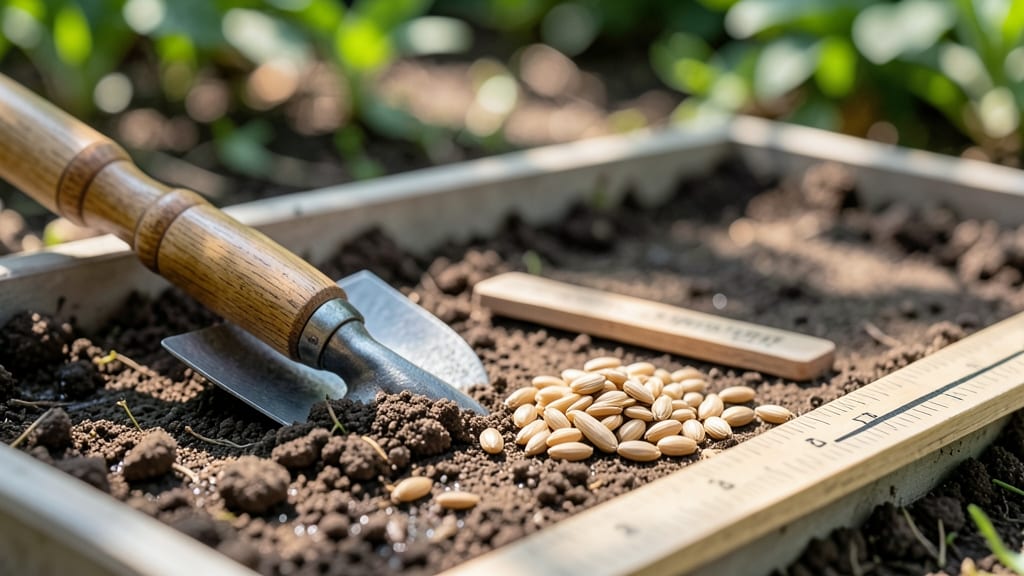
The wheat seed depth you choose determines whether your crop stands strong or struggles to emerge—aim for 1 to 2 inches deep to balance germination and disease resistance.
Picture this: you’ve tilled the soil, sown your seeds, and covered them with just enough dirt to feel confident—only to watch weeks pass with no sign of sprouts. That’s often the result of planting too deep or too shallow, and it’s a mistake even experienced growers make.
Wheat thrives when planted at the right depth, which isn’t just about inches—it’s about soil type, moisture, and even the variety you’re growing. Too shallow, and the seeds dry out; too deep, and they’ll never break through.
The key lies in understanding how these factors interact to create the perfect environment for strong, healthy stems.
In this guide, I’ll walk you through the science-backed depth recommendations, how to adjust for your climate, and the common pitfalls that can turn your hard work into wasted effort. Let’s get those seeds planted right the first time.
Optimal wheat seed depth by soil type and climate conditions
Getting the wheat seed depth right is one of the most critical steps for a successful harvest. Plant too shallow, and your seeds may dry out or get eaten by birds. Too deep, and they’ll struggle to break through the soil, leading to weak, spindly plants.
The ideal wheat seed depth typically ranges between 1.5 to 2.5 inches, but this varies based on your soil type and climate conditions. Understanding these factors ensures your wheat develops strong stems, resists lodging, and achieves maximum yield potential.
Soil type plays a huge role in determining the perfect planting depth. For example, sandy soils drain quickly, so seeds need to be planted slightly deeper—around 2 to 2.5 inches—to retain moisture long enough for germination.
On the other hand, clay soils, which hold moisture longer, can accommodate shallower planting at 1.5 to 2 inches without risking drought stress. Additionally, climate conditions like rainfall patterns and humidity influence how deeply you should plant to balance moisture retention and aeration.
Here’s a quick breakdown of how to adjust your planting depth based on your growing conditions:
In dry climates, deeper planting helps seeds access moisture stored deeper in the soil. For instance, in arid regions, I’ve found that planting wheat at 2 to 2.5 inches reduces the risk of seeds drying out before germination.
Conversely, in moist climates, shallower planting—around 1.5 to 2 inches—prevents waterlogging, which can lead to rot or poor root development. Always adjust based on your local rainfall patterns and soil moisture levels.
Another critical factor is seed size. Larger wheat seeds, like those from hard red winter wheat, can handle slightly deeper planting—up to 2.5 inches—because they store more energy for germination.
Smaller seeds, such as those from durum wheat, should be planted closer to the surface, around 1.5 inches, to ensure they don’t struggle to break through compacted soil. If you’re unsure about your seed size, check the packaging or consult a local agricultural extension office for guidance.
Proper seed spacing also complements depth adjustments. When planting wheat, aim for 6 to 12 inches between seeds in rows spaced 12 to 18 inches apart. This spacing allows roots to access nutrients and water without competing excessively.
In clay soils, wider spacing—up to 18 inches between rows—can help prevent overcrowding, which increases the risk of lodging (when plants fall over due to weak stems).
Before planting, prepare your soil by loosening it to a depth of 6 to 8 inches to improve aeration and drainage. Add compost or organic matter to enhance soil structure, especially in sandy soils, where nutrients wash away quickly.
If your soil is heavy clay, mixing in sand or peat moss can improve drainage. After planting, lightly cover the seeds with soil and gently press down to ensure good seed-to-soil contact, which is crucial for consistent germination.
Monitor your wheat seeds closely after planting. In cool, moist climates, germination typically occurs within 7 to 14 days. If you notice uneven emergence, it could indicate inconsistent planting depth or soil compaction. To fix this
How to adjust wheat seed depth for different seed varieties
Not all wheat varieties are created equal—and neither are their planting depths. Dwarf wheat varieties, like those bred for home gardens, need shallower placement than tall winter wheat varieties. The difference? Root strength and stem stability.
For dwarf wheat, aim for 1 to 1.25 inches deep—this keeps the seed close enough to moisture while allowing quick emergence. Semi-dwarf varieties, which are popular for small-scale farming, thrive at 1.25 to 1.75 inches.
Meanwhile, tall wheat varieties often require 1.75 to 2.5 inches to prevent lodging (when stems bend or break under wind or rain).
Seed coatings complicate things further. Many commercial wheat seeds come pre-coated with fungicides or moisture-retention agents, which can add 0.25 to 0.5 inches of bulk. If you’re planting coated seeds, adjust your depth by 0.5 inches deeper than the standard recommendation to avoid burying them too shallowly.
Moisture retention is another critical factor. In sandy soils, where moisture drains quickly, plant seeds 0.25 inches shallower to keep them closer to the damp layer. Conversely, in clay-heavy soils, where water pools, you can plant 0.25 inches deeper to prevent rot from excess moisture.
Pro tip: Use a seed depth gauge (or even a ruler) to ensure consistency. Uneven planting depths lead to uneven germination, which weakens the entire crop. For home gardeners, a simple wooden stick marked with measurements works perfectly.
Finally, consider your climate zone. In dry regions, shallow planting (closer to 1 inch) helps seeds access moisture faster. In humid climates, deeper planting (up to 2.5 inches) reduces the risk of seed rot from excess moisture.
Adjusting wheat seed depth isn’t just about inches—it’s about understanding your variety’s genetics, your soil’s moisture-holding capacity, and your local climate. Get it right, and you’ll see stronger stems, better disease resistance, and a higher yield come harvest time. 🌾