
Lawn
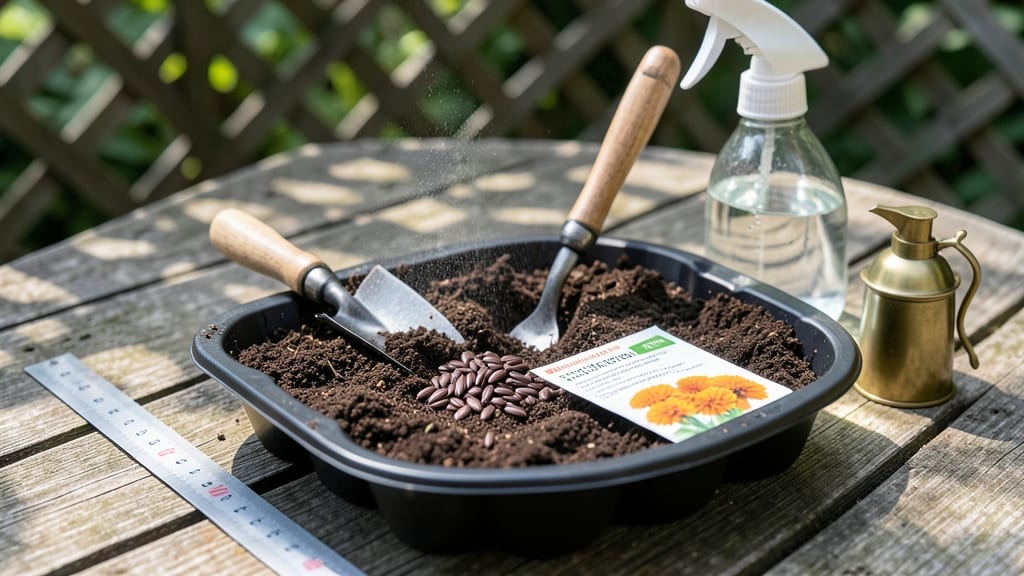
Planting marigold seeds at the right depth is the fastest way to guarantee strong, vibrant blooms 🌼 — and most gardeners get it wrong without even knowing it.
Struggling with marigold seeds that refuse to sprout? The secret to faster germination isn’t just water or sunlight—it’s getting the planting depth exactly right. Even a quarter-inch difference can mean the difference between thriving blooms and wasted effort.
Marigolds thrive in Zone 6a when planted in spring, but their success starts with proper seed depth. Too shallow, and they dry out; too deep, and they rot. The ideal range is between ¼” and ½”, depending on your soil type and climate.
In this guide, I’ll break down the exact planting depth for French, African, and signet varieties, plus tips to boost germination—so you can enjoy those bright blooms all season long.
Optimal marigold seed depth by variety and climate conditions
Marigolds are one of the easiest flowers to grow, but their success starts with the right seed depth. Unlike larger seeds, marigold seeds are tiny and delicate, requiring precise placement to avoid rotting or drying out.
The ideal depth varies slightly by variety and climate, but most experts agree on a range between ¼” and ½” for direct sowing.
French marigolds, with their fine, feathery foliage, are the most sensitive to depth. Planting them too deep can cause seed rot in cooler climates, while shallow planting risks drying out the seeds in hot, dry conditions.
African marigolds, with their bold, dark foliage, are slightly more forgiving but still need careful attention to depth for consistent germination.
Climate plays a surprising role in seed depth. In cool, wet climates, like the Pacific Northwest, planting at ¼” depth prevents rot. Meanwhile, in hot, dry regions, like the Southwest, a ½” depth helps retain moisture.
Soil type also matters—sandy soils dry out faster, so deeper planting is often better.
Here’s the science behind it: Marigold seeds need moisture and warmth to germinate, but they can’t handle waterlogged conditions. The seed coat must stay in contact with moist soil but not be buried so deep that oxygen is cut off.
This balance is why ¼” to ½” is the golden range for most varieties.
Transplanting marigolds requires a slightly different approach. When moving seedlings from seed trays to garden beds, bury them deeper than direct-sown seeds. The trick is to plant them so that the soil line on the stem is level with the garden soil.
This encourages stronger root growth and prevents the plant from toppling over later.
Soil temperature is another critical factor. Marigold seeds germinate best in soil that’s at least 60°F (15°C). If your climate is still cool in spring, consider using a seedling heat mat to speed up germination.
In warmer climates, like Zone 9 or 10, you can plant marigolds as early as February, but always adjust the depth based on moisture levels.
For container gardening, stick to the ¼” depth for all varieties. Containers dry out faster, so deeper planting can lead to root rot. Use a well-draining potting mix and water gently after planting to avoid displacing the seeds.
If you’re growing marigolds in hanging baskets, choose dwarf varieties like ‘Tangerine’ or ‘Lemon Gem’ for better success.
One common mistake is assuming that all marigold seeds are the same. French marigolds have the smallest seeds and need the shallowest planting, while African marigolds have slightly larger seeds and can handle a bit more depth.
Always check the seed packet for specific recommendations, as some hybrid varieties may have unique needs.
To test if your seed depth is correct, press your finger gently into the soil after planting. The seeds should be just below the surface, with no more than a light dusting of soil covering them.
If you’re unsure, plant a few seeds at different depths to see what works best in your garden.
Common mistakes that kill marigold germination (and how to fix them)
Marigold seeds are delicate little things, and even small mistakes in planting depth can spell disaster. I’ve seen gardeners waste entire seed packets because they didn’t realize how sensitive marigolds are to soil contact.
The wrong depth can cause seeds to either dry out or rot, both of which kill germination before it starts.
Most gardeners assume "deep enough" means burying seeds an inch or more—but marigolds need minimal soil coverage. Their tiny seeds require light to trigger germination, and too much burial blocks that crucial sunlight.
On the flip side, seeds left too close to the surface dry out quickly, especially in sandy soils or hot climates.
⚠️ Warning: Soil Compaction Kills Sprouts
Compacted soil is the silent germination killer. When you press seeds into clay-heavy soil, you create an airless environment that suffocates sprouts. For sandy soils, the opposite happens—seeds dry out before germinating. Fix it: Loosen soil to 1-2 inches deep with a fork before planting. Mix in compost to improve drainage in clay, or add perlite to sandy soil for moisture retention.
One of the most common signs of improper depth is uneven sprouting. If only a few seeds emerge while others rot or dry up, check your planting technique. Seeds planted too deep (over ½”) will rot, showing as blackened, mushy soil around the area.
Seeds planted too shallow (under ¼”) may sprout but then collapse when they can’t anchor properly.
Temperature also plays a role in depth sensitivity. In cooler climates (like Zone 6a), marigolds germinate best when planted at the upper limit (¼”) to avoid soil chill.
In hotter regions, aim for the lower limit (½”) to protect seeds from drying out. Always plant after your last frost date—marigolds hate cold soil.
Here’s my pro tip: Use a toothpick or pencil to create precise planting holes. Mark the depth with a small line on the tool so you can plant seeds consistently at ¼” to ½”.
This simple trick eliminates guesswork and gives your marigolds the perfect start. Once seeds sprout, thin seedlings to 12-18 inches apart for healthy growth.
Remember, marigolds reward precision with vibrant blooms. The key is balancing soil contact with light exposure—neither too much nor too little. With the right depth, you’ll see those first bright orange sprouts in just 7-14 days! 🌱