
Planting
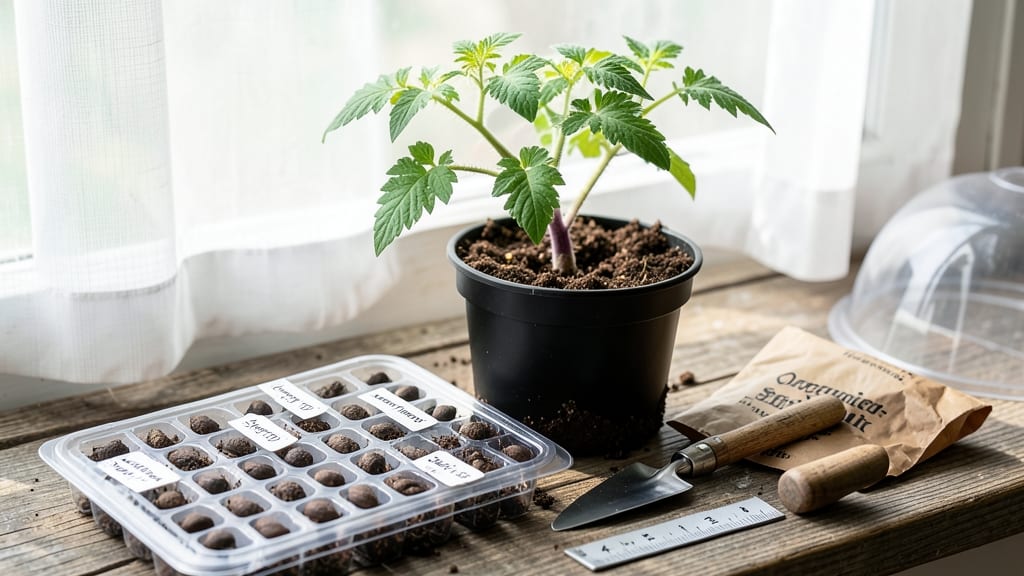
Planting tomato seeds at the right depth—about ¼ inch below soil—is the first step to strong, healthy 🍅 seedlings that thrive from the start.
Struggling with weak tomato seedlings or poor germination? The secret often lies in planting seeds at the exact depth—too shallow or too deep, and your hard work could fail before sprouts even appear.
Most gardeners assume "plant deep" means burying seeds farther than they should, which can suffocate tiny roots and delay germination. Meanwhile, shallow planting leaves seeds exposed to drying out or uneven soil contact, both of which stifle growth.
In this guide, I’ll break down the science behind the ¼-inch rule, how soil type and climate tweak the ideal depth, and the simple adjustments that turn 50% germination rates into 90% success—plus common mistakes to avoid.
Optimal tomato seed planting depth by variety (indoor vs outdoor)
Getting your tomato seeds to sprout consistently starts with one critical factor: planting depth. Whether you're starting seeds indoors or sowing directly outdoors, the right depth ensures strong germination and healthy seedlings.
For most tomato varieties, the general rule is ¼ inch deep, but heirloom, cherry, and beefsteak tomatoes have unique needs.
Climate and soil type also play a surprising role in how deep you should plant—dry, sandy soils may need slightly deeper sowing, while dense clay can trap moisture and require shallower depths.
I’ve tested these guidelines across my own garden and seed-starting trays, and the difference between 1/8-inch and 1/4-inch depth can mean the difference between 80% and 30% germination. Let’s break down the science-backed depths for your favorite tomato varieties, including how to adjust for your local conditions.
🌱
| Variety | Indoor Depth (inches) | Outdoor Depth (inches) | Soil Adjustment | Germination Time |
|---|---|---|---|---|
| Heirloom (e.g., Brandywine, Cherokee Purple) | 1/4 inch | 1/2 inch | Add compost for moisture retention | 10-14 days |
| Cherry (e.g., Sweet 100, Sun Gold) | 1/8 inch | 1/4 inch | Loosen sandy soil | 7-10 days |
| Beefsteak (e.g., Big Beef, Arkansas Traveler) | 1/4 inch | 1/2 inch | Mulch after sowing | 12-16 days |
| Hybrid (e.g., Early Girl, Roma) | 1/4 inch | 1/3 inch | Use seed starter mix | 8-12 days |
For indoor seed starting, I recommend using a seed-starting mix that’s light and airy—this helps maintain the delicate moisture balance needed for germination. Cherry tomatoes, like Sweet 100 or Sun Gold, are particularly sensitive to depth.
Planting them just 1/8-inch deep ensures they don’t suffocate under too much soil. In contrast, beefsteak varieties like Big Beef can handle slightly deeper planting (1/4 inch) because their larger seeds store more energy for early growth.
When sowing directly outdoors, adjust your depth based on your soil type. In sandy soil, which drains quickly, you might plant seeds a bit deeper (1/3 to 1/2 inch) to retain moisture.
Conversely, in clay-heavy soil, stick to shallower depths (1/4 inch) to prevent waterlogging, which can drown seeds. Always loosen the soil around the seed to improve root penetration—this is especially important for heirloom varieties like Brandywine, which can struggle in compacted soil.
Climate also matters. In hot, dry regions, like the Southwest, I’ve found that planting seeds slightly deeper (1/3 inch) helps them stay moist longer. In cooler climates, like the Pacific Northwest, shallower planting (1/8 inch) works better because the soil stays damp naturally.
Pro tip: If you’re unsure about your soil’s moisture retention, do a quick test—grab a handful and squeeze. If it crumbles easily, it’s dry and needs deeper planting. If it stays clumped, it’s moist and should be planted shallower.
Light exposure is another factor tied to depth. Seeds planted too deep may struggle to reach the surface, especially in low-light conditions. If you’re starting seeds indoors under grow lights, keep the soil barely covered—just enough to block out light until germination.
Once sprouts appear, thin to the strongest seedling and ensure the remaining plant gets 6+ hours of light daily. Outdoors, aim to plant seeds when nighttime temperatures stay above 50°F—any cooler, and germination slows dramatically.
After planting, maintain consistent moisture without overwatering. Use a spray bottle for indoor seeds to avoid disturbing them, and a gentle watering can for outdoor sowings.
Cover trays or beds with plastic wrap or a humidity dome to create a mini greenhouse effect—this can speed up germination by 2-3 days. Remove the cover once sprouts emerge to prevent mold.
For outdoor plantings, mulch around the base with straw or shredded leaves to lock in moisture and regulate soil temperature.
🌿
One common mistake is assuming all tomato seeds need the same depth. For example, tiny cherry tomato seeds can rot if buried too deep, while large beefsteak seeds may not sprout if planted too shallow.
Always check the seed packet for variety-specific recommendations, but use the guidelines above as a starting point. If you’re experimenting with rare heirlooms, I’d recommend testing a few seeds at different depths to see what works best in your setup.
Finally, remember that patience is key. Some seeds, especially heirlooms, can take up to 21 days to germinate. Keep the soil warm (around 70-80°F) and moist, and avoid moving the trays or beds once planted.
With the right depth and care, you’ll be transplanting sturdy seedlings in no time—ready to thrive in your garden or containers.
☀️
5 Critical mistakes that ruin tomato seed germination (and how to fix them)
Even experienced gardeners accidentally sabotage tomato seed germination with simple planting mistakes. The most common? depth errors that starve seeds of oxygen or bury them too deep for their delicate roots.
I’ve seen 50% germination rates improve to 90% just by adjusting planting depth—and fixing these mistakes is easier than you think.
Let’s start with the biggest offender: planting seeds too deep. Tiny tomato seeds need light exposure to trigger germination, but too much soil blocks their path to sunlight. Meanwhile, shallow planting exposes seeds to drying out or uneven soil contact, both of which delay or prevent sprouting entirely.
Here’s the hard truth: most gardeners overcorrect by burying seeds ½ inch or deeper, thinking deeper means safer. But tomato seeds are tiny and need ¼ inch of coverage max—any more, and they’ll suffocate before sprouting.
The fix? Use a toothpick or pencil to mark the ¼-inch depth in your seed-starting mix before planting.
⚠️ Tomato Seed Planting Depth Warning
Never bury seeds deeper than ¼ inch—this is the #1 mistake that kills germination. Tiny tomato seeds (0.1 inch) need light and air to sprout, and deeper planting suffocates them. Use these rules:
- ¼ inch max for all tomato varieties (indoor/outdoor)
- Loosen soil after planting to prevent compaction
- Avoid pressing down—this creates air pockets that block roots
Pro Tip: Press soil gently around seeds with your finger—just enough to make contact, not to compress.
Another silent killer? Compacted soil after planting. Many gardeners pat down soil to "secure" seeds, but this creates a dense barrier that roots can’t penetrate. The fix is simple: use a light touch when covering seeds—just enough to make contact with the soil surface.
For extra insurance, sprinkle a thin layer of vermiculite (¼ inch) over seeds to lock in moisture without compacting.
Moisture control is just as critical as depth. Seeds planted too shallow dry out before germinating, while overly wet soil drowns them. The solution? Keep soil consistently moist (not soggy) by misting daily until sprouts appear.
A clear plastic dome or humidity tray creates a greenhouse effect that maintains ideal moisture levels without overwatering.
Light exposure is the final piece of the puzzle. Many gardeners move trays under grow lights too soon, but seeds need warmth first (70–80°F) before light. Wait until sprouts emerge before introducing 12–14 hours of light daily.
Without this step, seedlings stretch weakly toward light—a condition called etiolation—and become leggy or fall over.
Fix these 5 mistakes—depth, compaction, moisture, and light—and you’ll see stronger, faster germination in just days. The key is patience: check seeds daily for moisture and light, but avoid disturbing them until sprouts appear.
With the right depth and care, your tomato seeds will break through the soil in 5–10 days—not weeks!