
Planting
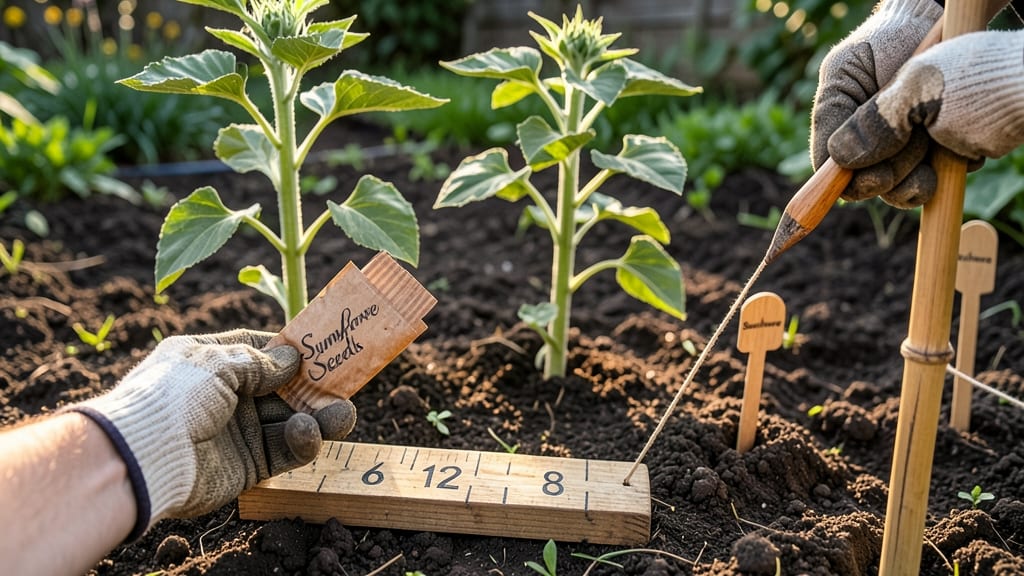
Proper sunflower seed spacing determines whether your towering 🌻 stalks reach their full potential or struggle for every inch of sunlight.
Picture this: you’ve spent weeks nurturing your sunflower seeds, only to watch them lean awkwardly or produce puny blooms because they’re crowded like sardines. Or worse, you’ve wasted garden space with stalks so far apart they look lonely and underwhelming.
The right spacing isn’t just about aesthetics—it’s the difference between a thriving harvest and a disappointing one.
Sunflowers aren’t one-size-fits-all. Giant varieties need 36–48 inches between seeds to support their massive heads, while dwarf types thrive at just 12–24 inches. Then there’s soil quality, wind exposure, and whether you’re growing them in rows, containers, or mixed beds—each factor tweaks the ideal distance.
Below, I’ll break down the exact measurements, plus how to adjust for your specific goals, whether that’s bigger blooms, more seeds, or a stunning windbreak.
Ready to grow sunflowers that turn heads (literally)? Let’s dive into the spacing science that’ll have your garden buzzing with success.
Optimal sunflower seed spacing by variety and growth type
Sunflowers are nature’s skyscrapers, but their towering beauty starts with the right seed spacing. Too close, and you’ll struggle with weak stalks and disease outbreaks—too far apart, and you’ll sacrifice yield and visual impact.
The key is matching your sunflower variety to its ideal spacing range, which directly impacts stalk strength, bloom size, and even seed production. Let’s break down the science behind spacing for giant, dwarf, and standard varieties.
Sunflowers aren’t one-size-fits-all plants. A giant variety like ‘Russian Giant’ needs 36–48 inches apart to support its 12-foot stalks, while a dwarf variety like ‘Teddy Bear’ thrives with 12–24 inches apart.
Even row spacing matters—planting in tight rows (18–24 inches) maximizes sun exposure for compact varieties, while wider rows (36–48 inches) prevent soil-borne diseases in taller types. Get this wrong, and you’ll end up with stunted blooms or overcrowded foliage that blocks sunlight.
| Variety Type | Seed Spacing (inches) | Row Spacing (inches) | Key Benefits |
|---|---|---|---|
| Giant (e.g., 'Russian Giant') | 36–48 | 48–60 | Strong stalks, large blooms |
| Standard (e.g., 'Mammoth') | 24–36 | 36–48 | Balanced growth, high yield |
| Dwarf (e.g., 'Teddy Bear') | 12–24 | 18–24 | Compact, great for containers |
| Semi-Dwarf (e.g., 'Autumn Beauty') | 18–24 | 24–36 | Versatile for borders |
For giant sunflowers, spacing isn’t just about aesthetics—it’s about structural integrity. A 48-inch gap gives their massive roots room to anchor, preventing toppling in wind. Meanwhile, dwarf varieties packed too tightly will compete for nutrients, leading to smaller blooms and leaf yellowing.
Standard varieties strike a balance: 24–36 inches apart ensures they don’t shade each other while still maximizing seed production.
Row orientation also plays a role. In north-south rows, sunflowers receive even sunlight throughout the day, which is critical for bloom development. If your garden runs east-west, consider wider row spacing (48+ inches) to prevent shading.
And if you’re growing sunflowers as a windbreak, tighten spacing to 18–24 inches for a denser barrier—just be prepared for slightly smaller individual blooms.
Don’t overlook the soil competition factor. Crowded sunflowers funnel nutrients to fewer stalks, resulting in weaker stems and reduced flowering. I’ve seen firsthand how overcrowded plots produce sunflowers that barely reach half their potential height.
The solution? Stick to the spacing guidelines and amend your soil with compost to ensure every plant gets the nutrients it needs.
Proper spacing also reduces disease risk. Tightly packed sunflowers create humid microclimates that encourage powdery mildew and rust. Aim for 36-inch row spacing in humid climates to improve airflow.
And if you’re growing sunflowers in containers, opt for dwarf varieties spaced 12–18 inches apart—just ensure each pot has at least 12 inches of depth for root growth.
Here’s a pro tip: if you’re growing sunflowers for seed production, widen spacing to 4
How to adjust spacing for different sunflower goals
Your sunflower spacing strategy should match your specific goals. Whether you’re dreaming of giant blooms, a bountiful seed harvest, or a living windbreak, the right spacing makes all the difference.
For example, if you’re growing Mammoth Russian sunflowers for their show-stopping 12-foot stalks, you’ll need 48 inches between plants to prevent toppling. But if you’re after a dense windbreak along a fence, you can plant them just 12 inches apart—closer than standard recommendations—to create a thick barrier.
Container gardening adds another layer of creativity. In a 5-gallon pot, a single dwarf variety like ‘Teddy Bear’ will thrive with just 6–12 inches of space, while larger containers (15+ gallons) can accommodate two standard sunflowers spaced 18 inches apart.
Vertical growing is also a game-changer: trellising sunflowers with 12-inch spacing between stalks lets you stack them upward, saving ground space while maximizing sunlight exposure for each plant.
Here’s how to fine-tune your spacing for the most common sunflower goals, including companion planting tips to boost yields and deter pests:
- 🌻 Maximize Bloom Size: Space giant varieties (e.g., ‘Russian Giant’) 36–48 inches apart in rows 4 feet apart. This prevents competition for nutrients and sunlight, letting each stalk develop a 12+ inch bloom. Use stakes or cages for extra support.
- 🌾 Increase Seed Yield: Plant standard varieties (e.g., ‘Autumn Beauty’) 24–36 inches apart in wide rows (3 feet). Thin seedlings to the strongest stalks to reduce crowding and improve seed production. Add companion beans or peas to fix nitrogen in the soil.
- 🌬️ Create a Windbreak: Space dwarf or semi-dwarf varieties (e.g., ‘Moulin Rouge’) 12–18 inches apart in tight rows 18 inches apart. Plant in a single, unbroken line along fences or property lines for maximum effectiveness. Mix in fast-growing annuals like cosmos to fill gaps early.
- 🪴 Container Gardening: Use one sunflower per 5-gallon pot for dwarf varieties, or two per 15-gallon pot for standard types, spaced 18 inches apart. Choose self-watering containers to prevent drought stress, which stunts growth.
- 🌿 Companion Planting: Pair sunflowers with basil or marigolds to repel pests like aphids and spider mites. Avoid planting near potatoes or fennel, which compete for nutrients and stunt growth. Use mulch to retain moisture and suppress weeds.
Adjusting spacing mid-season is easier than you think. If your sunflowers start leaning or showing signs of nutrient deficiency (yellowing leaves), thin them out immediately. For container-grown plants, prune lower leaves to encourage upward growth and reduce competition for light.
And if you’re growing sunflowers for cut flowers, space them 18–24 inches apart to ensure sturdy stems that last longer in vases.
Pro tip: Use a grid layout with string and stakes to mark your spacing before planting. This ensures even distribution and makes it easier to adjust rows later.
For vertical gardens, attach a trellis or netting to a fence or wall, then plant seeds 12 inches apart along the structure. This method works beautifully for balcony gardens or small urban spaces.
Remember, sunflowers are forgiving—even if you misjudge spacing at first, they’ll still grow. But with the right adjustments, you’ll unlock their full potential, whether that’s show-stopping blooms, a bountiful seed harvest, or a practical windbreak that works as hard as it looks. Happy planting! 🌻