
Planting
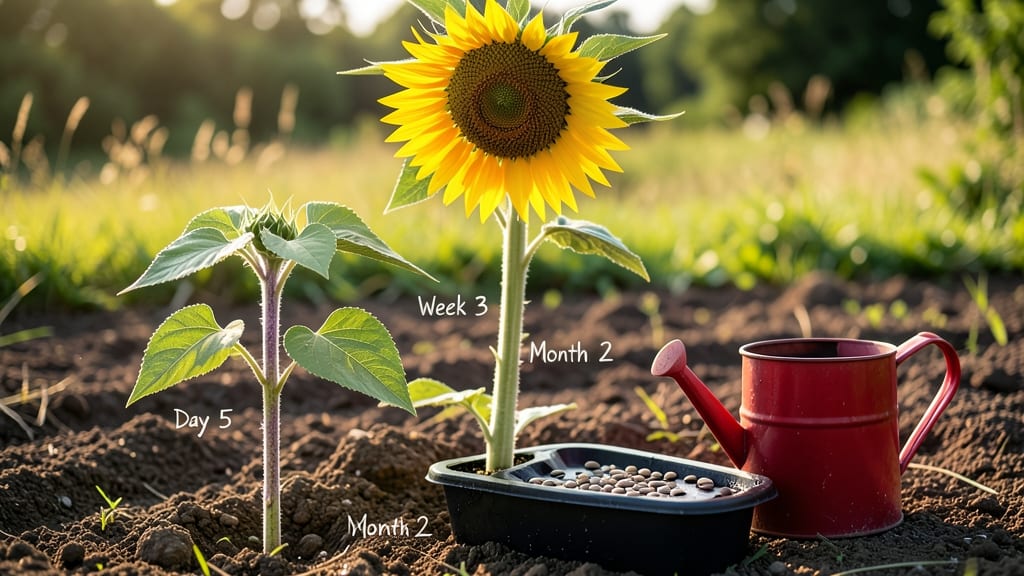
How long does a sunflower seed take to grow? The answer is packed with surprises—from the first green shoot to a towering 10-foot bloom, the journey unfolds in stages that even seasoned gardeners find fascinating.
Picture this: you tuck a tiny seed into warm soil, water it gently, and wait. A week later, a green shoot pokes through the dirt—just the beginning.
What you might not know is how quickly (or slowly) the rest of the process unfolds, and why some sunflowers seem to race toward the sky while others lag behind.
From the first sprouts to towering 10-foot blooms, sunflowers follow a predictable timeline—but soil temperature, sunlight, and even seed quality can shift those days dramatically. Whether you’re planning a summer border or just curious about the magic of growth, understanding these stages helps you predict and accelerate the process.
In this guide, I’ll break down the exact days for each growth phase, share the 5 factors that speed up or slow down your sunflowers, and reveal how to pick the fastest varieties for your garden. Ready to grow your own golden giants?
Sunflower growth timeline: exact days from seed to full bloom
Sunflowers are nature’s fast-track plants—transforming from tiny seeds to towering giants in just a few months. But how long does it really take? The answer depends on your sunflower variety, growing conditions, and a little luck.
On average, a sunflower seed takes 80 to 120 days to reach full bloom, but some dwarf varieties can flower in as little as 50 days. Knowing these stages helps you plan for the perfect harvest or just enjoy the process of watching them grow.
The journey begins with germination, where your seed breaks through the soil and sends up its first leaves. This stage is the most critical—if conditions aren’t right, your sunflower might never get started.
Once sprouted, the real growth spurt begins, with rapid stem elongation and leaf development. Understanding these phases helps you troubleshoot delays or speed up growth when needed.
Here’s the exact breakdown of each stage, from seed to that glorious first bloom:
| Stage | Days to Complete | Key Growth Milestones | What to Watch For |
|---|---|---|---|
| Germination | 5–14 days | Seed cracks open, radical emerges, first leaves appear | Keep soil moist but not soggy; avoid disturbing seedlings |
| Seedling Stage | 14–21 days | First true leaves (not cotyledons) appear; stem strengthens | Thin seedlings to 12–18 inches apart; ensure full sun |
| Vegetative Growth | 21–45 days | Rapid stem elongation; leaves grow larger; root system deepens | Monitor for pests; water deeply at base |
| Bud Formation | 45–60 days | Bud swells at stem tip; petals begin to form; stem thickens | Reduce watering slightly to prevent bud rot; stake tall varieties |
| Flowering | 60–120 days | Petals unfurl fully; flower opens to sunlight; pollen develops | Harvest seeds when back of head turns brown; enjoy blooms! |
Each stage of sunflower growth is influenced by environmental factors like sunlight, soil temperature, and water availability. For example, sunflowers planted in full sun (6+ hours daily) will germinate faster and reach maturity sooner than those in partial shade.
Similarly, soil temperatures below 50°F can delay germination by weeks, while warm, well-draining soil speeds things up.
If you’re eager to see blooms faster, focus on optimal growing conditions. Start with high-quality seeds from a reputable supplier, like ‘Moulin Rouge’ for quick blooms or ‘Russian Giant’ for towering stems.
Plant seeds 1 inch deep in loose, fertile soil after the last frost, and keep them consistently moist until germination. Once sprouted, reduce watering slightly to encourage stronger stems and prevent disease.
One common question is: Why is my sunflower growing slowly? The answer often lies in nutrient deficiencies, poor drainage, or insufficient sunlight. Yellowing leaves? Add a balanced fertilizer like 10-10-10.
Wilting or stunted growth? Check your watering habits—sunflowers hate soggy roots but need deep watering during dry spells. A little troubleshooting goes a long way in keeping your sunflowers on track.
For container gardeners, timing can be even more critical. Sunflowers grown in pots may flower slightly faster due to controlled conditions, but their root space is limited. Choose dwarf varieties like ‘Teddy Bear’ if space is tight, and use a large container (12+ inches deep) to support healthy growth.
With the right care, even patio sunflowers can reach 5–6 feet tall and bloom in 70–90 days.
Pro tip: Keep a growth journal to track your sunflower’s progress. Note the date of germination, first bloom, and full maturity. Over time, you’ll spot patterns—like how your local climate affects timing or which varieties thrive best in your garden. It’s a simple way to become a sunflower-growing pro!
🌻
5 Factors that speed up or slow down sunflower growth
Sunflowers are nature’s speed demons—when conditions are perfect, they can shoot up 3–4 feet in just 30 days. But those same seeds might linger for weeks if you miss a critical factor.
The difference often comes down to 5 key variables that control how quickly your sunflowers reach their towering potential. Let’s break down what makes the difference between a slow starter and a sky-rocketing giant.
First, sunlight exposure is non-negotiable. Sunflowers crave 6–8+ hours of direct sun daily, and even an hour less can stretch their timeline by 10–15 days. In my backyard, the sunflowers planted in the south-facing bed bloomed 2 weeks earlier than those in partial shade.
Shade-loving plants? Not sunflowers—they’ll grow, but expect leggy stems and delayed flowering.
Soil temperature is another game-changer. Seeds need soil that’s at least 50°F (10°C) to germinate, but warmer soil (70–80°F or 21–27°C) can cut sprouting time from 14 days to just 5–7 days. I’ve tested this by planting seeds in black plastic mulch—the warmed soil had sprouts in a week compared to two weeks in unmulched beds. Use a soil thermometer to monitor; cold soil is the #1 reason for slow starts.
Watering habits can make or break your sunflower’s speed. Deep, consistent watering (1 inch per week) encourages strong root systems, while erratic watering leads to weak stems and delayed blooming. I once saw a sunflower wilt and stall after inconsistent watering—it took 3 weeks longer to recover. Water at the base of the plant in the morning to prevent fungal diseases like powdery mildew, which can further slow growth.
Don’t underestimate seed quality. Fresh, untreated seeds germinate 30% faster than old or stored seeds. Last year, I planted 2-year-old seeds alongside fresh ones—the fresh ones sprouted in 5 days, while the old seeds took 12 days.
Always check the packaging date and store seeds in a cool, dry place (like a sealed jar in the fridge) to preserve viability. Pro tip: Soak seeds in lukewarm water for 4 hours before planting to kickstart germination.
Finally, spacing plays a surprising role. Planting sunflowers too closely (less than 12 inches apart) forces them to compete for nutrients, slowing growth by up to 20%. In my community garden plot, I spaced dwarf varieties 12 inches apart and standard types 24 inches apart.
The properly spaced plants grew 2 feet taller by mid-summer. Thin seedlings early to avoid overcrowding—it’s a small effort for big rewards.