
Pests and Diseases
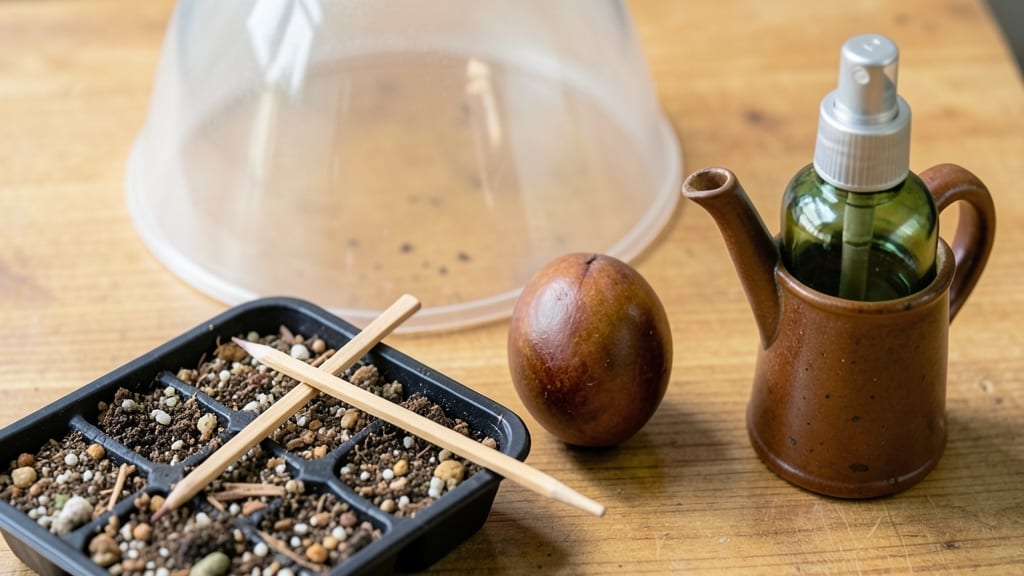
A mango seed planted with the pointed end down and flat side up maximizes germination success—this simple orientation trick can mean the difference between a thriving sapling and a failed attempt.
If you’ve ever watched a mango seed rot in the soil or sprout only to collapse, you’re not alone. The secret isn’t just about soil or moisture—it’s about getting the seed’s anatomy right from day one.
Most gardeners assume "pointy side up" is the rule, but the science tells a different story, especially for tropical trees like 🥭 mangoes.
This proven method works for both indoor starters and outdoor plantings in zones 10-11, where mangoes thrive year-round.
Whether you’re a beginner or a seasoned grower, mastering the orientation—along with the right soil mix and moisture balance—sets the stage for a healthy seedling ready to grow into a fruit-bearing tree.
Below, I’ll walk you through the step-by-step process, from planting depth to early care, so you can skip the guesswork and start your mango tree off on the right foot.
Mango seed orientation 101: flat side down or pointy side up?
The pointy side up rule for mango seeds is one of the most persistent gardening myths—but it’s actually backwards. Mango seeds, like many tropical seeds, have a natural orientation that prioritizes root development over shoot growth.
The "pointy" end isn’t the root—it’s the seed coat that protects the embryo. Understanding this anatomy is key to unlocking higher germination rates.
Most gardeners assume the pointed end should face upward because it resembles a shoot tip. However, mango seeds (and similar tropical seeds) actually prefer the flat side down to encourage downward water absorption and root initiation.
This orientation mimics how seeds germinate in their natural tropical environments, where moisture and humidity trigger root growth before shoots emerge.
Here’s the science: The flat side of a mango seed contains the radicle (embryonic root), which needs gravity and moisture to stimulate growth. Planting it downward aligns with how nature intended—roots grow downward, shoots upward.
The "pointy" end is simply the seed’s protective shell, not a directional cue.
The moisture gradient plays a critical role in this process. When planted flat side down, water naturally flows toward the radicle, activating enzymes that break down stored nutrients. This creates an ideal hydration trigger for root growth.
Conversely, the "pointy side up" method often leads to rot or failed germination because moisture pools around the seed coat instead of reaching the embryo.
Temperature also interacts with orientation. Mango seeds thrive in warm, humid conditions (75-85°F). The flat-side-down method ensures the seed’s base stays in contact with moist, warm soil, accelerating germination. In cooler climates, this orientation can make the difference between a successful sprout and a dormant seed.
Even indoor growers benefit from this method when using heat mats or greenhouse setups.
Air circulation is another factor often overlooked. The pointy side up approach can trap excess moisture against the seed, creating a fungal risk. Planting flat side down allows air to circulate around the seed’s sides, reducing rot while maintaining humidity.
This is especially important for indoor seedlings, where stagnant air can suffocate young roots.
Let’s address a common misconception: some gardeners swear by the "pointy side up" method because they’ve seen it work in avocado seeds. However, avocado seeds have a different anatomy—their "pointy" end is actually the root.
Mango seeds, on the other hand, are dicotyledonous, meaning their roots and shoots are positioned oppositely to avocados. This is why the flat-side-down rule applies specifically to mangoes.
For indoor growers in non-tropical zones, the flat-side-down method is even more critical. Without natural humidity, the seed relies on artificial moisture retention (like a humidity dome) to mimic tropical conditions. Planting incorrectly can lead to dried-out seeds or mold growth, both of which kill seedlings before they emerge.
Pro tip: If you’re unsure which side is flat, place the seed on a moist paper towel with the "pointy" end up. After 24 hours, the radicle will begin growing downward—this confirms the flat side is the correct orientation for planting.
This simple test can save weeks of waiting and guesswork.
Remember, the goal isn’t just to plant the seed—it’s to replicate its natural environment. By understanding the anatomy, moisture needs, and temperature preferences of a mango seed, you’re giving it the best possible start.
With the right orientation, your seedling will sprout faster, grow stronger, and reward you with years of tropical fruit. 🌱🥭
Step-by-step guide: how to plant a mango seed correctly for germination
Planting a mango seed correctly starts with understanding its unique anatomy. Unlike many seeds, mango seeds have a pointed end and a flat, wider side. The pointed end must face downward—this isn’t just a myth, it’s rooted in how the seed’s radicle (root) emerges naturally.
When planted with the flat side down, you’re mimicking the seed’s natural position in the fruit, which maximizes its ability to absorb moisture and oxygen from the soil.
Before you plant, clean the seed by gently rubbing it with a damp cloth to remove any fruit residue. This prevents mold and ensures direct contact with the soil.
For best results, use a well-draining potting mix combined with perlite or sand—this prevents waterlogging, which is a common killer of mango seedlings. If you’re planting outdoors in zones 10-11, choose a location with partial shade during the first few weeks to protect the delicate sprout.
Step-by-Step Planting Guide for Mango Seeds
-
Step 1: Prepare the Seed
Rinse the seed under cool water to remove pulp. Let it dry for 24 hours to prevent rot. -
Step 2: Choose the Right Container
Use a small pot (6+ inches deep) with drainage holes or plant directly in the ground in warm climates. -
Step 3: Plant with Pointed End Down
Place the seed 1-2 inches deep, flat side facing up. This ensures roots grow downward naturally. -
Step 4: Water Gently but Thoroughly
Keep soil moist (not soggy). Use a spray bottle for indoor seedlings to avoid displacing the seed. -
Step 5: Maintain Warmth and Humidity
Cover the pot with plastic wrap or a humidity dome. Place in a warm spot (75-85°F), like near a sunny window or under grow lights. -
Step 6: Monitor for Sprouts
Germination takes 2-6 weeks. Once a sprout appears, remove the cover and provide bright, indirect light.
After planting, patience is key. Mango seeds can take 2-6 weeks to sprout, depending on temperature and humidity. During this time, avoid overwatering—consistent moisture is more important than saturation. If you notice the soil drying out too quickly, group seedlings together to create a microclimate with higher humidity.
For indoor growers, a south-facing window or grow lights (12+ hours/day) will give your seedling the energy it needs to develop strong roots.
One of the biggest mistakes I see is planting the seed too deep or using compacted soil. Roots need oxygen, and if the seed is buried too far, it may suffocate before sprouting.
Another pitfall is using cold water—always use lukewarm water to mimic tropical conditions. If you’re in a cooler climate, consider starting seeds indoors under a heat mat (70-80°F) to speed up germination.
Once your mango seedling reaches 6 inches tall, it’s ready for its first transplant. Harden it off by moving it outdoors for a few hours daily before permanently relocating it.
Remember, mango trees are slow growers—don’t rush the process! With the right orientation, care, and a little luck, you’ll have a thriving sapling in no time.