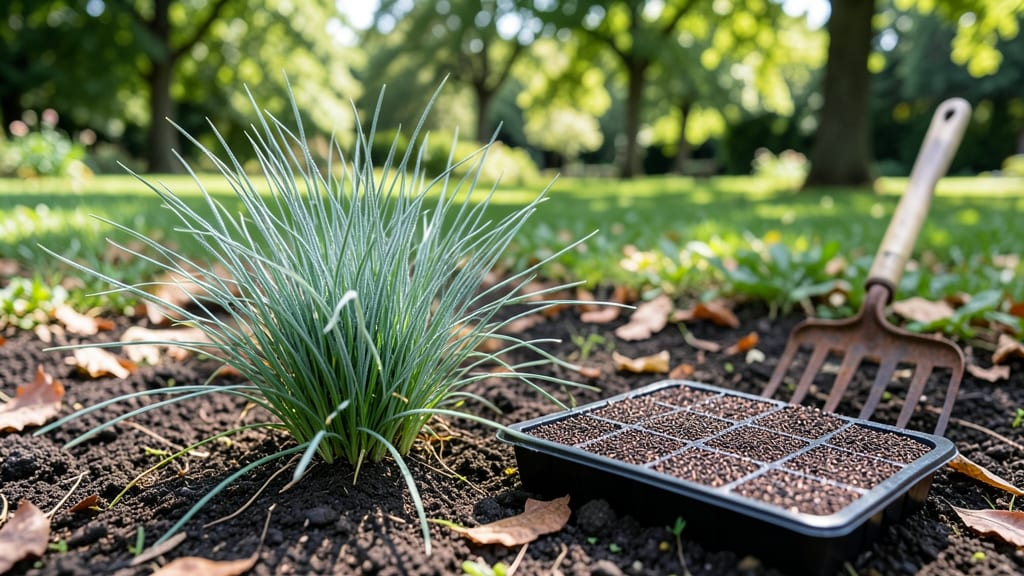
Sowing grass seed in autumn gives you a head start on a lush, weed-resistant lawn by spring—when cooler temperatures and fewer pests create perfect growing conditions.
But here’s the catch: not all grass seed varieties handle late-season planting well. Some struggle with frost, while others take off like a rocket in the right conditions. The key is choosing the right types for your zone and giving them the care they need before winter sets in.
In this guide, I’ll walk you through the best grass seed choices for autumn planting, step-by-step soil prep, and how to keep your new lawn thriving through the cold months. No guesswork—just proven tips for a stronger lawn next year.
Ready to skip the spring rush and plant now? Let’s get started with the varieties that actually survive winter and the exact timing that makes all the difference.
🌱
When to Plant Grass Seed Seed
Jan
❄️
Feb
❄️
Mar
🌱
Apr
🌱
May
🌸
Jun
☀️
Jul
☀️
Aug
🌱
Sep
🌱
Oct
🌱
Nov
🌱
Dec
❄️
Best grass seed varieties for autumn planting and winter survival
Autumn’s cool temperatures and reduced weed pressure create perfect conditions for sowing grass seed. The key to success lies in selecting cold-hardy varieties that establish strong roots before winter dormancy.
Cool-season grasses dominate autumn planting, but some warm-season types also thrive in mild climates. Let’s explore the top varieties that excel in late-season planting and survive winter’s chill.
Cool-season grasses like tall fescue and Kentucky bluegrass are the gold standard for autumn sowing. These varieties germinate quickly in 50-70°F soil and develop deep root systems before frost. Their dormancy tolerance ensures they’ll bounce back green and vigorous in spring.
Warm-season grasses like Bermuda grass can also work in USDA Zones 7-10 if sown early enough to establish before the first frost.
Your regional climate plays a critical role in variety selection. Northern gardeners should prioritize hardy cool-season blends like fine fescue, while Southern gardeners can extend their planting window with warm-season types that handle mild winters.
Even within cool-season categories, germination rates vary—some varieties sprout in 7-14 days, while others take 3-4 weeks.
Here’s a detailed comparison of the best autumn-sown grass varieties, including their growth habits, winter hardiness, and regional suitability:
| Variety |
Type |
Germination Time |
Winter Hardiness |
Best Regions |
Key Benefit |
| Tall Fescue |
Cool-season |
7-14 days |
Zones 4-9 |
North America |
Deep roots, drought-resistant |
| Kentucky Bluegrass |
Cool-season |
14-21 days |
Zones 3-8 |
Midwest, Northeast |
Soft texture, spreads aggressively |
| Fine Fescue |
Cool-season |
10-21 days |
Zones 2-9 |
Pacific Northwest, Northeast |
Shade-tolerant, low-maintenance |
| Ryegrass (Annual) |
Cool-season |
5-10 days |
Zones 4-10 |
All regions (temporary cover) |
Fast germination, winter green |
| Bermuda Grass |
Warm-season |
10-14 days |
Zones 7-10 |
Southeast, Southwest |
Heat/drought tolerant, stays green |
| Zoysia Grass |
Warm-season
Step-by-step guide to autumn grass seed sowing for maximum success
Autumn’s cool temperatures and reduced weed pressure create perfect conditions for sowing grass seed. Unlike spring planting, autumn seeds establish deep roots before winter dormancy, leading to stronger lawns by spring.
The key is timing—aim for 4-6 weeks before your first frost (typically mid-September to early October in most U.S. zones).
Before you begin, gather your tools: a rake, lawn roller, grass seed, starter fertilizer, and a sprinkler. Choose a cold-hardy variety like tall fescue or ryegrass for autumn sowing, as they germinate well in cooler soil. Avoid warm-season grasses like Bermuda, which struggle in fall.
Your Autumn Grass Seed Sowing Plan
-
Step 1: Clear and Prep Soil
Remove debris, rocks, and weeds. Use a rake to loosen soil to a depth of 2-3 inches. For bare soil, till lightly to create a seed-friendly surface.
-
Step 2: Test and Amend Soil
Ideal soil pH for grass is 6.0-7.0. Test your soil and amend with lime (to raise pH) or sulfur (to lower it) if needed. Mix in 2-3 inches of compost for nutrients.
-
Step 3: Apply Starter Fertilizer
Spread a low-nitrogen starter fertilizer (10-20-10 ratio) evenly over the soil. This provides quick nutrients for germination without burning tender seedlings.
-
Step 4: Sow Grass Seed
Use a broadcast spreader for even coverage. Aim for 5-8 lbs of seed per 1,000 sqft, depending on your grass type. Lightly rake seeds into the soil (¼ inch deep) to ensure soil contact.
-
Step 5: Cover and Protect
Gently roll the area with a lawn roller to press seeds into the soil. Apply a thin layer of straw mulch (¼ inch) to retain moisture and protect seeds from birds or drying winds.
-
Step 6: Water Consistently
Keep soil moist but not soggy. Water lightly 2-3 times daily (10-15 minutes per session) for the first 2 weeks. Gradually reduce to 1 inch per week once sprouts appear.
-
Step 7: Monitor and Maintain
Watch for even germination (typically 7-21 days). Avoid walking on new seedlings. Once grass reaches 3 inches tall, mow with a sharp blade set to 3-4 inches to encourage root growth.
✅ Pro Tip: Mark your calendar for first frost—seeds need 4-6 weeks to establish roots before winter dormancy.
One common mistake is overwatering, which can drown seeds or cause fungal diseases. Instead, focus on consistent moisture—soil should feel like a damp sponge. If you notice uneven germination, lightly rake the area and rewater to encourage even growth.
Birds can also be a problem, so cover seeds with netting if needed.
After the first mowing, reduce watering to 1 inch per week to strengthen root systems. Avoid fertilizing in late fall, as new growth can be damaged by frost. By spring, your lawn will reward you with dense, vibrant grass that outcompetes weeds naturally.
For regions with harsh winters, consider using a winter mulch (like straw) to insulate seeds and soil. This extra layer helps protect tender roots during freezing temperatures, ensuring your lawn emerges healthier in spring.
🌱
★★★★★4.8(13 reviews)
|