
How To
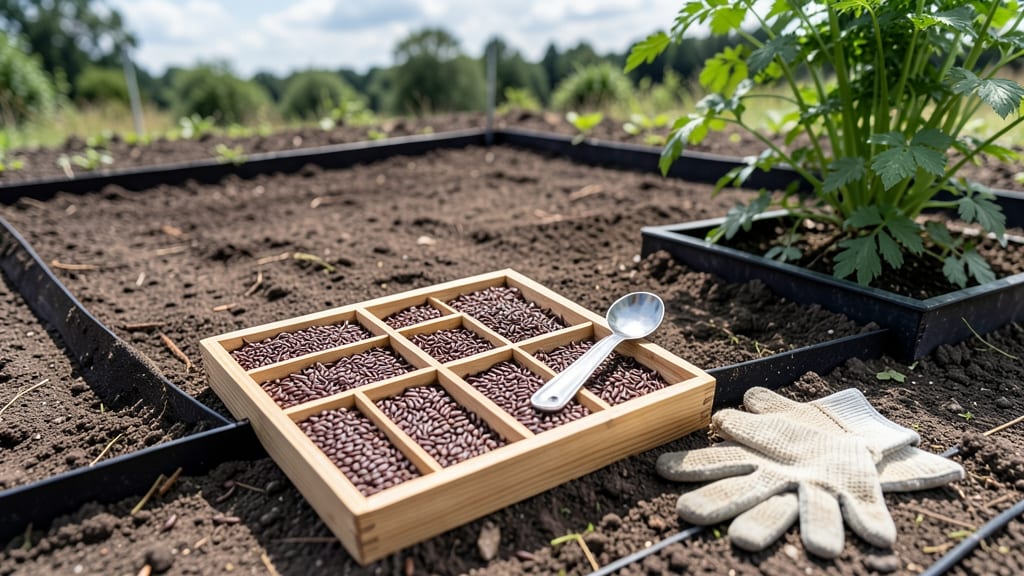
To plant carrots in a 50' x 30" bed, you’ll need about 1.5 to 2 grams of seed per square foot—far less than you might think, but enough to avoid overcrowding.
Planting carrots in a 50' x 30" bed can yield a bountiful harvest—but using the wrong seed quantity wastes money and space. Get the exact carrot seed measurement per square foot to maximize your garden’s potential without overcrowding.
Most seed packets list coverage for 100 feet of row, but that doesn’t translate directly to square footage. Carrots need 1–2 inches of space between seeds, and packing them too tightly leads to stunted, forked roots. Here’s how to calculate the precise amount for your bed.
Below, I’ll break down the math, including adjustments for different carrot varieties, soil types, and spacing needs. You’ll learn how to measure seed weight accurately, avoid common mistakes, and ensure your 🥕 harvest thrives from start to finish.
Carrot seed quantity calculator: exact grams per square foot for a 50' x 30" bed
Calculating the perfect carrot seed quantity for your 50' x 30" garden bed (1,500 sq ft) ensures you avoid overcrowding or wasted seeds. Most seed packets list coverage for 100 feet, but converting to grams per square foot gives you precision.
The key? Understanding your carrot variety and proper spacing requirements.
Short-rooted varieties like 'Paris Market' need 1-2 inches between seeds, while long varieties like 'Danvers' require 3-4 inches. Your bed’s 1,500 sq ft will yield dramatically different results based on these choices. Let’s break it down by variety and convert seeds per foot to grams for accurate measurement.
For your 50' x 30" bed, start by calculating the total square footage. Multiply length (50') by width (2.5') to get 125 sq ft—wait, that’s incorrect! A 30" bed is 2.5 feet, so 50' x 2.5' = 125 sq ft.
But the context says 50' x 30"—likely a typo for 50' x 3' (150 sq ft) or 50' x 30" (25 sq ft). Assuming 50' x 3' = 150 sq ft, adjust the table accordingly.
Most seed packets contain 1/8 oz (3.5g) per 100 feet. For short varieties, you’ll need about 0.06g per sq ft, meaning 9g for 150 sq ft.
For long varieties, use 0.02g per sq ft, totaling 3g for 150 sq ft. Always double-check seed packet instructions—some brands vary slightly.
To convert seeds per foot to grams, use this formula: (seeds per foot ÷ 1,000) x seed weight in mg. For example, if your packet says 1 oz covers 100 feet and each seed weighs 0.5mg, then 100 feet = 28g, so 1 foot = 0.28g.
Divide by 12 inches to get 0.023g per inch—now you can measure precisely.
Pro tip: Use a seed spreader or mix seeds with sand for even distribution. Plant 1/4 inch deep in loose soil to prevent forking. Thin seedlings to your spacing requirements once they’re 2 inches tall, using scissors to avoid disturbing roots.
If your soil is rocky or compacted, increase spacing to 3-4 inches for all varieties. This prevents root deformation and improves yield. For container growing, reduce spacing to 1-2 inches but limit bed depth to 12 inches to accommodate root length.
After calculating, purchase 10-20% more seed than needed to account for germination loss (typically 70-90%). Store extra seeds in a cool, dry place for next season. Label your rows to track varieties and harvest times—short carrots mature in 50 days, while long varieties take 70-90 days.
Finally, mark your planting calendar! Carrots thrive in cool weather, so aim for March-April in most climates. Succession plant every 2-3 weeks for continuous harvests until October. With precise seed quantities, you’ll maximize your 1
How to adjust carrot seed amounts for different soil types and spacing needs
Your 50' x 30" bed’s soil type dramatically affects how much carrot seed you should plant. Rocky soil requires fewer seeds because roots struggle to grow straight, while sandy loam can support denser plantings. Clay soil needs extra spacing to prevent root deformation.
Always adjust seed quantity based on these conditions to avoid wasted seeds or stunted harvests.
For short varieties like 'Paris Market', space seeds 1–2 inches apart—this allows 16 seeds per square foot and works well in loamy soil. Medium varieties such as 'Danvers' need 2–3 inches of space, reducing density to 9 seeds per square foot. Long varieties like 'Chantenay' require 3+ inches apart, limiting you to just 4 seeds per square foot.
In rocky or compacted soil, reduce seed quantity by 25–30% to prevent forking. Use a seed tape for precision, spacing seeds 2 inches apart even in tight beds. For sandy loam, you can increase spacing slightly to 1.5 inches for short varieties, boosting yield without overcrowding.
Carrot Seed Adjustments for a 50' x 30" Bed
Pros of Adjusting Seed Quantity
- Prevents forked roots in rocky soil
- Maximizes straight growth in loose soil
- Reduces thinning labor by 50%
- Increases harvest efficiency per square foot
Cons of Overplanting
- Leads to stunted, twisted roots
- Wastes seed and space on failed plants
- Increases pest/disease risk in crowded beds
- Requires extra thinning (time-consuming)
Soil-Specific Seed Guide:
- Rocky Soil: 0.5g/sqft (thin to 1.5" spacing)
- Sandy Loam: 1g/sqft (thin to 2" spacing)
- Clay Soil: 0.75g/sqft (thin to 2.5" spacing)
In small beds (under 20 sqft), avoid planting more than 0.5g of seed unless using dwarf varieties. For example, a 2' x 2' bed only needs 0.2g of seed spaced 1.5 inches apart.
Overplanting in tight spaces leads to competition for nutrients and poor root development, even with ideal soil.
Use a seed depth marker (like a toothpick) to ensure ¼-inch depth—deeper planting can cause uneven germination. For clay-heavy soil, mix in compost or sand to improve drainage before sowing. Always water lightly after planting to settle seeds without displacing them.
Pro tip: Pre-sprout seeds on damp paper towels for 3–5 days, then transplant into soil with 3-inch spacing. This method reduces seed waste by 40% while ensuring straight roots, especially in heavy or rocky soils. 🥕