
Lawn
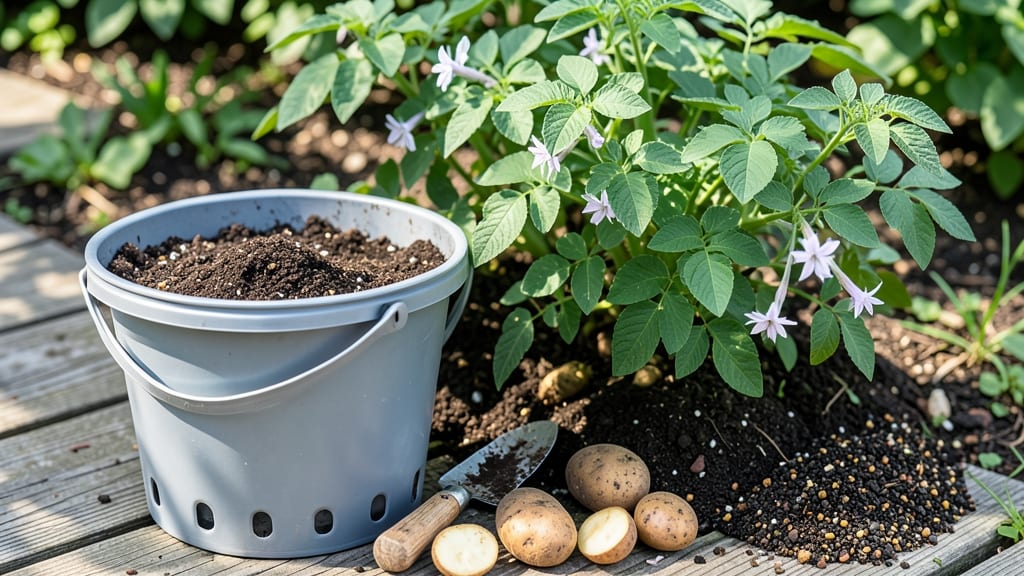
Planting the right number of seed potatoes per 5-gallon bucket is the sweet spot for a bountiful harvest—but get it wrong, and you’re either drowning in overcrowded vines or wasting space.
Picture this: your bucket brimming with lush green foliage, but when you dig in, you find only a handful of small tubers instead of the pound of potatoes you expected. That’s the cost of guessing on spacing.
Here’s the secret: the right number depends on whether you’re growing early harvesters (like Red Pontiac) or late-season varieties (like Yukon Gold), and how deep your bucket is. Too many, and the tubers compete for space; too few, and you’re leaving potential yield on the table.
Below, I break down the exact spacing math, soil tricks to maximize growth, and how to tell if you’ve got it right—or if it’s time to adjust mid-season.
Optimal seed potato spacing for 5-Gallon buckets by variety
When growing potatoes in a 5-gallon bucket, proper seed potato spacing determines whether you'll harvest a few small tubers or a bountiful crop. The key lies in understanding how variety type and maturity timing affect spacing needs.
Early harvesters like Red Pontiac can handle closer spacing, while late varieties such as Russet Burbank need more room to develop large tubers.
Most gardeners make the mistake of treating all seed potatoes the same, but new vs. mature seed potatoes also impact spacing. A new seed potato (smaller, less than 2 oz) produces fewer tubers, while a mature seed potato (2-4 oz) yields more.
This means you can plant slightly more mature potatoes per bucket without overcrowding. Let’s break down the science-backed spacing guidelines to maximize your harvest.
Here’s where the 5-gallon bucket’s depth comes into play. While the top layer supports foliage, the 12-18 inches of soil below is where tubers form. Early varieties like Yukon Gold only need 12-15 inches of fill, while late varieties such as Kennebec require the full 18 inches.
Adjust your spacing based on both the variety and the bucket’s fill depth to avoid stunted growth.
For early harvesters like Red Norland, you can fit up to 3 new seed potatoes in a 5-gallon bucket, spaced 4-5 inches apart. These varieties mature quickly, so their tubers won’t outgrow the container.
However, if you’re growing mature seed potatoes of the same variety, reduce the count to 1-2 potatoes to prevent competition for nutrients.
Mid-season varieties such as Katahdin strike a balance. With a 15-18 inch fill depth, you can plant 3 new seed potatoes spaced 4-5 inches apart. If using mature seed potatoes, stick to 2 potatoes with 6-8 inches of spacing.
This ensures each plant has enough room to develop a robust tuber set without overcrowding.
Late varieties like Russet Burbank demand the most space. Their long growing season means tubers need ample room to reach full size. In a 5-gallon bucket, limit yourself to 1 mature seed potato with 8-10 inches of spacing and a full 18-inch fill depth.
If you’re using new seed potatoes, you can fit 2 potatoes with 6-8 inches of spacing, but expect smaller yields compared to in-ground planting.
Pro tip: If your bucket has drainage holes, consider adding a 1-inch layer of gravel at the bottom before filling with soil. This prevents waterlogging, which can cause
How to calculate seed potato quantity for maximum yield
Calculating the perfect number of seed potatoes for your 5-gallon bucket starts with understanding the growth habit of your chosen variety. A standard 5-gallon bucket can comfortably fit 2-3 seed potatoes, but this varies based on whether you're planting new seed potatoes or larger mature tubers.
Early varieties like Red Norland need less space, while late-season varieties like Yukon Gold require more room for larger tubers.
Bucket depth is equally critical—most 5-gallon buckets are about 12-14 inches deep, which is ideal for potatoes since their tubers form 6-12 inches underground. If your bucket is shallower, opt for earlier-maturing varieties to prevent tubers from outgrowing the container.
Always leave at least 4-6 inches of soil above the top tuber to allow for foliage growth.
- 🥔 1 seed potato (large, mature tuber) → 12-14" deep bucket (ideal for 1 late-season variety like Yukon Gold)
- 🥔 2 seed potatoes (medium-sized) → 10-12" spacing (best for early varieties like Red Pontiac or Kennebec)
- 🥔 3 seed potatoes (small, new seed) → 8-10" spacing (works for bush varieties like Fingerling or Purple Majesty)
- 🌱 Soil depth check: Ensure 6" of soil above top tuber for foliage growth
- 💧 Companion tip: Add compost or worm castings to bottom 4" for faster tuber development
For maximum yield, prioritize spacing over quantity. Place seed potatoes 8-12 inches apart, depending on their size. Smaller seed potatoes (like new seed potatoes) can be planted closer together, while larger ones need more room.
If you're using organic seed potatoes, consider soaking them in water for 12-24 hours before planting to encourage faster sprouting and even growth.
Boost production further with companion planting. Add bush beans or marigolds around the bucket’s edge—they deter pests like Colorado potato beetles while improving soil health.
Avoid planting tomatoes or peppers nearby, as they share diseases with potatoes. Mulch with straw or grass clippings to retain moisture and prevent soil-borne diseases.
Monitor your plants closely after 4-6 weeks. If vines are crowding each other, gently prune the smallest stems to redirect energy to tuber growth. Conversely, if foliage looks stunted or sparse, you may have under-planted—consider adding a second seed potato if your bucket has space.
Always harvest when the top foliage yellows, but before it dies completely.
Remember, container size limits yield, but smart spacing maximizes what you can grow. With the right balance, a single 5-gallon bucket can produce 1-2 pounds of potatoes—enough for a family of four! 🥔